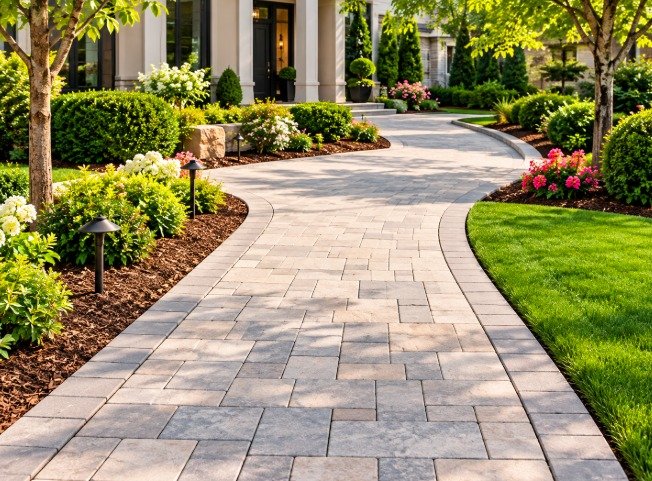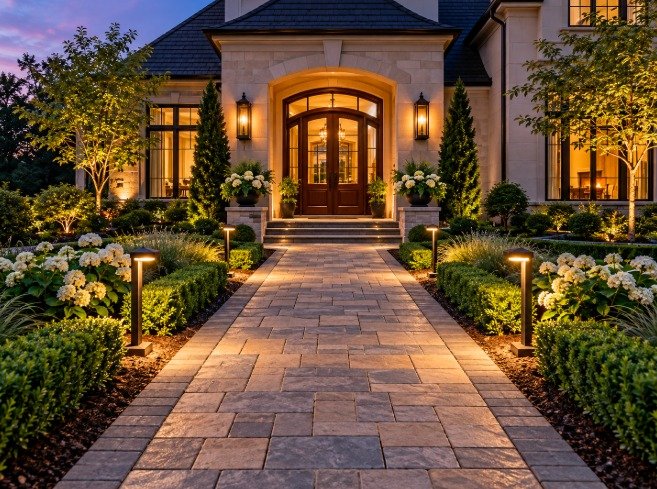
Straight paver front entry walkway with path lights leading to a lit front door at dusk

Walkway PaversServices Los Angeles

Front entry paths, backyard and garden walkways, side yards and pool access, with new installation, replacement, repair, extensions and widening.

A Path That Connects Your Whole Property

Walkway pavers can improve both the appearance and function of a property by creating a durable, defined path between entrances, patios, driveways, gardens, pools, garages, and outdoor living spaces. A professionally installed paver walkway can make daily movement around a property more comfortable while adding structure and visual interest to the landscape.

Our walkway paver services include new installation, replacement, repair, extensions, widening, decorative borders, curved layouts, garden paths, front entry walkways, side-yard walkways, pool access paths, and commercial pedestrian areas. Whether the goal is to create a new path through a landscaped yard or replace an old cracked walkway, proper preparation is essential for long-term stability.

A successful walkway should be more than a row of pavers placed on the ground. The base should be properly prepared, the surface should be graded for drainage, the joints should be filled correctly, and the width and layout should match the way people actually use the property.

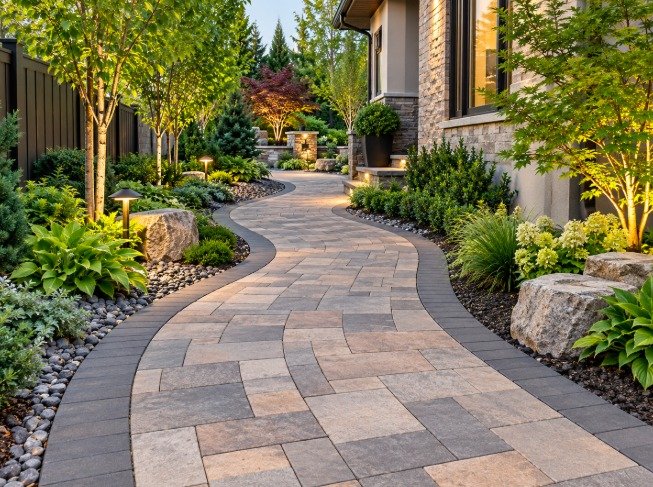
Curved backyard paver walkway with path lights leading to a lit patio

Our Walkway Paver Services

From a brand-new entry path to fixing a single trip hazard, every walkway starts with a solid base and a layout that fits how people move around your property.

New Walkway Paver Installation

New walkway installation is ideal for properties that need a defined pedestrian route or a more attractive connection between outdoor areas.

A new walkway can connect:

  • The street to the front door
  • A driveway to a side entrance
  • A patio to a pool
  • A home to a detached garage
  • A backyard to a garden
  • A parking area to a building
  • A house to an outdoor kitchen
  • A gate to a backyard
  • Multiple outdoor living areas

The installation process typically begins with layout planning and excavation. The area is then graded, compacted, and prepared with a stable aggregate base. Once the base is ready, a bedding layer is added and the pavers are installed in the selected pattern.

Edge restraints help keep the pavers in place, while joint material helps stabilize the finished surface.

Walkway Paver Replacement

Older walkways may become cracked, uneven, outdated, or difficult to maintain.

Walkway replacement may be a practical option when:

  • Large areas have settled
  • The original base is failing
  • The walkway is too narrow
  • Drainage is poor
  • The surface is badly damaged
  • The material no longer matches the property
  • The layout needs to change

Replacement begins with removing the existing surface and evaluating the base below it. This makes it possible to correct underlying problems before the new walkway is installed.

A replacement project can also include widening the path, changing its direction, adding decorative borders, or connecting it to a new patio or driveway.

Walkway Paver Repair

Many walkway problems can be repaired without replacing the entire surface.

Paver walkway repair may be used to correct:

  • Sunken pavers
  • Loose pavers
  • Cracked units
  • Rocking pavers
  • Uneven sections
  • Edge movement
  • Missing joint material
  • Small trip hazards
  • Settlement near steps
  • Drainage-related movement

When a specific section has settled, the pavers can often be lifted so the base can be corrected. The original pavers can then be reinstalled if they are still in good condition.

The goal of a proper repair is to address the cause of the movement rather than simply making the surface look level temporarily.

Walkway Paver Extension

A walkway extension can improve access to areas that were not originally connected.

Common extension projects include paths to:

  • Sheds
  • Detached garages
  • Pools
  • Guest houses
  • Gardens
  • Side gates
  • Fire pits
  • Outdoor kitchens
  • New patios

Extensions can be designed to match an existing walkway or use a complementary paver style.

The transition between the original and new section should be carefully planned so the finished route feels intentional and continuous.

Walkway Widening

A narrow walkway can feel uncomfortable when two people need to pass or when the path is used frequently.

Widening may provide:

  • More comfortable pedestrian access
  • Easier movement with strollers
  • Better wheelchair or mobility access where applicable
  • More room near entrances
  • Improved visual proportion
  • Safer movement around landscaping

A walkway can sometimes be widened on one side or both sides depending on the site.

The new section should be built with proper base preparation rather than simply placing additional pavers next to the existing edge.

Residential Walkway Pavers

Residential walkway services may include:

  • Front entry paths
  • Backyard paths
  • Garden walkways
  • Pool walkways
  • Side-yard paths
  • Patio connections
  • Driveway connections

Residential walkways should be designed around daily use, landscaping, and the architecture of the home.

Residential paving services

Walkway Pavers for Every Part of Your Property

Front entries, backyards, gardens, side yards and pool areas each call for a different width, layout and style.

Curved front entry paver walkway through a green lawn to an arched front door

Front Entry Walkway Pavers

The front walkway is one of the first exterior features visitors see. A well-designed entry walkway can improve curb appeal and create a clear visual connection between the sidewalk, driveway, and front door.

Front entry designs may include:

  • Straight walkways
  • Curved paths
  • Wide entrance areas
  • Decorative borders
  • Steps
  • Landings
  • Column bases
  • Lighting features

The paver color and style can be coordinated with the home exterior, driveway, retaining walls, or landscaping. A wider landing near the door can also make the entrance feel more welcoming.

Walls & pillars
Curved side-yard paver walkway with a charcoal border, boulders and path lights

Side-Yard Walkway Pavers

Side yards are often narrow and can become muddy or difficult to use. A paved side-yard walkway can create cleaner access between the front and back of the property.

These walkways may be used for:

  • Trash bin access
  • Utility access
  • Pool equipment
  • Garden maintenance
  • Side gates
  • Backyard entry

Because side yards are often tight spaces, drainage and elevation should be planned carefully.

Backyard Walkway Pavers

Backyard walkways help organize outdoor spaces and make it easier to move between activity areas.

They can connect:

  • Patios
  • Pools
  • Gardens
  • Fire pits
  • Outdoor kitchens
  • Play areas
  • Sheds
  • Seating zones

Backyard walkway designs can be formal or informal. A straight paver path can create a modern look, while a gently curved walkway can blend more naturally into landscaping.

Garden Walkway Pavers

Garden pathways can add structure to planting areas while creating a practical route for walking and maintenance.

Garden walkways may use:

  • Concrete pavers
  • Brick-style pavers
  • Natural stone
  • Stepping-stone layouts
  • Permeable pavers

The design can be narrow and decorative or wide enough for regular pedestrian use. Curved paths often work well in gardens because they can follow planting beds and natural landscape features.

Pool Access Walkway Pavers

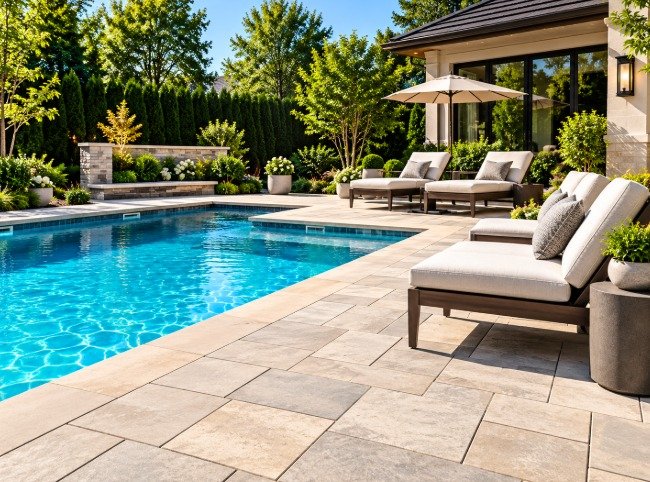
Pavers can create a direct connection between the house, patio, and pool area.

Pool access walkways should consider:

  • Wet foot traffic
  • Surface texture
  • Drainage
  • Barefoot comfort
  • Transitions to the pool deck

The walkway can match the pool deck or use a complementary material. A coordinated design helps make the backyard look more connected.

Patio Walkway Pavers

A walkway can connect a patio with other parts of the property while maintaining the same overall design style.

Patio walkways may connect to:

  • Driveways
  • Pools
  • Fire pits
  • Gardens
  • Outdoor kitchens
  • Gates
  • Secondary patios

Using the same or related pavers can create a continuous visual flow.

Driveway-to-Entry Walkways

Many properties benefit from a separate pedestrian path between the driveway and front entrance.

This can help keep foot traffic away from parked vehicles and create a more polished entrance.

The walkway may run alongside the driveway or branch away from it through landscaping.

Commercial Walkway Pavers

Commercial paver walkways can provide a durable pedestrian surface for:

  • Office buildings
  • Retail centers
  • Restaurants
  • Hotels
  • Apartment complexes
  • Medical facilities
  • Schools
  • Community spaces

Commercial walkways should account for higher foot traffic and may require additional attention to width, accessibility, drainage, and maintenance access.

Walkway Layouts & Design

The shape, pattern and edge details decide whether a walkway feels formal, relaxed or modern.

Curved Walkway Pavers

Curved walkways create a softer, more natural appearance.

They work especially well in:

  • Gardens
  • Large yards
  • Traditional landscapes
  • Properties with irregular layouts

Curved designs require careful cutting and layout planning so the pattern remains consistent. A gentle curve often looks more natural than several sharp direction changes.

Straight Walkway Pavers

Straight walkways are common in modern and formal landscape designs.

They can create:

  • Clean visual lines
  • Direct access
  • Simple installation patterns
  • A structured appearance

Large rectangular pavers are often used for contemporary straight walkways.

Stepping-Stone Paver Walkways

Not every walkway needs to be completely paved. Stepping-stone style layouts can create a lighter appearance in gardens and low-traffic areas.

Pavers can be spaced with:

  • Grass
  • Gravel
  • Decorative stone
  • Ground cover

This style is generally more decorative than a fully paved pedestrian path and may not be appropriate for every use.

Walkway Borders

Borders can add definition and help the walkway stand out from surrounding landscaping.

Common border options include:

  • Contrasting pavers
  • Soldier course
  • Double borders
  • Natural stone edges
  • Dark accent borders

Borders can also help visually connect a walkway with the driveway or patio.

Decorative Walkway Designs

Decorative walkways can include:

  • Inlays
  • Accent bands
  • Circular details
  • Mixed colors
  • Geometric patterns
  • Custom edges

These features can be used near entrances or focal points without making the entire walkway overly complex.

Decorative paving services

Walkway Paver Patterns

The layout pattern can significantly change the appearance of a walkway.

Running Bond

Rectangular pavers are staggered in rows for a clean, traditional layout.

Herringbone

Pavers are arranged at angles to create a strong visual pattern.

Basket Weave

Pairs of pavers are arranged to create a classic woven effect.

Stack Bond

Straight joint lines create a modern appearance.

Modular Pattern

Several paver sizes are combined for a more varied look.

Random Pattern

Different sizes are arranged in a less repetitive layout.

Explore all paver styles, colors and patterns

Walkway Paver Materials

Each material brings a different look, texture and price point to your walkway.

Concrete Walkway Pavers

Concrete pavers are one of the most versatile walkway materials. They are available in many sizes, shapes, colors, textures, and finishes.

Concrete pavers can imitate stone, brick, slate, or smooth modern concrete. They work well for front entrances, garden paths, patios, and commercial walkways.

Brick Walkway Pavers

Brick-style pavers provide a classic appearance. They are commonly used around traditional homes, historic-style properties, courtyards, gardens, and front entrances.

Popular layouts include herringbone, running bond, and basket weave. Brick colors can range from traditional reds and browns to charcoal and blended tones.

Natural Stone Walkways

Natural stone can create a distinctive pathway with varied texture and color. Materials may include flagstone, bluestone, limestone, sandstone, granite, and travertine.

Natural stone can be installed in regular patterns or more organic layouts. Because stone can vary in thickness and surface texture, proper base preparation is important.

Porcelain Walkway Pavers

Outdoor porcelain pavers can create a clean, modern pathway. They are available in finishes that resemble stone, concrete, wood, and marble.

Porcelain pavers should be selected for exterior use and installed with an appropriate system. They are often used around contemporary homes, patios, and pools.

Permeable Walkway Pavers

Permeable pavers allow water to move through wider joints into a specially designed base. They can be useful where stormwater management is an important consideration.

A permeable walkway requires a different base structure than a standard paver path. The underlying system should be designed to allow water to infiltrate properly.

Compare all paver materials

Walkway Base Preparation

The base beneath the pavers plays a major role in long-term stability.

A typical walkway installation may include:

  1. Excavation
  2. Soil preparation
  3. Aggregate base
  4. Base compaction
  5. Bedding material
  6. Paver installation
  7. Edge restraint
  8. Joint filling

If the base is weak or poorly compacted, the walkway can develop uneven sections. Proper preparation is especially important in areas with soft soil or drainage problems.

Walkway Drainage

A walkway should be graded so water does not collect on the surface or flow toward buildings.

Drainage planning may include:

  • Surface slope
  • Landscape grading
  • Drain channels
  • Permeable sections
  • Downspout management

Water should be directed away from foundations, steps, and doorways whenever possible.

Walkway Edge Restraints

Edge restraints help keep the pavers from spreading outward.

They are especially important where the walkway meets:

  • Grass
  • Mulch
  • Gravel
  • Soil
  • Garden beds

Proper edge support helps maintain clean lines and consistent joints.

Joint Sand and Paver Stability

Joint material fills the spaces between pavers and helps stabilize the surface. Polymeric sand is commonly used for many walkway installations.

It can help reduce:

  • Joint erosion
  • Weed growth
  • Insect activity
  • Paver movement

The appropriate joint material depends on the specific paver and installation system.

Walkway Paver Cost in Los Angeles

Estimated installed prices, including materials and labor. Your exact price depends on the route, width and design, so every quote starts with a free on-site evaluation.

Brick Pavers

$18 – $35 / sq ft

Front walkway (150 sq ft): $2,700 – $5,250

Natural Stone

$25 – $50 / sq ft

Front walkway (150 sq ft): $3,750 – $7,500

Porcelain Pavers

$25 – $50 / sq ft

Front walkway (150 sq ft): $3,750 – $7,500

What Affects the Cost of Your Walkway

  • Walkway length and width
  • Paver material and pattern
  • Removal of an old walkway
  • Soil condition and base depth
  • Curves and cutting required
  • Steps, landings and slopes
  • Borders and decorative details
  • Drainage work required
  • Path lighting and access

Prices are estimates only, not a final quote. Small walkways may cost more per square foot because setup and equipment costs are spread over less area. Repairs are priced after an inspection.

GET MY EXACT PRICE

Walkway Paver Care

Outdoor walkways collect dirt, leaves, mud, and organic buildup.

Walkway Paver Cleaning

Routine maintenance may include:

  • Sweeping
  • Rinsing
  • Spot cleaning
  • Low-pressure washing
  • Joint maintenance

Cleaning methods should be suitable for the material.

Very high pressure can sometimes remove joint sand or damage softer surfaces.

Walkway Paver Sealing

Some walkways can be sealed to enhance color or make cleaning easier.

Depending on the product, sealing may help:

  • Reduce staining
  • Enhance appearance
  • Stabilize joint material
  • Make maintenance easier

Different materials require different sealers, and some pavers do not need sealing at all.

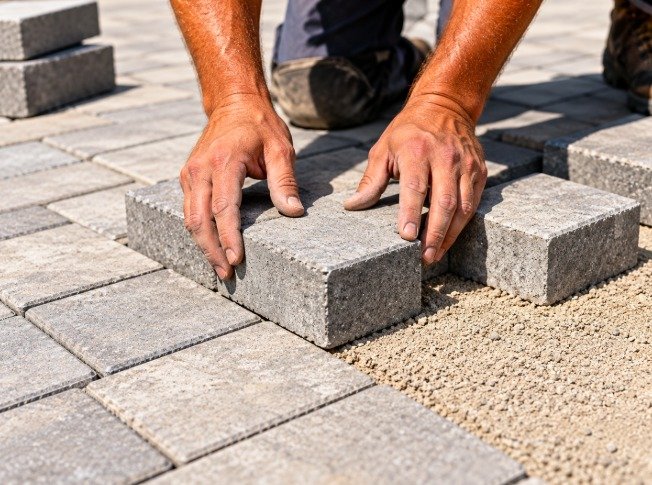
Installer resetting paver stones by hand on a prepared base

Signs Your Walkway Pavers Need Repair

Common signs include:

  • Uneven sections
  • Loose pavers
  • Sunken areas
  • Cracked units
  • Gaps between pavers
  • Trip hazards
  • Standing water
  • Edge movement
  • Missing joint sand
  • Settlement near steps or entrances

Many walkway problems can be repaired locally if they are addressed before the damage spreads.

Our Walkway Paver Installation Process

Ten steps from the first site visit to the final walk-through.

  1. 1

    Site Evaluation

    We review the proposed route, elevations, drainage, soil conditions, and intended use.

  2. 2

    Layout Planning

    The width, shape, material, pattern, and border details are selected.

  3. 3

    Excavation

    Existing soil, grass, or damaged material is removed as necessary.

  4. 4

    Grading

    The area is shaped for proper drainage.

  5. 5

    Base Installation

    Aggregate is installed and compacted.

  6. 6

    Bedding Preparation

    A consistent bedding layer is prepared.

  7. 7

    Paver Installation

    The pavers are installed according to the selected pattern.

  8. 8

    Cutting and Edge Work

    Pavers are cut around curves, steps, structures, and landscaping.

  9. 9

    Joint Filling

    Joint material is applied between the pavers.

  10. 10

    Final Inspection

    The walkway is checked for alignment, stability, drainage, and smooth transitions.

Why Choose Pavers for a Walkway?

Pavers offer a combination of durability, design flexibility, and repairability. A walkway can be simple and functional or become a major design feature of the landscape.

Design a Walkway Around Your Property

The best walkway design depends on how the property is used. A front entry may need a wide, formal path, while a garden can use a curved decorative route. A side yard may require a narrow practical walkway, while a commercial property may need a wider surface for regular pedestrian traffic.

Our walkway paver services can be customized for:

  • New construction
  • Existing homes
  • Backyard renovations
  • Pool projects
  • Commercial properties
  • Garden improvements
  • Entryway upgrades

Benefits of paver walkways:

  • Wide material selection
  • Many colors and textures
  • Custom layouts
  • Decorative borders
  • Easy connection to patios and driveways
  • Individual paver replacement
  • Defined pedestrian access
  • Improved outdoor appearance

Walkway Paver FAQs

A front entry walkway is usually 4 to 5 feet wide, which lets two people walk side by side comfortably and looks balanced with most homes. Backyard and garden paths are often 3 to 4 feet wide, while side-yard walkways may be narrower to fit the space. If you use a stroller, wheelchair or walker, a wider path is more comfortable. We recommend a width based on your property and how the walkway will be used.

Most residential walkways take one to three working days, depending on length, removal of an old path, base preparation, steps and the number of curves that need cutting. Larger projects that connect several areas of the yard or include landings and lighting can take longer. You can usually walk on the new walkway right after final compaction. We give you a clear timeline with your written estimate before work begins.

Yes. We remove the old concrete, check the soil and base underneath, and correct any drainage or settlement problems before installing the new pavers. Replacement is also a great time to widen the walkway, change its shape from straight to curved, add a landing at the front door or connect it to your driveway or patio. The result is a stronger, better-looking path that can be repaired one paver at a time if needed.

Most concrete pavers have a textured surface that provides good traction, even when wet. Very smooth or polished materials can be more slippery, so we recommend textured finishes for front entries, steps and pool access paths. Keeping the walkway clean and free of moss, leaves and debris also improves safety. If a walkway is sealed, choosing a sealer with an anti-slip additive can help maintain traction on the surface.

In many cases, yes. If your current pavers are still being made, we can often match the same product and color. When an exact match is not available, we use a complementary paver or a coordinating border color so the walkway looks intentional rather than mismatched. Tying the walkway, driveway and patio together with a shared border or accent color creates a unified, finished look across your whole property.

REQUEST A WALKWAY PAVER ESTIMATE

Planning a new walkway or repairing an existing paver path? We evaluate the route, width, drainage, base conditions, material choices and connections to surrounding areas before creating a plan for your project.

Curved garden paver walkway

WHY CHOOSE

DREAM PAVING LOS ANGELES?

  • Over 13 Years of Experience
  • Licensed, Bonded and Insured
  • Proper Base Preparation
  • Drainage Planned Into Every Job
  • Custom Curves & Borders
  • Free, Honest Estimates
  • On-Time Project Completion
  • Clean, Respectful Crews
  • Beautiful & Long-Lasting Results