Paver driveway with a large starburst medallion inside circular charcoal and tan bands

Paver StylesLos Angeles

Modern, traditional, Mediterranean and rustic paver styles in every shape, size, color, texture and pattern, designed around your home.

Finding the Right Paver Style for Your Property

Choosing the right paver style is one of the most important parts of designing a driveway, patio, walkway, pool deck, courtyard, or outdoor living area. Pavers are available in a wide range of shapes, sizes, colors, textures, finishes, and patterns, making it possible to create anything from a traditional brick-inspired surface to a clean, modern outdoor space.

Our paver style options can be used for residential and commercial projects of different sizes and designs. Some property owners prefer simple, uniform layouts, while others want mixed sizes, contrasting borders, natural stone textures, or custom patterns that become a major visual feature.

The best paver style should fit the architecture of the property, the surrounding landscape, the intended use of the paved area, and the overall design goal. A driveway may need a stronger interlocking pattern, while a patio or courtyard can allow more flexibility with larger formats, decorative borders, and detailed layouts.

Modular paver patio in warm blended tones with a charcoal border and fire pit at sunset

Paver Design Styles

From clean modern lines to old-world cobblestone, the overall style sets the tone for your whole outdoor space.

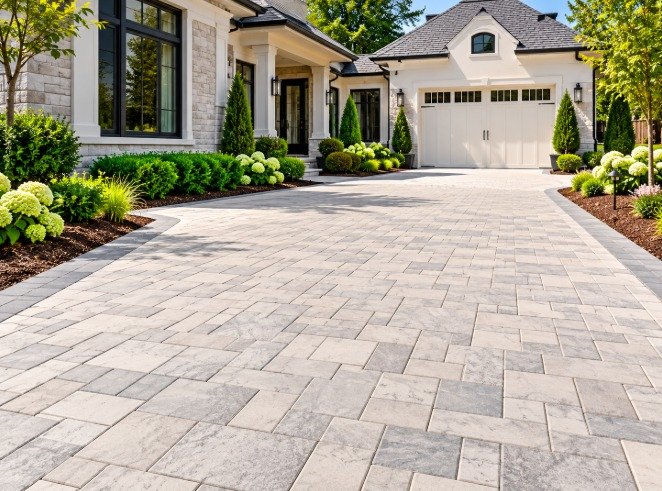
Modern front entry with large-format light gray pavers and straight joint lines

Modern Paver Styles

Modern paver styles are typically defined by clean lines, simple colors, and larger-format shapes.

Common modern design features include:

  • Large rectangular pavers
  • Oversized square pavers
  • Straight joint lines
  • Minimal borders
  • Neutral colors
  • Smooth or lightly textured surfaces
  • Geometric layouts

Popular modern colors include:

  • Light gray
  • Charcoal
  • White
  • Beige
  • Concrete tones

Modern pavers work well with contemporary homes, minimalist landscaping, glass railings, modern pools, and outdoor kitchens.

Traditional Paver Styles

Traditional paver styles often use smaller units, warm colors, and classic installation patterns.

Typical features include:

  • Brick-style shapes
  • Running bond
  • Basket weave
  • Herringbone
  • Tumbled edges
  • Earth-tone colors
  • Decorative borders

Traditional pavers are well suited to older homes, colonial-style properties, cottages, courtyards, and classic landscaping.

Contemporary Paver Styles

Contemporary pavers combine modern design with more flexibility in texture and color.

They may feature:

  • Mixed rectangular sizes
  • Subtle texture
  • Gray and beige blends
  • Modular layouts
  • Clean borders
  • Minimal decorative accents

Contemporary paving works well when a property owner wants a modern appearance without an overly stark design.

Rustic Paver Styles

Rustic pavers are designed to create a more natural or aged appearance.

Common characteristics include:

  • Tumbled edges
  • Rough textures
  • Irregular color variation
  • Earth tones
  • Natural stone appearance
  • Mixed sizes

Rustic pavers are often used for garden patios, courtyards, walkways, country-style homes, and outdoor fireplaces, and blend especially well with mature landscaping and natural stone features.

Mediterranean Paver Styles

Mediterranean-style paving often uses warm colors and natural textures.

Popular choices include:

  • Travertine
  • Tumbled pavers
  • Beige
  • Cream
  • Tan
  • Terracotta tones
  • Natural stone borders

Mediterranean pavers work well around pools, courtyards, patios, outdoor kitchens, and arched entryways. Curved layouts and decorative borders can enhance this style.

European-Style Pavers

European-inspired paving often uses old-world shapes and textures.

Designs may include:

  • Cobblestone-style pavers
  • Small rectangular units
  • Tumbled finishes
  • Fan patterns
  • Traditional borders
  • Gray, brown, and mixed stone tones

This style can create the appearance of an older plaza, courtyard, or street.

Cobblestone-Style Pavers

Cobblestone-style pavers provide a classic, textured appearance.

They are commonly used for:

  • Driveways
  • Entryways
  • Courtyards
  • Borders
  • Walkways

Modern manufactured cobblestone pavers can provide a similar visual effect to traditional stone while offering more consistent sizes. They can also be combined with larger pavers as an accent.

Paver Looks, Finishes & Textures

Manufactured pavers can recreate brick, stone and even wood, in finishes from smooth to tumbled.

Brick-Style Pavers

Brick-style pavers remain popular because they work with many architectural styles.

Common colors include:

  • Red
  • Brown
  • Burgundy
  • Charcoal
  • Tan
  • Mixed blends

They can be installed in herringbone, running bond, basket weave, and stack bond, and are often used for walkways, patios, entryways, and driveways.

Stone-Look Pavers

Stone-look pavers are manufactured to resemble natural materials while maintaining consistent shapes and installation dimensions.

They may imitate:

  • Slate
  • Limestone
  • Travertine
  • Flagstone
  • Granite

Stone-look pavers can be used where a natural appearance is desired without using full natural stone.

Slate-Look Pavers

Slate-look pavers typically feature textured surfaces and layered color variation.

They may use:

  • Charcoal
  • Gray
  • Blue-gray
  • Brown
  • Mixed tones

These pavers can work well for patios, walkways, and courtyards.

Travertine-Style Pavers

Travertine-style pavers are designed to create a light, natural appearance.

Common colors include:

  • Ivory
  • Cream
  • Beige
  • Light tan

They are often used around pools, patios, courtyards, and outdoor kitchens.

Flagstone-Style Pavers

Flagstone-style pavers mimic the irregular appearance of natural flagstone.

They may include:

  • Uneven shapes
  • Natural color blends
  • Textured surfaces
  • Organic layouts

This style works well in gardens, walkways, patios, and rustic outdoor spaces.

Wood-Look Pavers

Wood-look pavers provide the appearance of wood without using traditional wood decking.

They may reproduce:

  • Wood grain
  • Board shapes
  • Natural brown tones
  • Weathered gray finishes

Wood-look porcelain pavers are commonly used around patios and pools.

Smooth-Finish Pavers

Smooth pavers are commonly used in modern and contemporary designs.

They create:

  • Clean surfaces
  • Sharp edges
  • Precise joint lines
  • Minimalist appearance

Smooth finishes can be used for patios, walkways, courtyards, and some pool areas depending on the material and surface rating.

Textured Pavers

Textured pavers provide additional visual depth and surface character.

Textures may include:

  • Stone-like finishes
  • Brushed surfaces
  • Riven textures
  • Tumbled surfaces
  • Lightly rough finishes

Textured pavers can be especially useful where a more natural appearance is desired.

Tumbled Pavers

Tumbled pavers are processed to create softened edges and an aged appearance.

They are popular for:

  • Traditional patios
  • Mediterranean homes
  • Courtyards
  • Garden paths
  • Rustic driveways

Their worn look can make a newly installed surface appear more established.

Paver Shapes & Sizes

Paver size can change how large or small an area feels. Large pavers can create a more open appearance, while smaller pavers can create more visual detail.

Large-Format Pavers

Large-format pavers are a major feature of modern outdoor design, including large rectangles, oversized squares, and long plank-shaped units.

They are commonly used for:

  • Modern patios
  • Pool decks
  • Walkways
  • Courtyards

They can create a spacious appearance by reducing the number of visible joints.

Small-Format Pavers

Smaller pavers can create more detailed patterns.

They are ideal for:

  • Herringbone layouts
  • Curved areas
  • Borders
  • Walkways
  • Traditional driveways

Smaller units can be especially useful where the design includes many curves or detailed edges.

Modular Paver Styles

Modular pavers use several sizes that are designed to work together. A modular layout can create a varied appearance without looking random.

Common combinations may include:

  • Small squares
  • Medium rectangles
  • Large rectangles

Modular designs are popular for patios, pool decks, and large outdoor areas.

Plank Pavers

Plank pavers are long and narrow and can resemble wood boards, modern stone strips, or linear concrete panels.

They are often used for:

  • Contemporary patios
  • Pool decks
  • Walkways

The long shape can visually make an area feel wider or longer depending on the direction of installation.

Geometric Paver Styles

Geometric pavers create bold, structured patterns.

Shapes may include:

  • Hexagons
  • Diamonds
  • Triangles
  • Squares
  • Rectangles

Geometric pavers are often used in modern courtyards, patios, and entry areas.

Hexagon Pavers

Hexagon pavers can create a distinctive honeycomb-style layout.

They work well for:

  • Patios
  • Courtyards
  • Walkways
  • Decorative sections

Several colors can also be combined to create custom patterns.

Square Pavers

Square pavers provide a simple and balanced appearance.

They can be installed in:

  • Straight grids
  • Offset patterns
  • Mixed-size layouts

Large square pavers are especially popular in modern landscaping.

Rectangular Pavers

Rectangular pavers are among the most versatile styles.

They can be installed in:

  • Running bond
  • Herringbone
  • Stack bond
  • Modular patterns

They work well for driveways, patios, walkways, and pool decks.

Mixed-Size Paver Styles

Mixing multiple paver sizes adds visual variety.

A typical layout might combine:

  • Squares
  • Small rectangles
  • Large rectangles

Mixed-size styles work especially well in large patios and pool decks.

Paver Patterns

The installation pattern changes both the look and the strength of the finished surface.

Herringbone paver driveway with a charcoal and tan double border

Herringbone Paver Style

Herringbone is one of the most recognizable paver patterns. Pavers are installed at angles to create a repeating zigzag effect.

Herringbone can be used for:

  • Driveways
  • Walkways
  • Patios
  • Commercial areas

It is especially popular where strong interlock is desired.

Running Bond

Uses staggered rows for a simple, organized appearance. Works well with brick, rectangular and plank pavers, and is common for walkways, patios, and borders.

Basket Weave

A traditional pattern using pairs of rectangular units, often with brick-style pavers. Works well for courtyards, patios, walkways, and historic-style properties.

Stack Bond

Aligns joints in straight rows for a clean, geometric look on modern patios, walkways, and decorative areas. The base and installation need to be precise.

Random Patterns

Multiple paver sizes with less obvious repetition create a more natural appearance, often with stone-look pavers, modular pavers, and natural stone.

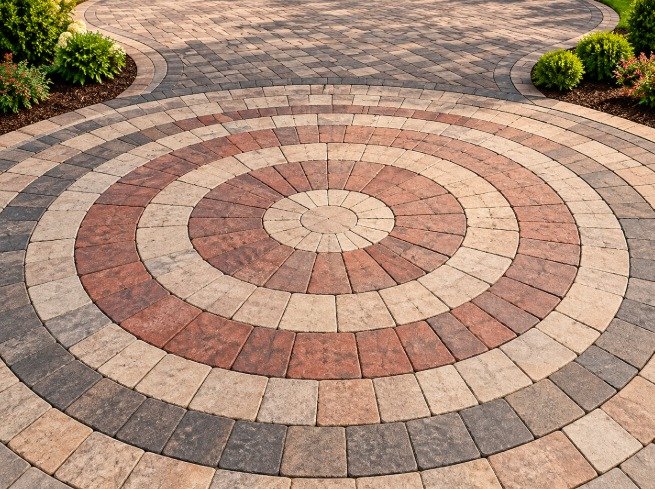
Circular Paver Styles

Circular paver kits can create patio centers, fire pit areas, fountain surrounds, and courtyard focal points, and can be combined with standard rectangular pavers.

Fan Pattern Pavers

Fan patterns create a curved European-style effect associated with cobblestone looks, courtyards, decorative driveways, and entry plazas, creating a strong focal point.

Paver Colors

A well-coordinated color palette can make different outdoor areas feel connected.

Single-Color Pavers

A single-color layout creates a clean and consistent appearance. It works well for modern properties, minimalist patios, and commercial spaces.

Different textures or borders can still add interest without introducing additional colors.

Multi-Color Pavers

Multiple colors can be blended or used strategically through mixed-color pavers, contrasting borders, accent bands, and decorative inlays.

The colors should complement each other and the surrounding architecture.

Light-Colored Pavers

Cream, beige, and light gray can make outdoor spaces feel brighter and are common for pool decks, patios, courtyards, and modern walkways.

Lighter materials may also absorb less heat than very dark surfaces, although actual surface temperature depends on the material and conditions.

Dark Pavers

Charcoal, deep gray, and dark brown create strong contrast. Dark colors are often used as borders, accent bands, and modern patio surfaces.

They can pair well with lighter buildings and landscaping.

Earth-Tone Pavers

Earth tones include brown, tan, beige, terracotta, and warm gray.

They work well in natural, traditional, rustic, and Mediterranean designs.

Gray Paver Styles

Gray pavers are among the most versatile choices, fitting contemporary homes, traditional homes, commercial properties, and pool areas.

Light and dark gray tones can also be combined for additional contrast.

White and Cream Pavers

White and cream pavers create a bright and clean appearance, commonly used in luxury patios, Mediterranean designs, pool decks, and courtyards.

They can be paired with darker borders for contrast.

Compare all paver materials

Paver Borders & Inlays

Borders can completely change the appearance of a paving project. They can frame the entire surface or separate different activity areas.

Soldier Course Borders

Rectangular pavers installed perpendicular to the edge create a strong, defined perimeter around driveways, patios, walkways, and pool decks.

Sailor Course Borders

Rectangular pavers placed lengthwise along the edge create a thinner, more subtle border.

Double Paver Borders

Two rows of accent pavers create a more substantial frame around a large driveway or patio.

Contrasting Paver Borders

Light surface with charcoal border, beige with brown, or gray with black highlights the edge of the paved area.

Paver Border Styles

Popular border options include:

  • Soldier course
  • Sailor course
  • Double border
  • Contrasting border
  • Stone border
  • Brick border

Borders can frame the entire surface or separate different activity areas.

Paver Inlays

Inlays can create custom focal points within the main surface.

Designs may include:

  • Diamonds
  • Circles
  • Geometric shapes
  • Accent bands
  • Medallions

Inlays are popular in driveways, patios, and courtyards.

Decorative paving services

Paver Styles for Every Area

Each part of your property has different needs, from vehicle loads on driveways to water and heat around pools.

Paver Styles for Driveways

Driveways need a style that works visually while also handling vehicle traffic. Popular choices include herringbone, brick-style pavers, interlocking concrete pavers, cobblestone styles, and contrasting borders.

The paver thickness and base structure are just as important as the pattern.

Driveway paving

Paver Styles for Patios

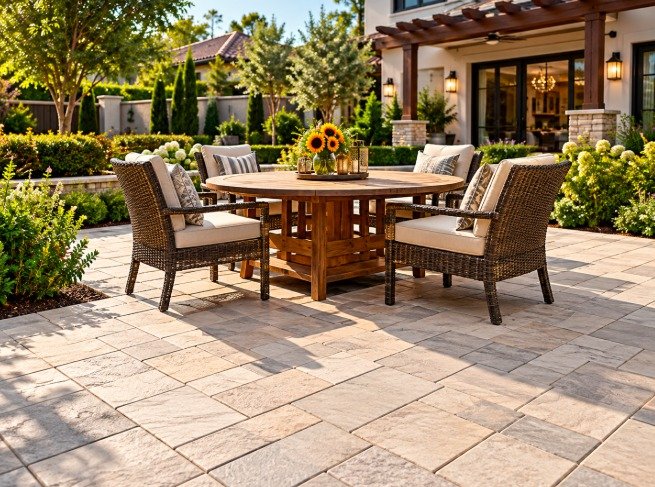
Patios allow more design flexibility. Popular styles include large-format pavers, modular patterns, natural stone looks, mixed colors, and decorative borders.

Patio pavers can also be coordinated with outdoor kitchens, fire pits, and furniture areas.

Patio pavers

Paver Styles for Walkways

Walkways can use running bond, brick-style pavers, natural stone, curved layouts, and contrasting borders.

The width and pattern should match the scale of the property.

Walkway pavers

Paver Styles for Pool Decks

Pool decks often use light colors, travertine, porcelain, textured concrete pavers, and large-format pavers.

Material selection should consider water exposure, heat, and surface texture.

Pool deck pavers

Paver Styles for Courtyards

Courtyards can support more detailed designs. Popular options include circular patterns, brick-style paving, natural stone looks, decorative borders, and center inlays.

Paver Styles for Entryways

Entryway paving can create a strong first impression. Popular styles include herringbone, geometric patterns, contrasting borders, decorative medallions, and natural stone.

Residential Paver Styles

Residential paver styles can be coordinated with exterior paint, roofing, landscaping, garage doors, and retaining walls.

A consistent palette can help tie the property together.

Residential paving

Commercial Paver Styles

Commercial properties often use pavers to create visually defined pedestrian spaces with large-format modern pavers, brick-style plazas, geometric layouts, and mixed-size patterns.

Durability and maintenance should be considered along with appearance.

How to Choose, Mix & Match Paver Styles

Size, color and texture work together, and a thoughtful plan keeps a design from feeling busy.

Choosing the Right Paver Size

Paver size can change how large or small an area feels. Large pavers can create a more open appearance, while smaller pavers can create more visual detail.

The size should also suit the shape of the area. Curved spaces may be easier to finish with smaller units, while large open patios can work well with oversized pavers.

Choosing the Right Paver Color

Color selection should consider:

  • Building exterior
  • Roof color
  • Landscaping
  • Existing concrete
  • Pool finishes
  • Nearby stone

A well-coordinated color palette can make different outdoor areas feel connected.

Choosing the Right Paver Texture

Texture affects appearance, traction, and maintenance.

Smooth finishes can create a modern look, while rougher surfaces may fit rustic or traditional designs.

Pool areas and frequently wet surfaces often benefit from additional texture.

Mixing Paver Styles

Different paver styles can be combined carefully to create a custom look.

Examples include:

  • Large pavers with brick borders
  • Gray pavers with charcoal bands
  • Stone-look patios with smooth walkways
  • Modular pavers with circular inlays

Using too many unrelated styles can make a project feel busy, so combinations should be planned carefully.

Matching New Pavers to Existing Pavers

When extending an existing paved area, the original paver may no longer be available.

Possible solutions include:

  • Finding the closest available match
  • Using a contrasting border
  • Creating a deliberate transition
  • Reusing existing pavers in visible areas

An intentional design transition often looks better than a near-match that is noticeably different.

Updating an Existing Paver Style

An older paver surface can sometimes be refreshed without complete replacement.

Updates may include:

  • New borders
  • Replacing damaged units
  • Adding accent colors
  • Re-sanding
  • Cleaning
  • Releveling

A new border can significantly change the appearance of an existing patio or walkway.

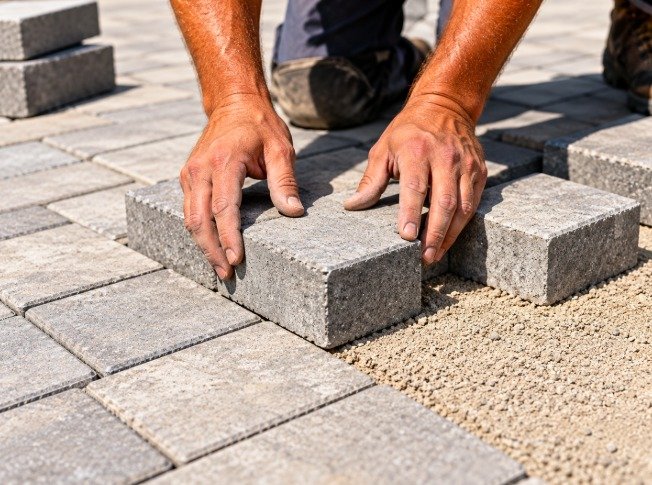
Paver Style and Base Preparation

Regardless of style, pavers need a stable foundation.

A typical project may include:

  1. Excavation
  2. Soil preparation
  3. Base installation
  4. Compaction
  5. Bedding layer
  6. Paver installation
  7. Edge restraint
  8. Joint filling

A premium paver installed on a poor base can still fail.

Paver Style and Drainage

Style should never interfere with drainage.

The finished layout still needs appropriate:

  • Slope
  • Joint design
  • Drain locations
  • Surface elevations

Decorative patterns should be installed over a properly graded base.

Paver Style and Edge Restraint

The border style and structural edge restraint are not always the same thing.

Decorative border pavers create the visible edge, while structural restraint helps prevent movement.

Both should be planned together.

Paver Style and Joint Material

Joint width varies depending on the paver design.

Some modern pavers use narrow joints, while permeable systems may use wider joints.

The appropriate joint material should match the specific paver system.

Paver Style Cost in Los Angeles

Estimated installed prices by style, including materials and labor. Your exact price depends on the area, pattern and base work, so every quote starts with a free on-site evaluation.

Brick, Cobblestone & Tumbled

$18 – $35 / sq ft

Backyard patio (300 sq ft): $5,400 – $10,500

Large-Format & Porcelain

$25 – $50 / sq ft

Backyard patio (300 sq ft): $7,500 – $15,000

Natural Stone & Travertine

$25 – $55 / sq ft

Backyard patio (300 sq ft): $7,500 – $16,500

What Affects the Cost of Your Paver Style

  • Paver material and finish
  • Paver size and shape
  • Pattern complexity and cutting
  • Number of colors used
  • Borders and accent bands
  • Inlays and medallions
  • Curves and edge details
  • Driveway vs. patio base depth
  • Removal of existing surfaces

Prices are estimates only, not a final quote. Herringbone, fan and circular patterns take more cutting and labor than simple running bond. Custom inlays and medallions are priced by design.

GET MY EXACT PRICE

Our Paver Style Selection Process

Eight steps to a style that fits your property, before a single paver is installed.

  1. 1

    Evaluate the Property

    We review the architecture, landscaping, existing surfaces, and project area.

  2. 2

    Determine the Intended Use

    Driveways, patios, pool decks, and walkways have different requirements.

  3. 3

    Choose the Material

    Concrete, brick-style, natural stone, porcelain, or another suitable paver type is selected.

  4. 4

    Select the Size and Shape

    The paver dimensions are chosen according to the area and desired appearance.

  5. 5

    Select the Color

    Colors are coordinated with the surrounding property.

  6. 6

    Choose the Pattern

    The installation layout is selected.

  7. 7

    Add Borders and Accents

    Borders, inlays, or contrasting details can be included.

  8. 8

    Finalize the Complete Design

    The style, drainage, base requirements, and transitions are reviewed before installation.

Create a Paver Style That Fits Your Property

There is no single paver style that works for every property.

A modern home with clean architectural lines may benefit from large gray pavers and simple borders, while a traditional property may look better with brick-style paving and a herringbone layout.

The right combination of material, size, texture, color, and pattern can make a driveway, patio, walkway, or pool deck feel like a natural extension of the property rather than a separate surface.

We help you choose:

  • Design style
  • Material and finish
  • Paver size and shape
  • Color palette
  • Texture
  • Installation pattern
  • Borders and inlays
  • Transitions between areas

Paver Styles FAQs

In Los Angeles, large-format and modular pavers in light gray, beige and warm blended tones are very popular, especially for patios and pool decks at modern and contemporary homes. For driveways, herringbone layouts with a contrasting charcoal border remain a favorite because they look great and interlock well. Traditional and Mediterranean homes often choose tumbled or travertine-style pavers. We help you pick a style that suits your home rather than a passing trend.

Herringbone, laid at 45 or 90 degrees, is generally considered the strongest pattern for driveways because the angled pavers lock together and resist shifting under turning tires. Running bond can also work well when laid across the direction of traffic. Regardless of pattern, a driveway needs pavers of the right thickness and a deeper compacted base than a patio, along with solid edge restraints to keep everything in place.

Yes. We bring samples to your free on-site evaluation so you can see colors and textures in your own light next to your home, roof and landscaping. Colors often look different outdoors than they do in photos or catalogs. We can also show photos of completed projects and suggest pattern and border combinations, so you can feel confident about the style before any work begins on your property.

Usually, yes. Large-format and porcelain pavers typically cost more per square foot for both materials and installation, because larger units need an especially flat, precise base and careful handling. They also require clean, accurate cuts at edges. However, they can create a high-end modern look with fewer joints. We explain the price difference between styles during your estimate so you can compare options side by side.

Yes, when it is planned carefully. A common approach is to use one main paver throughout and change the pattern, size or border color to define different areas, such as a herringbone driveway and a modular patio in the same color family. Using too many unrelated styles can make a property look busy. We help you create a coordinated plan so each area has its own character while the whole property still feels connected.

REQUEST A PAVER STYLE & INSTALLATION ESTIMATE

Not sure which style best fits your property? We review the project area, intended use, architecture, landscaping, colors, patterns, paver sizes, borders and materials before developing a design.

Herringbone paver driveway with a double border

WHY CHOOSE

DREAM PAVING LOS ANGELES?

  • Over 13 Years of Experience
  • Licensed, Bonded and Insured
  • Samples Brought to Your Home
  • Every Style, Color & Pattern
  • Proper Base Preparation
  • Free, Honest Estimates
  • On-Time Project Completion
  • Clean, Respectful Crews
  • Beautiful & Long-Lasting Results