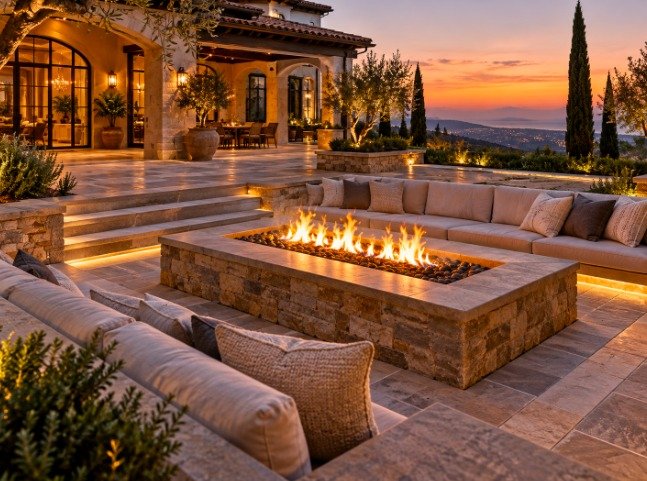
Linear stone gas fire pit on a paver patio with lounge seating overlooking a lake at sunset

Fire PitsServices Los Angeles

Custom gas, propane and wood-burning fire pits with paver surrounds, built-in seating walls, fire tables and fire bowls.

A Warm Place to Gather All Year

A professionally designed fire pit can turn a backyard, patio, pool area, courtyard, or outdoor living space into a comfortable gathering area that can be enjoyed during cool evenings and throughout much of the year. Fire pits can be simple and compact or built as large custom features with surrounding pavers, permanent seating, lighting, decorative stone, and connections to nearby outdoor kitchens or patios.

Our fire pit services can include new installation, custom design, gas fire pits, propane fire pits, wood-burning fire pits, built-in seating, paver surrounds, natural stone finishes, concrete fire pits, fire bowls, fire tables, sunken fire pit areas, patio integration, repair, renovation, and complete outdoor entertainment spaces.

A successful fire pit project should combine appearance, comfort, safety, proper clearances, ventilation, fuel access, drainage, and the surrounding paving. The location and layout should also fit the way the property is used so the fire feature feels like a natural part of the backyard rather than an isolated addition.

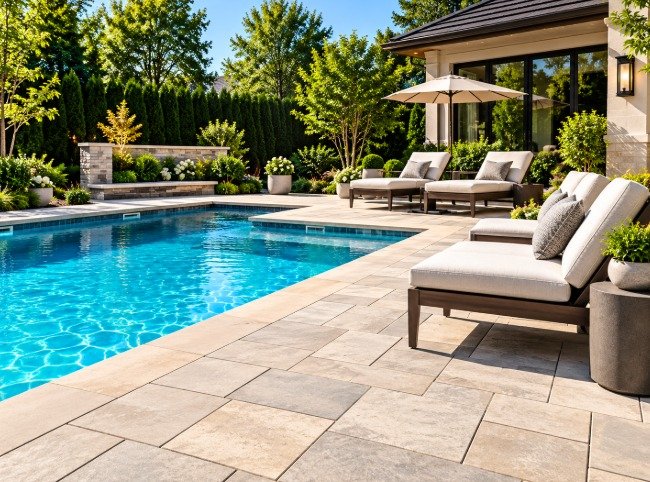
Round stone fire pit on a circular paver patio

Our Fire Pit Services

Custom design, new installation, repair, renovation, replacement and maintenance for fire features across Los Angeles.

Custom Fire Pit Design

Every property has different space, access, landscape, and entertainment needs.

A custom fire pit can be designed around:

  • Patio size
  • Pool location
  • Existing pavers
  • Seating needs
  • Outdoor kitchen layout
  • Landscaping
  • Wind exposure
  • Fuel source
  • Walkways
  • Property boundaries

Some homeowners prefer a compact circular fire pit with loose chairs, while others want a large sunken entertainment area with permanent masonry seating.

The design should leave enough room for comfortable movement around the fire feature and surrounding furniture.

New Fire Pit Installation

New fire pit installation can be completed as a standalone project or included in a larger patio or backyard renovation.

A typical project may involve:

  • Site evaluation
  • Layout planning
  • Excavation
  • Base preparation
  • Paver or concrete work
  • Fire pit construction
  • Fuel connections
  • Seating installation
  • Drainage
  • Final finishing

The installation surface should be stable and suitable for the weight and heat of the fire feature.

Fire Pit Repair

Existing fire pits may need repair because of:

  • Cracked masonry
  • Loose veneer
  • Damaged caps
  • Burner issues
  • Settlement
  • Drainage problems
  • Damaged pavers

The cause of the problem should be identified before repairs are completed.

Fire Pit Renovation

An older fire pit can sometimes be upgraded without complete replacement.

Renovation may include:

  • New stone veneer
  • New cap material
  • Updated burner
  • New fire glass
  • Seating improvements
  • New surrounding pavers
  • Lighting upgrades

Fire Pit Replacement

Complete replacement may be appropriate when the existing structure is badly damaged or no longer fits the backyard layout.

A new design can change:

  • Shape
  • Fuel type
  • Size
  • Seating
  • Materials
  • Location

Fire Pit Maintenance

Maintenance may include:

  • Removing debris
  • Cleaning fire media
  • Checking burners
  • Inspecting gas components
  • Cleaning surrounding pavers
  • Inspecting masonry
  • Checking drainage

Wood-burning pits should also be cleared of excessive ash.

Gas, Propane & Wood-Burning Fire Pits

The fuel source shapes how your fire pit is built, how it is used and how much upkeep it needs.

Gas Fire Pits

Gas fire pits provide a convenient flame without the storage and cleanup associated with firewood. Gas systems may use natural gas or propane.

Benefits can include:

  • Quick ignition
  • Easy flame control
  • Less ash
  • Consistent appearance
  • Convenient operation

They may include decorative media such as fire glass, lava rock, ceramic stones, or other approved fire media. The burner, ventilation, and enclosure should be installed according to the system manufacturer's requirements.

Natural Gas Fire Pits

Natural gas is often selected when the property already has an available gas service. A permanent line can supply the fire pit without requiring portable fuel tanks.

Natural gas fire pits can be incorporated into:

  • Paver patios
  • Courtyards
  • Pool decks
  • Outdoor kitchens
  • Seating areas

Gas-line sizing and installation should be appropriate for the selected burner system.

Propane Fire Pits

Propane can provide more flexibility where natural gas is not available.

A propane system may use:

  • Hidden tank storage
  • Remote tank locations
  • Permanent propane supply

The enclosure must provide proper ventilation and safe tank access. The design should never create a sealed area where leaking gas can collect.

Wood-Burning Fire Pits

Wood-burning fire pits offer the traditional experience of a real wood fire, built with stone surrounds, concrete block, brick, metal fire rings, and paver seating areas.

They require additional consideration for:

  • Smoke
  • Sparks
  • Ash
  • Firewood storage
  • Wind direction
  • Nearby structures

Local rules may affect where and how wood-burning fire features can be used.

Fire Pit Ignition Systems

Gas fire pits can use:

  • Manual ignition
  • Push-button ignition
  • Electronic ignition

The appropriate system depends on the burner and installation.

Fire Pit Burners

Common burner configurations include:

  • Round burners
  • Square burners
  • Rectangular burners
  • Linear burners

The burner size should fit the enclosure and desired flame appearance.

Fire Glass

Commonly used in gas fire pits, in clear, black, blue, amber, and mixed colors. Only media specifically rated for fire features should be used.

Lava Rock

Creates a more natural appearance and may be used alone or beneath other approved decorative media depending on the burner system.

Fire Pit Covers

Help protect the burner area from rain, leaves, dirt, and debris. Custom covers can fit the fire feature when it is not in use.

Firewood Storage

Built-in niches, freestanding racks, or covered storage for wood-burning pits, kept away from active flames and combustible structures.

Fire Pit Shapes & Designs

Round, square, rectangular or linear, built into the patio or sunken into a conversation area.

Round stone fire pit centered in a circular paver patio with a charcoal border band

Circular Fire Pits

Circular fire pits create a classic gathering layout. They work well with loose chairs, curved seating walls, circular patios, and garden spaces.

A circular paver pattern can be used around the feature to emphasize its shape.

Built-In Fire Pits

Built-in fire pits create a permanent feature within the patio or landscape. They may be circular, square, rectangular, or linear, and finished with natural stone, concrete, brick, stucco, tile, or paver materials.

The finish can be coordinated with the home exterior, outdoor kitchen, retaining walls, or patio.

Rectangular stone fire pit with fire glass surrounded by built-in sectional seating on a travertine patio

Rectangular Fire Pits

Rectangular fire pits are popular for modern outdoor spaces. They can be installed in front of outdoor sofas, along poolside seating, near outdoor bars, or in large patios.

Long linear flames can create a strong visual focal point.

Linear Fire Pits

Linear fire pits use long burners and are commonly associated with contemporary landscaping. They may be integrated into low walls, patio edges, pool seating areas, and modern outdoor lounges.

Linear fire features work especially well with large-format pavers and simple architectural lines.

Square Fire Pits

Square fire pits create a more structured appearance.

They work well with:

  • Modern patios
  • Geometric paver layouts
  • Sectional seating
  • Straight retaining walls

A square fire pit can also be used as the center of a symmetrical courtyard design.

Fire Tables

Fire tables combine a gas flame with a usable tabletop surface, in square, rectangular, or round designs.

They can be used in:

  • Lounge areas
  • Patios
  • Pool decks
  • Covered outdoor spaces where approved

A fire table can provide both a focal point and a place for drinks or small items.

Fire Bowls

Fire bowls create a decorative flame feature with a more sculptural appearance.

They can be installed:

  • Near pools
  • Along patio edges
  • At entry areas
  • Around luxury outdoor spaces

Some projects use matching fire bowls on opposite sides of a pool or patio for symmetry.

Fire and Water Features

Fire can be combined with water in custom designs:

  • Fire bowls beside pools
  • Fire-and-water bowls
  • Raised water features with flames

These projects require careful planning around fuel, plumbing, drainage, and heat.

Water features

Sunken Fire Pit Areas

A sunken fire pit creates a defined conversation zone below the surrounding patio level.

It may include:

  • Built-in bench seating
  • Steps
  • Paver flooring
  • Retaining walls
  • Drainage
  • Lighting

Sunken areas require especially careful drainage planning because water can collect at the lowest point.

Small and Large Fire Pit Areas

Small fire pits work well in compact patios and courtyards, using compact gas bowls, small round pits, or fire tables while preserving seating and walking space.

Large properties can support complete fire pit entertainment zones with an oversized fire pit, built-in seating, paver patio, landscape walls, lighting, outdoor kitchen connection, and walkways.

The scale of the feature should match the surrounding space.

Fire Pit Seating & Paver Areas

Built-in seating and a well-built paver surround turn a fire pit into a complete outdoor room.

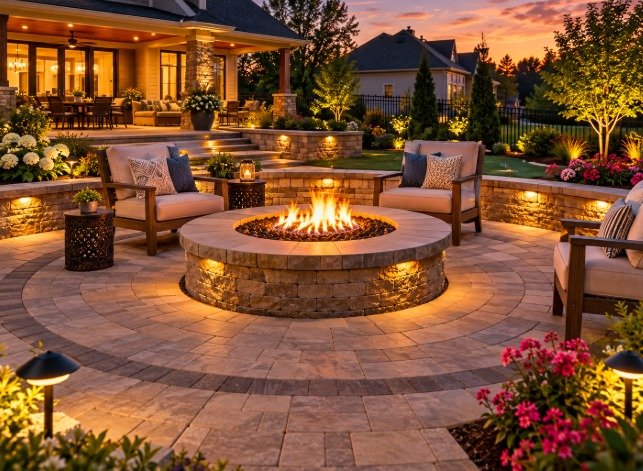
Round fire pit surrounded by a curved lit stone seating wall and paver patio at dusk

Fire Pit Seating Walls

Built-in seating walls can create permanent seating around a fire pit, finished with stone veneer, concrete, brick, stucco, or pavers.

Seating walls can be curved or straight depending on the fire pit shape, and can help define the entertainment area from the rest of the yard.

Fire Pit Benches

Bench design should consider:

  • Seat height
  • Back support
  • Distance from the flame
  • Walking clearance

Loose cushions can be added for comfort.

Walls & pillars

Paver Fire Pit Areas

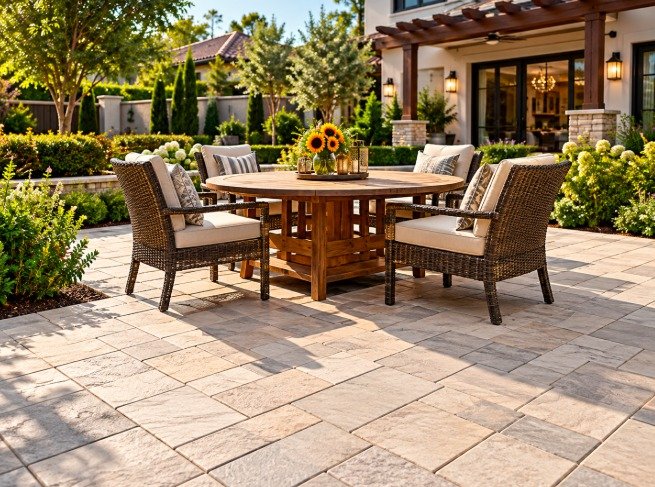
Pavers are commonly used around fire pits because they create a durable and decorative surrounding surface, using concrete, brick, natural stone, or porcelain pavers.

The paving can be installed in:

  • Circular patterns
  • Herringbone
  • Modular layouts
  • Large-format grids

Materials near the actual flame should be selected according to heat exposure and manufacturer guidance.

Fire Pit Patio Installation

A complete fire pit patio can create a separate outdoor destination.

The patio may include:

  • Fire pit
  • Seating
  • Lighting
  • Walkways
  • Landscaping
  • Side tables

It can be connected to the main house patio with a paved walkway.

Patio paver services

Fire Pits on Existing Patios

A fire pit can sometimes be added to an existing patio.

The surface should be evaluated for:

  • Strength
  • Slope
  • Drainage
  • Heat suitability
  • Available clearances

The existing paving may also need modifications for gas lines or structural support.

Fire Pits on Concrete Patios

Concrete can provide a stable base when properly designed for the fire feature. A new concrete patio can be built around the fire pit, or an existing slab may be evaluated before installation.

Decorative concrete options may include stamped concrete, colored concrete, and exposed finishes.

Fire Pits on Paver Patios

Paver patios offer flexibility for integrating a fire feature. Pavers can often be removed temporarily to install gas lines, drainage, and foundations.

They can then be reinstalled around the completed feature.

Fire Pit Paver Borders

Contrasting borders can define the fire pit area:

  • Dark accent pavers
  • Brick borders
  • Natural stone bands
  • Double borders

A border can help visually separate the fire feature from adjacent dining or lounge spaces.

Fire Pit Materials & Styles

The materials closest to heat should be appropriate for the intended fire system. Decorative veneer should not be substituted for required heat-resistant internal components.

Natural Stone Fire Pits

Natural stone can create a substantial and timeless appearance, with ledgestone, fieldstone, flagstone, or cut stone finishes.

Natural stone fire pits work well in rustic, traditional, and luxury landscapes.

Brick Fire Pits

Brick can create a classic or traditional appearance that pairs well with brick patios, traditional homes, garden courtyards, and outdoor fireplaces.

The internal fire area should use materials appropriate for heat exposure.

Concrete Fire Pits

Concrete fire pits can be designed in modern or traditional styles using cast concrete, poured concrete, concrete block with finish, or precast units.

Concrete can be shaped into square, round, or linear designs.

Stucco Fire Pits

Stucco can create a smooth, clean exterior finish that works well with Mediterranean homes, Southwestern designs, and modern patios.

The stucco exterior can be color-matched to the home or outdoor kitchen.

Tile Fire Pits

Exterior-rated tile can be used as a decorative finish on some fire pit designs, adding color, pattern, and texture.

Materials should be selected for exterior exposure and appropriate distance from heat.

Manufactured Stone Fire Pits

The exterior of a fire pit may also be finished with manufactured stone, offering a stone look with consistent sizing and color.

As with all finishes, the internal fire area must use heat-resistant components.

Modern Fire Pits

Modern fire pits often feature straight lines, rectangular shapes, smooth concrete, porcelain, dark or neutral tones, and fire glass.

They pair well with contemporary homes and large-format pavers.

Traditional Fire Pits

Traditional fire pits may use brick, stone, circular shapes, earth-tone materials, and curved seating.

These designs can blend naturally into established landscapes.

Rustic Fire Pits

Rustic fire pits often incorporate rough stone, irregular shapes, gravel or stone surroundings, and natural landscaping.

They can create a more informal backyard setting.

Mediterranean Fire Pits

Mediterranean-style fire pits may feature stucco, travertine, stone, warm colors, and curved seating walls.

They work especially well in courtyards and pool areas.

Fire Pits Around Your Backyard

Pools, outdoor kitchens, pergolas, lighting and landscaping all shape where a fire pit works best.

Poolside Fire Pits

A fire pit near the pool can help create a resort-style entertainment area.

The layout should consider:

  • Wet traffic
  • Pool circulation
  • Wind
  • Seating
  • Distance from the water

The fire area should not block the primary walking path around the pool.

Pool deck pavers

Fire Pits Near Outdoor Kitchens

A fire pit can be positioned near an outdoor kitchen while still creating a separate relaxation zone.

The design should prevent:

  • Cooking traffic crossing the seating area
  • Smoke moving toward the kitchen
  • Crowding between furniture and appliances

Different paver patterns can visually separate the two spaces.

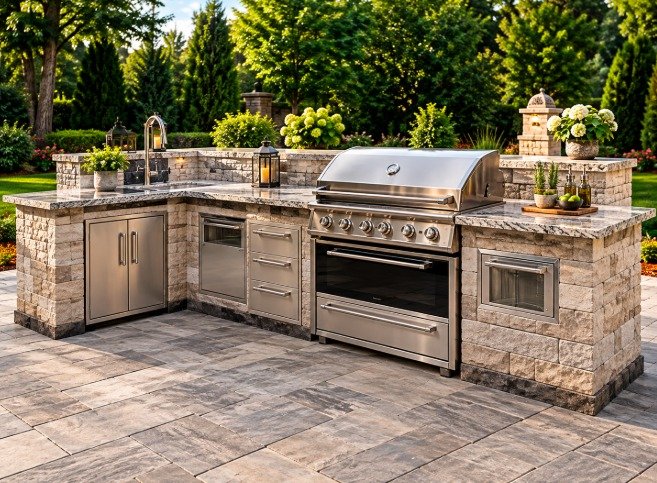
Outdoor kitchens

Fire Pits With Pergolas

A pergola can define the surrounding seating area, but the fire feature must have suitable clearance from overhead construction.

The location should be planned around:

  • Pergola height
  • Material
  • Fuel type
  • Flame size
  • Manufacturer guidance

Fire Pits With Pavilions

Fire features beneath or close to roofed structures require especially careful review.

The appliance should only be installed in a location permitted by its manufacturer and applicable regulations.

Ventilation and clearances are essential.

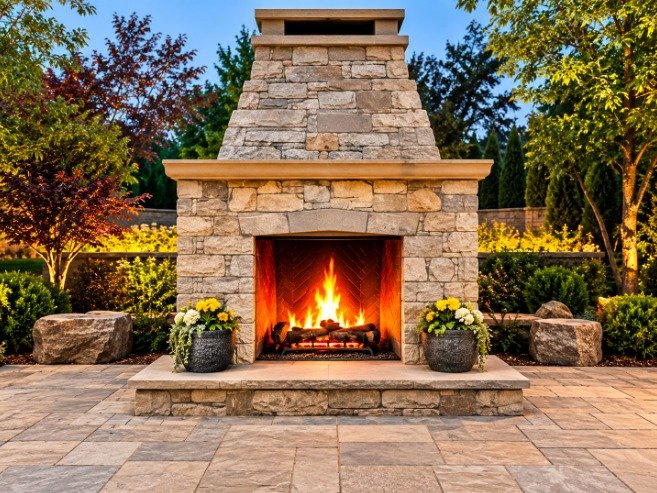
Outdoor fireplace services

Fire Pit Lighting

Lighting options may include:

  • Step lights
  • Seat-wall lighting
  • Landscape lighting
  • Path lighting
  • Low-voltage accent lights

Lighting should provide visibility without overpowering the fire itself.

Fire Pit Walkways

A paved walkway can connect the fire area with the house, patio, pool, outdoor kitchen, or garden.

Walkways make a separate fire pit area easier to access and can help keep foot traffic off lawns or planted areas.

Walkway pavers

Fire Pit Landscaping

Landscape design can include:

  • Planting beds
  • Decorative gravel
  • Trees
  • Low walls
  • Landscape lighting

Plants should be positioned with appropriate clearance from the flame and heat.

Residential Fire Pits

Residential fire pits can be customized around the home's architecture and backyard layout.

Projects may include:

  • New fire pit installation
  • Paver surround
  • Seating walls
  • Gas conversion
  • Patio expansion
  • Fire pit renovation

Commercial Fire Pits

Fire features may also be used at hotels, resorts, apartment communities, restaurants, rooftop lounges, and common areas.

Commercial installations should consider higher use, public circulation, access control, and maintenance.

Fire Pit Safety Planning

A fire pit should be planned around safe use.

Important considerations include:

  • Distance from structures
  • Overhead clearance
  • Fuel type
  • Wind exposure
  • Seating distance
  • Combustible materials
  • Local fire regulations

Manufacturer instructions and applicable local requirements should always be followed.

Fire Pit Location Planning

The location can strongly affect how comfortable the area feels.

A good location should consider:

  • View from the house
  • Distance from doors
  • Prevailing wind
  • Pool access
  • Neighboring properties
  • Outdoor kitchen traffic
  • Landscaping

The goal is to create a convenient gathering area without disrupting other outdoor functions.

Fire Pit Seating Distance

Seating should be positioned far enough from the flame to remain comfortable while still allowing guests to enjoy the fire.

The correct distance depends on fire pit size, fuel type, flame height, and seating type. Permanent seating should be planned before construction begins.

Gas Fire Pit Ventilation

Gas fire pit enclosures may require ventilation openings. Vent locations depend on fuel type, burner design, and enclosure configuration.

Proper ventilation can help prevent gas accumulation. The burner manufacturer's instructions should guide the design.

Fire Pit Drainage

Water should not collect:

  • Inside the fire pit enclosure
  • Beneath seating
  • In sunken areas
  • Around gas components

Drainage options may include:

  • Surface grading
  • Drains
  • Gravel drainage layers
  • Patio drains

Sunken fire pits require especially careful planning.

Fire Pit Cost in Los Angeles

Estimated installed prices. Your exact price depends on size, fuel type, finishes and surrounding paving, so every quote starts with a free on-site evaluation.

Built-In Wood-Burning Fire Pit

$2,500 – $5,000

Round or square stone or block fire pit with a steel fire ring and cap.

Fire Pit Patio With Seating

$12,000 – $30,000+

Fire pit plus paver patio, built-in seating walls, lighting and walkway.

What Affects the Cost of a Fire Pit

  • Size and shape
  • Gas, propane or wood-burning
  • Gas line length and trenching
  • Burner and ignition system
  • Stone, brick, stucco or concrete finish
  • Cap material
  • Seating walls and benches
  • Surrounding paver patio
  • Lighting and drainage

Prices are estimates only, not a final quote. Gas line work may require a licensed contractor and a city permit. Repairs and renovations are priced after an inspection.

GET MY EXACT PRICE

Our Fire Pit Installation Process

Ten steps from the first site visit to the final inspection.

  1. 1

    Site Evaluation

    We review the patio, yard layout, clearances, paving, drainage, and available fuel sources.

  2. 2

    Design Planning

    The size, shape, location, material, fuel type, and seating arrangement are selected.

  3. 3

    Site Preparation

    Excavation, base preparation, or patio modifications are completed as necessary.

  4. 4

    Utility Installation

    Gas or electrical components are prepared when required.

  5. 5

    Fire Pit Construction

    The enclosure, burner support, and structural elements are built.

  6. 6

    Exterior Finish

    Stone, brick, stucco, concrete, or another finish is installed.

  7. 7

    Paving and Seating

    Paver surrounds, seating walls, steps, or walkways are completed.

  8. 8

    Burner and Fire Media Installation

    The approved burner system and decorative media are installed.

  9. 9

    Drainage and Ventilation Check

    Drainage and ventilation features are reviewed.

  10. 10

    Final Inspection

    The complete fire pit area is checked for clearances, layout, stability, access, and finished appearance.

Why Professional Fire Pit Installation Matters

A fire pit combines high heat with outdoor construction, fuel systems, paving, and seating.

Professional installation considers both the appearance of the feature and the requirements needed for safe, comfortable use.

Create a Complete Fire Pit Entertainment Area

A fire pit can be designed as part of a larger outdoor living project, connecting with paver patios, outdoor kitchens, pool decks, walkways, pergolas, seating walls, landscaping, and outdoor lighting.

Planning these features together can create a more cohesive and practical backyard layout.

Problems can occur when:

  • Clearances are inadequate
  • Gas enclosures are poorly ventilated
  • Materials are not suitable for heat
  • Drainage is ignored
  • Seating is positioned too close
  • The surrounding patio settles

Fire Pit FAQs

Gas fire pits light instantly, have adjustable flames and produce no smoke, sparks or ash, which makes them the most popular choice for Los Angeles patios and pool areas. Wood-burning pits offer the crackle and smell of a real fire but need firewood storage, ash cleanup and more space from structures. Southern California air quality rules can also restrict wood burning on certain days, so gas is often the more practical option.

The right distance depends on the fire pit type, flame size, local rules and the burner manufacturer's instructions. Wood-burning pits generally need more clearance from the house, fences, trees and overhanging structures than gas fire pits because of sparks and smoke. We review your property, wind direction and nearby structures during the estimate and position the fire pit so it meets the applicable requirements and stays comfortable to use.

In many cases, yes. We check your existing pavers or concrete for strength, slope, drainage and heat suitability, and confirm there is enough clearance for seating and walkways. For a gas fire pit, pavers can often be lifted to run the gas line and then reinstalled around the new feature. If your patio is too small or uneven, we can extend or rebuild the area so the fire pit fits properly.

A standalone built-in fire pit usually takes about two to four working days, depending on size and finish. Gas fire pits can take a little longer because the gas line must be installed and, where required, inspected. Larger projects with a new paver patio, seating walls, lighting and walkways typically take one to three weeks. We give you a clear timeline with your written estimate before any work begins.

A permanent gas line to a fire pit usually requires a permit in Los Angeles County cities, and some cities also have rules about fire pit size, placement and wood burning. A simple wood-burning pit may have fewer requirements, but local fire codes still apply. Rules vary by city and neighborhood, so we check what your project needs during the estimate and help you with the permit process when one is required.

REQUEST A FIRE PIT ESTIMATE

Planning a new fire pit or improving an existing gathering area? We evaluate the space, paving, fuel options, drainage, seating, materials, clearances, surrounding structures and backyard layout before developing a project plan.

Fire pit with curved seating wall

WHY CHOOSE

DREAM PAVING LOS ANGELES?

  • Over 13 Years of Experience
  • Licensed, Bonded and Insured
  • Gas, Propane & Wood-Burning
  • Fire Pit & Patio Built Together
  • Safety Clearances Planned In
  • Free, Honest Estimates
  • On-Time Project Completion
  • Clean, Respectful Crews
  • Beautiful & Long-Lasting Results