Stone BBQ island with a built-in grill, bar seating and pool at dusk

BBQ IslandsServices Los Angeles

Custom built-in BBQ islands and outdoor kitchens with grills, countertops, storage, sinks, refrigerators and bar seating.

Your Backyard, Built for Cooking and Entertaining

A custom BBQ island can turn a basic backyard into a complete outdoor cooking and entertainment area. Instead of using a standalone grill with limited storage and workspace, a built-in BBQ island creates a permanent outdoor station designed around the way you cook, serve, and entertain.

Our BBQ island services can include new construction, custom layouts, grill installation, outdoor countertops, storage cabinets, sink areas, refrigerator spaces, bar seating, side burners, pizza ovens, lighting, electrical features, gas-line coordination, and integrated paver or patio surrounds.

BBQ islands can be designed for small patios, large backyards, pool areas, covered outdoor living spaces, courtyards, and complete outdoor kitchens. The design can be simple and compact or built as a large multi-zone cooking station with food preparation areas, seating, appliances, and storage.

A well-designed BBQ island should combine appearance, durability, comfortable working space, practical appliance placement, ventilation, weather resistance, and safe access to utilities.

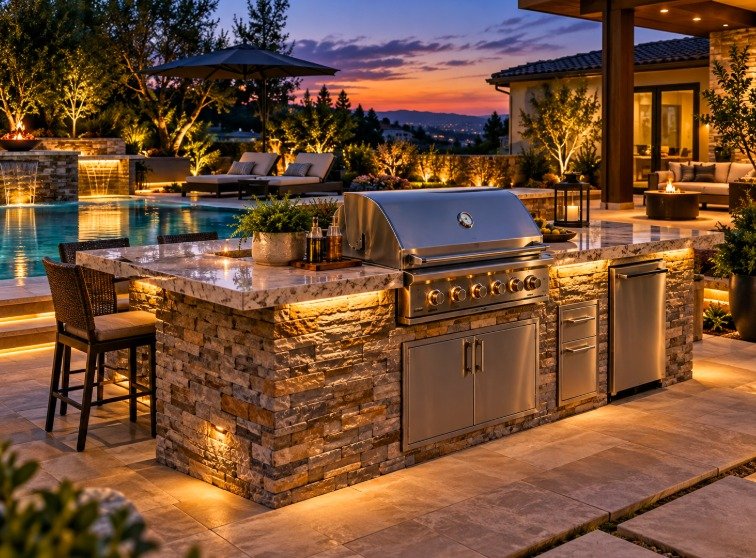
Large lit outdoor kitchen island with granite bar top, stools and fire pit lounge at sunset

Our BBQ Island Services

Custom design, new construction, repair, renovation and replacement for outdoor cooking areas across Los Angeles.

Custom BBQ Island Design

Every outdoor cooking area has different requirements.

A custom BBQ island can be designed around:

  • Available patio space
  • Grill size
  • Cooking habits
  • Number of appliances
  • Seating needs
  • Storage requirements
  • Utility locations
  • Pool layout
  • Outdoor furniture
  • Existing pavers or concrete

Some homeowners want a simple straight island with a grill and countertop, while others prefer an L-shaped or U-shaped outdoor kitchen with multiple appliances and bar seating.

The layout should make it easy to move between cooking, preparation, serving, and seating areas.
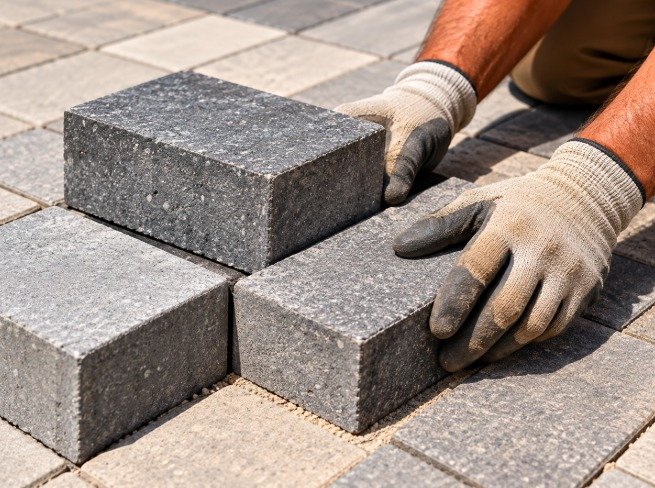
New BBQ Island Installation

New BBQ island installation can be included in a new patio project or added to an existing outdoor living area.

A typical project may include:

  • Site preparation
  • Island framing
  • Exterior finish installation
  • Countertop installation
  • Grill placement
  • Appliance openings
  • Utility access
  • Electrical preparation
  • Storage
  • Final detailing

The island should be built on a suitable surface that can support its weight.

If the existing patio is uneven, weak, or poorly positioned, additional paving or foundation work may be required before construction begins.

BBQ Island Repair

Existing BBQ islands may need repair because of:

  • Cracked finishes
  • Damaged countertops
  • Loose veneer
  • Broken cabinet doors
  • Appliance replacement
  • Water damage

Repairs should address both appearance and the underlying cause.

BBQ Island Renovation

An older BBQ island can often be updated without complete demolition.

Renovation may include:

  • New countertops
  • New grill
  • New doors and drawers
  • Stone veneer
  • Stucco refinishing
  • New refrigerator
  • Lighting upgrades
  • Additional storage

The existing structure should be inspected before new finishes are installed.

BBQ Island Replacement

Replacement may be appropriate if the island is structurally damaged, poorly designed, or incompatible with newer appliances.

A replacement project creates the opportunity to redesign:

  • Appliance placement
  • Counter space
  • Seating
  • Storage
  • Utilities
  • Overall appearance

BBQ Island Cleaning and Maintenance

Routine maintenance tasks may include:

  • Cleaning countertops
  • Cleaning grill components
  • Wiping stainless steel
  • Checking cabinet hardware
  • Cleaning exterior finishes
  • Inspecting joints and sealants

Manufacturer recommendations should be followed for each appliance and material.

BBQ Island Layouts

From a compact straight island to a full U-shaped outdoor kitchen, the layout is planned around your space and how you cook.

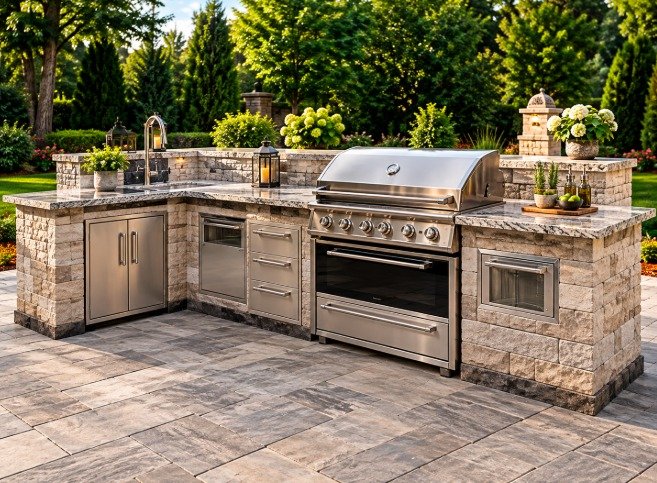
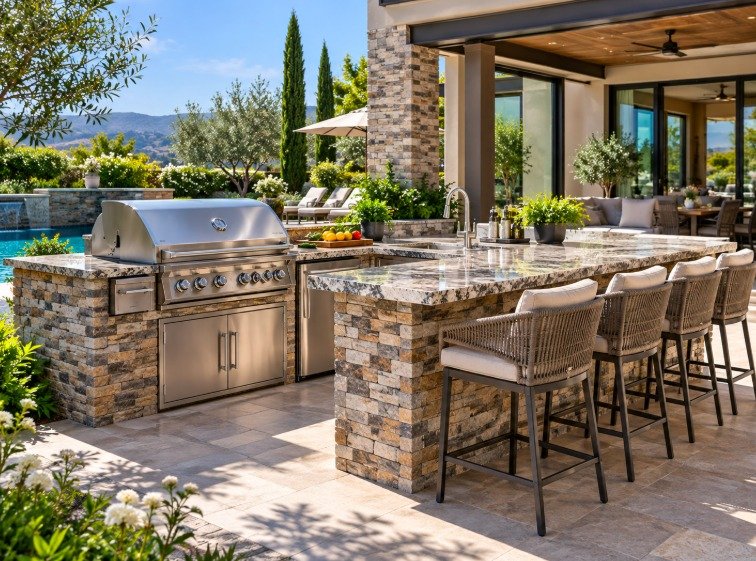
L-shaped stone BBQ island with grill, sink and granite bar seating near a pool

L-Shaped BBQ Islands

L-shaped islands create separate cooking and serving areas. One side can contain the grill and appliances, while the second side may provide bar seating, food preparation, serving space, and storage.

This design is popular for medium and large patios because it creates a more defined outdoor kitchen without requiring a fully enclosed layout.

BBQ Islands With Bar Seating

Adding seating can turn a cooking station into a social space. Bar seating may be incorporated using raised counters, extended countertops, peninsula sections, or L-shaped layouts.

The seating area should be positioned so guests have enough legroom and do not interfere with the primary cooking zone.

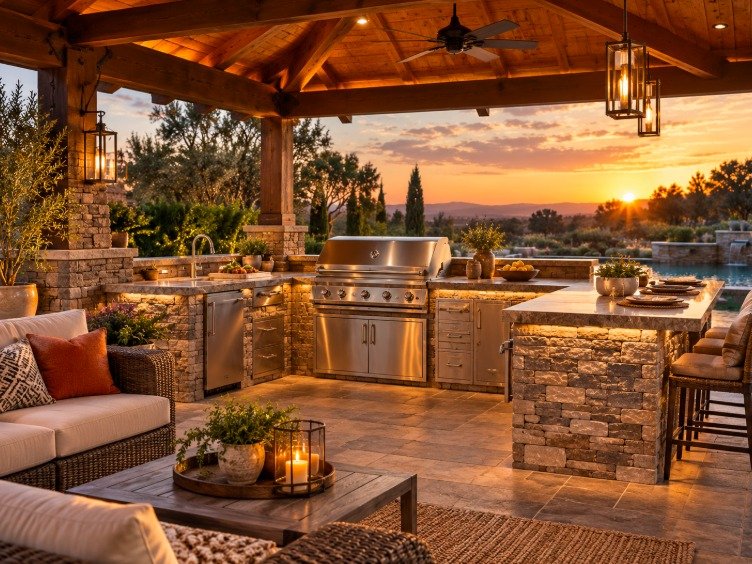
U-shaped outdoor kitchen under a wood patio cover with grill, sink and bar seating at sunset

Covered Patio BBQ Islands

Outdoor kitchens can be installed under patio covers, pergolas, and other structures.

Covered installations require careful planning for:

  • Ventilation
  • Heat clearance
  • Hood systems
  • Roof materials
  • Lighting

A grill should never be placed beneath a structure unless the installation meets the appliance manufacturer's requirements.

Outdoor Vent Hoods

A vent hood may be needed when a grill is installed beneath a covered structure. Outdoor hoods are designed to capture heat, smoke, grease, and cooking fumes.

Hood size and installation height should be matched to the grill and structure.

Straight BBQ Islands

Straight BBQ islands work well in compact outdoor spaces.

A linear layout can include:

  • Built-in grill
  • Countertop
  • Storage
  • Mini refrigerator
  • Side burner

Straight islands can be positioned against an outdoor wall, along the edge of a patio, near a pool, under a patio cover, or between dining and lounge areas.

U-Shaped BBQ Islands

U-shaped BBQ islands can provide a large amount of counter space and storage.

They can accommodate:

  • Multiple appliances
  • Large grills
  • Sinks
  • Refrigerators
  • Storage drawers
  • Serving counters
  • Bar seating

U-shaped designs work best where there is enough room for comfortable movement around the island.

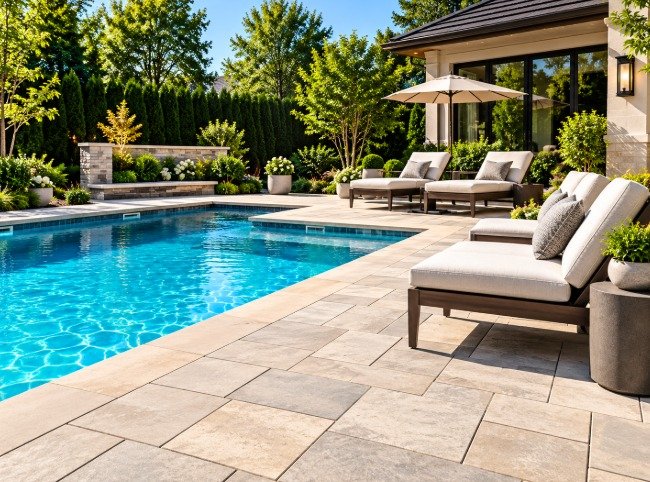
Poolside BBQ Islands

A BBQ island near the pool can create a resort-style backyard.

Poolside kitchens may include:

  • Built-in grill
  • Refrigerator
  • Sink
  • Bar seating
  • Beverage center

The layout should keep cooking equipment far enough from pool traffic to avoid crowding the area.

Pool deck pavers

Small BBQ Islands

Small patios can still support functional built-in cooking areas.

A compact BBQ island may include:

  • Grill
  • Small prep counter
  • Access door
  • Compact refrigerator

Straight-line designs are often the most efficient for limited spaces.

Large BBQ Islands

Large outdoor spaces can accommodate full outdoor kitchens.

A larger island may include:

  • Oversized grill
  • Griddle
  • Side burners
  • Refrigerator
  • Ice maker
  • Sink
  • Pizza oven
  • Storage
  • Bar seating

The layout should prevent the cooking zone from becoming too spread out.

Outdoor kitchen services

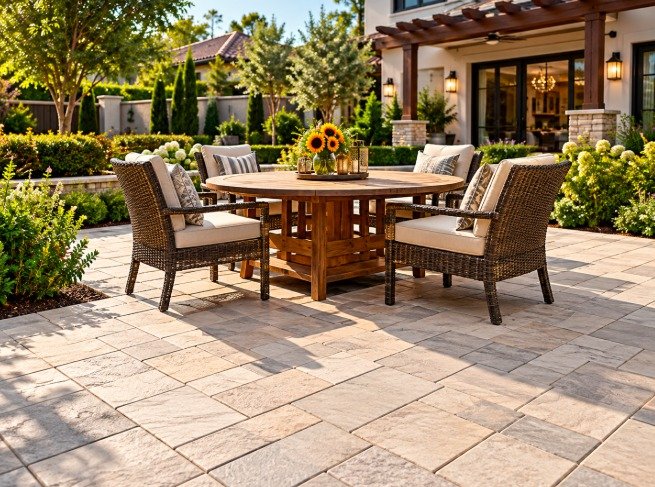
BBQ Islands With Outdoor Dining

The cooking area can be connected directly to an outdoor dining space.

The paving plan should provide enough space around:

  • Dining tables
  • Chairs
  • Serving areas
  • Walkways

This creates a smoother flow from cooking to dining.

Grills & Outdoor Kitchen Appliances

The island should be designed for the specific appliance models rather than using generic openings. Manufacturer clearances, ventilation, insulation, and combustible-material requirements should be followed carefully.

Built-In BBQ Grills

The built-in grill is usually the centerpiece of the island, available in many sizes and configurations.

  • Gas grills
  • Natural gas grills
  • Propane grills
  • Charcoal grills
  • Hybrid grills
  • Smoker-style systems

Outdoor Refrigerator Installation

An outdoor refrigerator can keep drinks, condiments, ingredients, and prepared foods close to the cooking area.

It should be specifically rated for outdoor use when installed in an exposed environment. Adequate ventilation and electrical access should be included in the design.

BBQ Island Sink

A sink can make food preparation and cleanup more convenient. Outdoor sink areas may include hot and cold water or cold water only, drainage, a faucet, a soap dispenser, and under-sink storage.

Plumbing availability and local requirements should be reviewed before installation.

Side Burners

Side burners allow pots and pans to be used outdoors without taking up space on the main grill. They are useful for sauces, boiling, frying, and side dishes.

A side burner is usually installed next to the primary food preparation area.

Power Burners

Power burners are larger, higher-output burners designed for cooking with large pots and specialty cookware, such as seafood boils, large stock pots, and wok cooking.

The island should be designed according to the manufacturer's clearance requirements.

Outdoor Griddles

Built-in griddles are increasingly popular for outdoor kitchens and can be used for breakfast cooking, burgers, vegetables, sandwiches, and flat-top cooking.

A griddle can supplement or replace part of a traditional grill setup.

Pizza Ovens

Pizza ovens can be integrated into larger BBQ island projects, including gas pizza ovens, wood-fired ovens, countertop ovens, and built-in units.

The layout should consider heat, clearance, ventilation, and access for fuel where applicable.

Smokers

A smoker can be added to a custom outdoor cooking station as a built-in unit, freestanding unit, or kamado-style cooker.

The island design should provide enough clearance and ventilation around the unit.

Kamado Grill Islands

Kamado-style ceramic grills can be integrated into outdoor islands. The opening and support structure should be built for the specific cooker.

Heat-resistant materials and proper clearances are especially important around these units.

Beverage Centers

A beverage area can keep drinks separate from the main food-preparation zone, with a beverage refrigerator, ice maker, sink, bottle storage, and bar counter.

This can reduce traffic around the grill when several people are using the outdoor space.

Outdoor Ice Makers

An outdoor-rated ice maker can be integrated into larger BBQ islands and bar areas. It requires a water supply, drainage, electrical connection, and ventilation.

The appliance should be installed according to manufacturer requirements.

BBQ Island Storage

Built-in storage helps keep cooking tools and supplies organized, with access doors, drawers, drawer-door combinations, trash pullouts, propane tank compartments, and dry storage.

Storage placement should be planned around the grill and other appliances so commonly used tools are easy to reach.

Countertops & Island Finishes

Outdoor countertops should be selected for exposure to sunlight, heat, moisture, food spills, and cleaning, and should coordinate with your pavers, pool deck and home.

BBQ Island Countertops

Countertops provide preparation, serving, and dining space. Common outdoor materials include granite, quartzite, porcelain, concrete, natural stone, and outdoor-rated tile.

The material should also coordinate with the pavers, pool deck, home exterior, and island finish.

Granite BBQ Island Countertops

Granite is commonly used outdoors because of its natural stone appearance and wide range of colors, for preparation counters, bar tops, and serving surfaces.

The stone should be suitable for exterior use and maintained according to its finish and exposure.

Porcelain Outdoor Countertops

Porcelain surfaces can create a modern appearance and are available in designs that resemble marble, concrete, and stone.

They can work well with contemporary BBQ islands and outdoor kitchens.

Concrete Countertops

Concrete countertops can be customized in shape, thickness, color, and finish, and are often used for modern designs, rustic outdoor kitchens, and custom island shapes.

Proper construction and sealing are important because outdoor concrete is exposed to changing weather conditions.

BBQ Island Framing

The island structure may be built using outdoor-appropriate systems such as:

  • Metal framing
  • Masonry
  • Concrete block
  • Other noncombustible construction

The framing must support the countertops, appliances, finishes, and storage components.

Stone Veneer BBQ Islands

Stone veneer can create a substantial, high-end appearance.

Options may include:

  • Natural stone veneer
  • Manufactured stone
  • Ledgestone
  • Stacked stone

Stone finishes often work well with paver patios and pool decks.

Stucco BBQ Islands

Stucco can create a clean exterior finish that works well with Mediterranean homes, Southwestern designs, and modern architecture.

The color can be coordinated with the house exterior.

Brick BBQ Islands

Brick can create a traditional or rustic BBQ island that pairs well with brick patios, paver patios, traditional homes, and outdoor fireplaces.

Brick can be used for the full island exterior or as an accent material.

Tile BBQ Islands

Exterior-rated tile can create decorative island surfaces for counter fronts, accent panels, and backsplashes.

The tile and setting materials should be suitable for outdoor exposure.

BBQ Island Backsplashes

A backsplash can protect the area behind the countertop while adding design detail. Materials may include tile, stone, porcelain, and brick.

Backsplashes can also create a focal wall behind the grill.

Gas BBQ Islands

Gas-powered islands may use natural gas or propane. The fuel source should be planned before the island is built.

Permanent gas connections should be installed according to applicable codes and appliance requirements.

Natural Gas BBQ Islands

Natural gas can provide a permanent fuel source for a built-in grill. A gas line may also supply side burners, pizza ovens, and fire features.

Gas-line sizing and appliance requirements should be reviewed before construction.

Propane BBQ Islands

Propane grills may use replaceable tanks, remote tank locations, or permanent propane systems.

The tank area requires appropriate access and ventilation. The island should not be enclosed in a way that traps leaking gas.

BBQ Island Ventilation

Openings may be required to prevent gases from collecting inside the island.

Vent placement depends on:

  • Fuel type
  • Appliance design
  • Island configuration

Manufacturer instructions and applicable code requirements should always guide the design.

Insulated Grill Jackets

Some built-in grills require an insulated jacket when they are installed near combustible framing or materials. The jacket creates a protective enclosure around the grill.

Whether one is required depends on the grill model, construction material, and manufacturer specifications.

BBQ Island Electrical Features

Electrical outlets can be useful for:

  • Blenders
  • Small appliances
  • Phone charging
  • Refrigerators
  • Lighting
  • Rotisserie motors

Exterior electrical work should use suitable outdoor-rated equipment and appropriate protection.

BBQ Island Lighting

Lighting makes the cooking area easier to use after sunset:

  • Under-counter lighting
  • Task lighting
  • Pendant lighting
  • Wall lighting
  • Landscape lighting

Lighting should illuminate cooking and preparation areas without creating glare.

BBQ Island Weather Protection

Outdoor kitchens are exposed to sun, rain, moisture, dirt, and temperature changes. Materials and appliances should be selected for outdoor use.

Protective covers can also help extend the life of certain appliances.

Patios, Pavers & Surroundings

A BBQ island is only as good as the surface it sits on and the space around it.

BBQ Islands on Paver Patios

BBQ islands are commonly installed on paver patios.

Before construction, the paving should be evaluated for:

  • Base strength
  • Levelness
  • Drainage
  • Island weight
  • Utility access

In some cases, the island support may need to be built independently of the surrounding pavers. The pavers can then be installed around the structure for a finished appearance.

Patio paver services

BBQ Islands on Concrete Patios

Concrete can provide a stable surface for an outdoor kitchen when the slab is suitable for the load.

Existing concrete should be evaluated for:

  • Cracking
  • Settlement
  • Slope
  • Thickness
  • Utility access

New slabs can be designed specifically around the island.

BBQ Island Paver Surrounds

Pavers can be installed around the BBQ island to create a complete cooking and dining area.

Popular materials include:

  • Concrete pavers
  • Porcelain pavers
  • Travertine
  • Brick pavers
  • Natural stone

The paving can coordinate with the island finish or create deliberate contrast.

Paver materials

BBQ Island Pergolas

A pergola can provide shade and help define the outdoor kitchen.

Its design should account for:

  • Grill placement
  • Heat
  • Smoke
  • Lighting
  • Clearance

Cooking appliances must still maintain required ventilation and separation.

BBQ Island Fire Features

Some outdoor kitchens are integrated with:

  • Fire pits
  • Fireplaces
  • Fire bowls

These features should be positioned so heat and smoke do not interfere with cooking, seating, or walking areas.

Fire pit services Outdoor fireplaces

Build a Complete Outdoor Cooking Area

A BBQ island can be integrated with:

  • Paver patios
  • Pool decks
  • Pergolas
  • Fire pits
  • Outdoor dining areas
  • Walkways
  • Landscape walls
  • Seating areas

Planning these features together can create a more cohesive backyard and better use of available space.

BBQ Island Styles

Match your outdoor kitchen to your home's architecture and the rest of your backyard.

Modern BBQ Islands

Modern designs often feature straight lines, large porcelain surfaces, smooth stucco, neutral colors, minimal detailing, and stainless steel appliances.

These islands pair well with modern pavers, pools, and outdoor furniture.

Traditional BBQ Islands

Traditional outdoor kitchens may include brick, natural stone, granite countertops, decorative edges, and warm colors.

They can complement traditional homes and established landscapes.

Mediterranean BBQ Islands

Mediterranean designs may incorporate stucco, travertine, stone veneer, warm earth tones, and arched details.

This style works well with courtyards and pool areas.

Rustic BBQ Islands

Rustic outdoor kitchens often use stacked stone, brick, textured concrete, natural stone countertops, and wood-look accents.

The result can blend naturally with garden and landscape settings.

Planning a BBQ Island That Works

A good outdoor kitchen should be easy to use.

Planning the BBQ Island Work Triangle

The grill, sink, refrigerator, and preparation area should be positioned so the cook does not have to walk unnecessarily far between tasks. The layout should also keep guests from repeatedly crossing through the main cooking zone.

BBQ Island Counter Space

Adequate counter space is important on both sides of the grill for raw ingredients, finished food, serving trays, and cooking tools. Larger outdoor kitchens may benefit from dedicated preparation and serving zones.

BBQ Island Appliance Placement

Place the refrigerator near the preparation area, the sink near the prep counter, the side burner near the grill, and trash storage below the preparation counter. Thoughtful placement makes the outdoor kitchen significantly more convenient.

BBQ Island Cost in Los Angeles

Estimated prices for island construction, finishes and countertops. Appliances vary widely by brand and model, so every quote starts with a free on-site evaluation.

Compact Straight Island

$6,000 – $12,000

Grill opening, countertop, access doors and space for a compact refrigerator.

Full Outdoor Kitchen

$25,000 – $50,000+

U-shaped or large layouts with multiple appliances, sink, bar seating and lighting.

Outdoor kitchen cost guide

What Affects the Cost of a BBQ Island

  • Island size and layout
  • Grill and appliance selection
  • Countertop material
  • Stone, stucco, brick or tile finish
  • Gas line and fuel type
  • Electrical, water and drainage
  • Lighting and outlets
  • Foundation or patio work needed
  • Pergolas, hoods and covered areas

Prices are estimates only, not a final quote. Gas, electrical and plumbing work may require licensed trades and city permits. Repairs and renovations are priced after an inspection.

GET MY EXACT PRICE

Our BBQ Island Installation Process

Ten steps from the first site visit to the final inspection.

  1. 1

    Site Evaluation

    We review the patio, available space, drainage, existing paving, utility locations, and desired kitchen features.

  2. 2

    Layout Planning

    The island shape, grill location, appliances, counter space, seating, and storage are selected.

  3. 3

    Utility Planning

    Gas, electrical, water, drainage, and ventilation requirements are identified.

  4. 4

    Base Preparation

    The installation surface is prepared or reinforced as necessary.

  5. 5

    Island Construction

    The structural frame or masonry base is built.

  6. 6

    Appliance Openings

    Openings are created according to manufacturer specifications.

  7. 7

    Exterior Finish

    Stone, stucco, brick, tile, or another finish is installed.

  8. 8

    Countertop Installation

    The outdoor countertop is measured and installed.

  9. 9

    Appliance Installation

    Grills, refrigerators, sinks, burners, and other equipment are installed according to applicable requirements.

  10. 10

    Final Inspection

    The layout, finishes, ventilation, access panels, and surrounding paving are reviewed.

Why Professional BBQ Island Construction Matters

Outdoor kitchens combine multiple building systems in one compact area.

Poor planning can lead to difficult appliance access, inadequate ventilation, damaged finishes, or an uncomfortable cooking layout.

A professional project considers both the appearance of the finished island and the practical requirements behind it.

A BBQ island may involve:

  • Heavy countertops
  • High-temperature cooking appliances
  • Gas
  • Electricity
  • Water
  • Drainage
  • Ventilation

BBQ Island FAQs

A compact straight BBQ island typically takes about one to two weeks from construction start to finish, depending on the finish and countertop. Larger L-shaped or U-shaped outdoor kitchens with multiple appliances, sinks and electrical work can take two to four weeks or more. Custom countertops, appliance deliveries, permits and utility work can affect the schedule, so we give you a clear timeline with your written estimate.

Natural gas is convenient if your home already has a gas line, because you never run out of fuel and the same line can serve side burners, pizza ovens and fire features. Propane is a good option when a gas line is not practical, using replaceable tanks or a larger remote tank. The grill must be ordered for the correct fuel type, so we plan the fuel source before the island is designed.

A simple island with a propane grill may not need a permit, but permanent gas lines, electrical outlets, plumbing for a sink and some covered structures usually require permits and licensed trades in Los Angeles County cities. Requirements vary by city and project. We check what your project needs during the estimate, coordinate the required work and help keep your outdoor kitchen safe and code-compliant.

Granite is one of the most popular choices because it handles sun, heat and moisture well and comes in many colors. Quartzite and exterior-rated porcelain are also excellent options, especially for modern designs. Concrete countertops allow custom shapes and colors but need proper sealing. We generally recommend avoiding indoor-only materials that can fade or discolor in direct sun, and we help you choose a surface that matches your island and patio.

Often, yes. We inspect your existing pavers or concrete for strength, levelness, drainage and utility access before building. A solid concrete slab or well-built paver patio may support the island directly, while some projects need a dedicated footing or local paver work first. We can also extend or rebuild the surrounding patio so the island, dining area and walkways fit together as one finished outdoor kitchen.

REQUEST A BBQ ISLAND ESTIMATE

Planning a new outdoor cooking area or upgrading your backyard? We evaluate the patio, available space, paving, appliance requirements, countertop options, utilities, storage, seating and surrounding features before developing a project plan.

L-shaped BBQ island with bar seating

WHY CHOOSE

DREAM PAVING LOS ANGELES?

  • Over 13 Years of Experience
  • Licensed, Bonded and Insured
  • Custom Layouts & Finishes
  • Island & Patio Built Together
  • Utilities Planned From the Start
  • Free, Honest Estimates
  • On-Time Project Completion
  • Clean, Respectful Crews
  • Beautiful & Long-Lasting Results