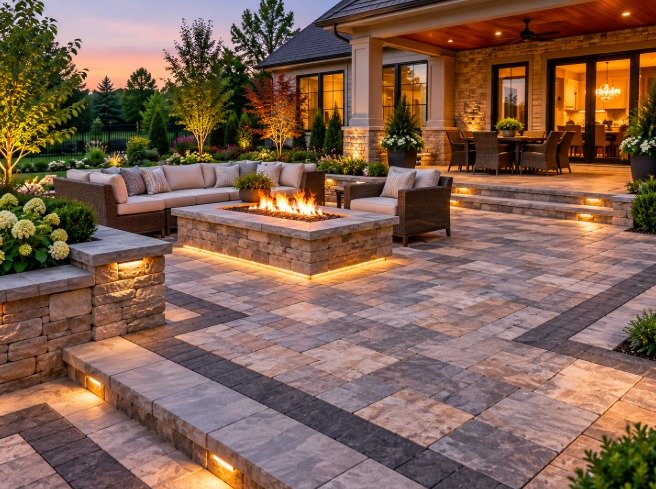
Lit paver patio with a stone fire table, lounge seating and steps at dusk

Patio PaversServices Los Angeles

New patios, replacement, repair, renovation and extensions for backyards, pools, courtyards, outdoor kitchens and fire pit areas.

Outdoor Living Starts With the Right Patio

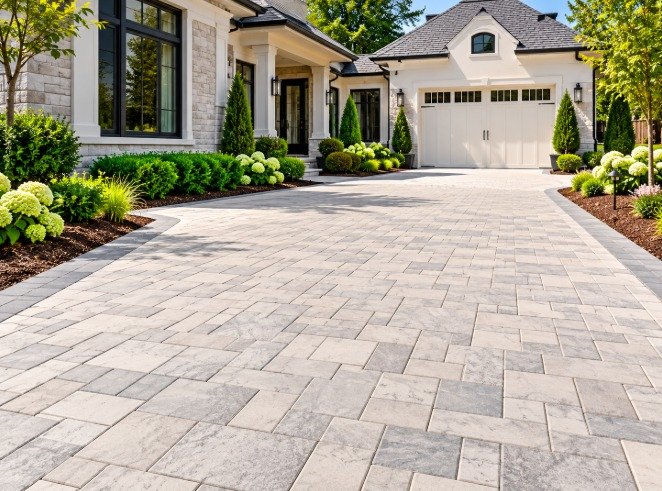
A professionally installed paver patio can completely change the way an outdoor space looks and functions. Patio pavers create a durable, attractive surface for seating, dining, entertaining, grilling, fire pits, poolside areas, and everyday outdoor living. With a wide selection of materials, colors, patterns, textures, and layouts available, pavers can be designed to complement both traditional and modern properties.

Our patio paver services include new patio installation, replacement, extensions, repairs, custom layouts, decorative borders, outdoor living areas, backyard patios, pool-adjacent patios, and complete patio renovations. Whether you are starting with an empty yard, replacing an old concrete slab, or expanding an existing outdoor space, proper site preparation and installation are essential for long-term performance.

A paver patio should not only look good when it is first installed. It should also have a stable base, proper drainage, strong edge restraint, consistent joint spacing, and a layout that fits the way the space will be used.

Paver patio with outdoor dining set and a stone outdoor fireplace

Our Patio Paver Services

Whether you are building from scratch or restoring an older patio, every project starts with a stable base and a layout that fits how you live outdoors.

New Patio Paver Installation

New patio paver installation is a popular way to create a defined outdoor living space without relying on a plain concrete surface.

A new paver patio can be installed in:

  • Backyards
  • Side yards
  • Courtyards
  • Pool areas
  • Garden spaces
  • Outdoor kitchens
  • Covered patios
  • Pergola areas
  • Fire pit zones
  • Entertaining areas

The installation process begins with planning the size, shape, elevation, and intended use of the patio. The area is then excavated to the proper depth, graded for drainage, and prepared with a compacted base.

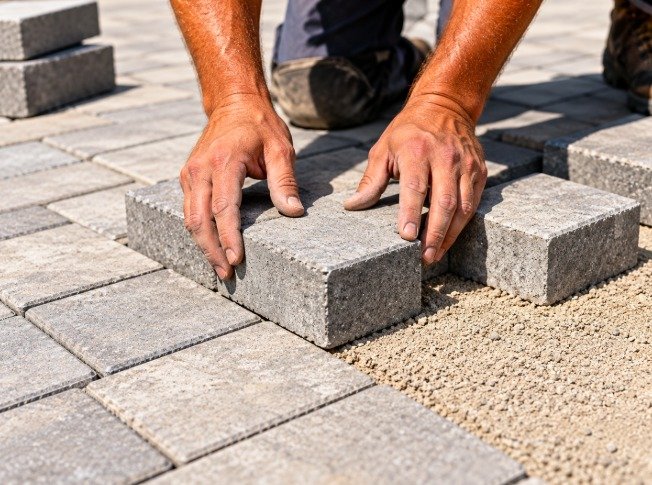
Once the base is stable, bedding material is added and the pavers are installed in the selected pattern. Edge restraints are used to hold the patio together, and the joints are filled to help stabilize the surface.

A properly installed patio should feel solid underfoot and remain level while allowing water to drain away from structures.
Patio Paver Replacement

Older patios can become uneven, cracked, faded, unstable, or outdated in appearance. In some cases, replacement is a better option than continuing to make small repairs.

Patio paver replacement may be recommended when:

  • Large sections have settled
  • The original base has failed
  • Drainage is poor
  • The patio layout no longer works
  • Pavers are badly damaged
  • The surface has become uneven
  • The patio needs to be enlarged
  • You want a completely new style

Replacement often begins with removing the existing surface and evaluating the condition of the base below it. This creates an opportunity to correct previous grading problems, improve drainage, change the shape of the patio, or install a new paver style.

A complete replacement can also be combined with other improvements such as a fire pit, seating wall, pathway, outdoor kitchen, or landscape border.

Patio Paver Repair

Not every damaged paver patio requires full replacement. One of the advantages of individual paving units is that specific sections can often be lifted, corrected, and reinstalled.

Patio paver repair can address:

  • Sunken pavers
  • Loose pavers
  • Cracked pavers
  • Uneven sections
  • Separated joints
  • Edge movement
  • Trip hazards
  • Drainage-related settlement
  • Missing joint material
  • Small damaged areas

If pavers have settled, the affected area can often be removed so the base can be corrected before the original or replacement pavers are reinstalled.

Repairs should focus on the cause of the problem rather than simply correcting the visible surface. For example, repeated settling may indicate a weak base, poor drainage, or insufficient compaction.

Patio Paver Resurfacing and Renovation

Some patios do not need to be removed completely but can benefit from a renovation.

Patio paver renovation can include:

  • Releveling
  • Replacing damaged units
  • Cleaning
  • Re-sanding joints
  • Border replacement
  • Extension
  • Redesigning specific areas
  • Adding decorative accents
  • Improving transitions
  • Correcting drainage

Renovation is a useful option when the overall patio is still structurally sound but has lost some of its original appearance or function.

It can also be used to modernize an older patio by introducing a new border color, updated pattern, or expanded seating area.

Patio Paver Extension

A patio extension adds usable outdoor space without requiring the entire patio to be rebuilt.

Homeowners often extend patios to make room for:

  • Larger dining sets
  • Outdoor kitchens
  • Fire pits
  • Lounge furniture
  • Hot tubs
  • Grills
  • Outdoor bars
  • Pergolas
  • Additional seating
  • Family gathering areas

The new section should be constructed with a proper base and carefully tied into the elevation of the existing patio.

Matching an older paver can sometimes be challenging, so some projects use a complementary border or contrasting design to intentionally blend the old and new areas.

Backyard Patio Pavers

Backyard paver patios are one of the most common outdoor improvements because they create a clean, low-maintenance surface for everyday use. A backyard patio can be designed around the shape and layout of the property.

Popular uses include:

  • Outdoor dining
  • Lounge areas
  • Grilling stations
  • Fire pits
  • Children’s seating areas
  • Garden viewing spaces
  • Outdoor kitchens
  • Entertainment areas

Backyard patios can be compact and simple or large enough to include multiple activity zones.

The layout should consider access from the home, doors, steps, landscaping, drainage, and existing structures.

Patio Pavers for Every Outdoor Space

Covered patios, fire pit areas, pools, courtyards and outdoor kitchens each need their own layout, elevations and material choices.

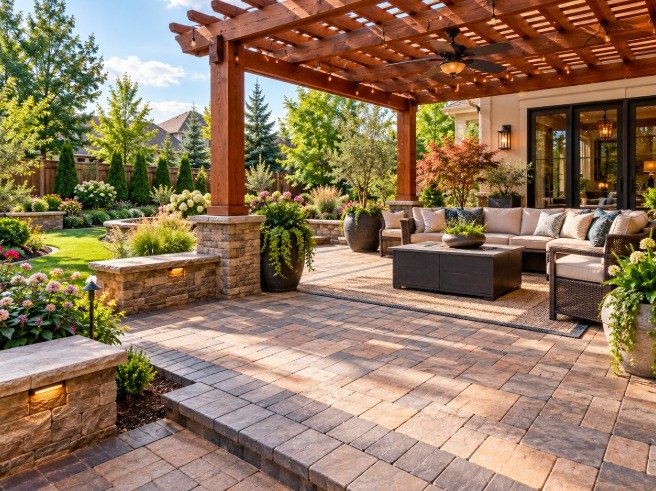
Paver patio under a wood pergola with lounge seating and stone pillars

Covered Patio Pavers

Pavers can also be installed beneath covered patios, pergolas, roof structures, and screened outdoor areas. Covered patios often need especially precise elevation planning because the paver surface may connect directly with:

  • Sliding doors
  • French doors
  • Outdoor kitchens
  • Steps
  • Columns
  • Walls
  • Drainage systems

Proper elevation helps reduce the risk of water moving toward the building.

Pavers under covered areas can provide a polished appearance while still maintaining the durability of an outdoor surface.

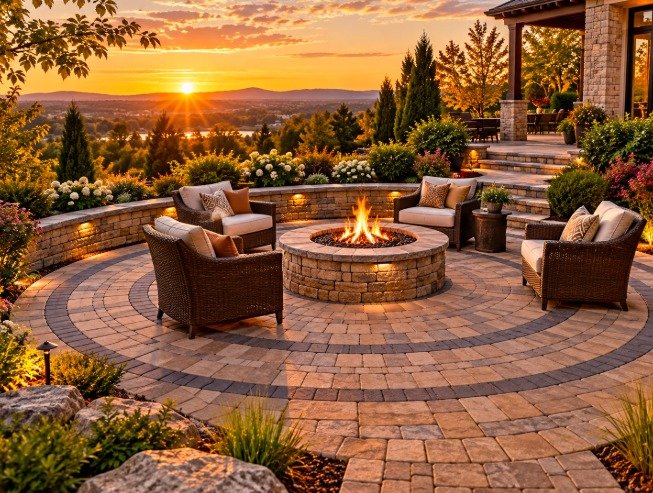
Circular paver patio with a stone fire pit and seating wall at sunset

Fire Pit Patio Pavers

A fire pit can become the centerpiece of a paver patio.

Fire pit areas may be built as:

  • Circular patios
  • Square gathering areas
  • Sunken seating zones
  • Large entertainment patios
  • Separate backyard destinations

The paver layout can be designed around the shape of the fire feature and surrounding seating. Materials near fire features should be selected with heat exposure and manufacturer recommendations in mind.

Adequate spacing should also be planned between the fire feature, furniture, landscaping, and nearby structures.

Fire pit services

Poolside Patio Pavers

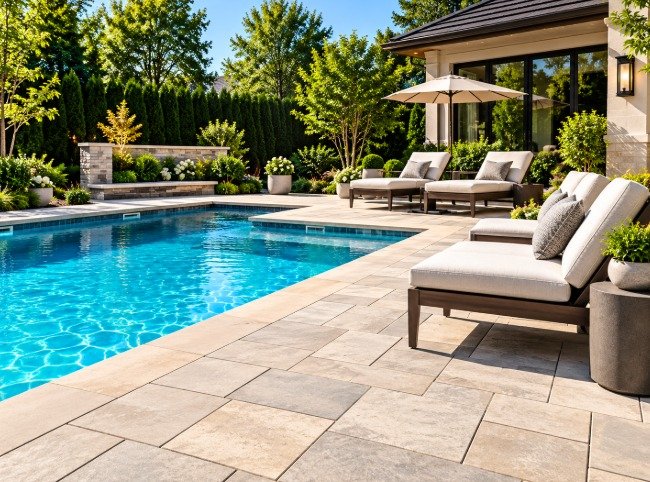
Pavers are widely used around pools because they can create an attractive surface with a variety of design possibilities.

Poolside paver patios can include:

  • Lounge areas
  • Dining spaces
  • Walkways
  • Pool decks
  • Outdoor kitchens
  • Fire features
  • Seating areas

Material selection is especially important around pools. Homeowners may prefer surfaces with texture for improved traction and lighter colors that absorb less heat.

Proper grading is also important so water drains away from the pool and nearby structures.

Courtyard Pavers

Courtyards can be transformed with decorative pavers that create a defined and inviting central space.

Courtyard pavers can work well around:

  • Fountains
  • Gardens
  • Seating
  • Planters
  • Outdoor fireplaces
  • Entryways
  • Decorative walls

Because courtyards are often visible from several sides, pattern selection and border detail can have a strong visual impact.

Smaller spaces can also benefit from carefully selected paver sizes and layouts that make the area feel larger and more balanced.

Water features

Outdoor Kitchen Patio Pavers

Outdoor kitchens require a stable surface that can support cabinets, grills, counters, appliances, tables, and foot traffic. Paver patios are often used around outdoor kitchens because individual areas can be adjusted or repaired if necessary.

The layout should account for:

  • Appliance locations
  • Utilities
  • Drainage
  • Seating
  • Cooking areas
  • Walking paths
  • Cabinet bases
  • Traffic flow

The patio should be planned before the kitchen is installed so the finished elevation and layout work together.

BBQ island services Outdoor kitchens

Patio Pavers for Small Spaces

A small yard can still benefit from a carefully designed paver patio.

Smaller patios may be used for:

  • Bistro seating
  • Grilling
  • Small fire pits
  • Garden seating
  • Side-yard lounges

Large-format pavers, straight lines, and lighter colors can sometimes make a compact area feel more open.

The layout should prioritize practical furniture placement and comfortable walking space.

Large Patio Paver Installation

Large patios can be divided into several functional areas.

A large outdoor living project may include:

  • Dining zone
  • Outdoor kitchen
  • Lounge area
  • Fire pit
  • Pool seating
  • Walkways
  • Garden access
  • Pergola
  • Built-in seating

Using different paver patterns or borders can help visually separate these areas while maintaining one unified design.

Commercial Patio Pavers

Pavers can also be installed in commercial outdoor spaces where durability and appearance are both important.

Commercial applications can include:

  • Restaurants
  • Hotels
  • Apartment complexes
  • Office buildings
  • Retail centers
  • Courtyards
  • Outdoor dining areas
  • Common areas

Commercial patios should be designed for the expected amount of foot traffic and the type of furniture or equipment that will be placed on the surface.

Custom Patio Paver Design

Custom paver design allows the patio to become a distinctive part of the landscape rather than simply a flat paved area.

Design Features

Design features may include:

  • Contrasting borders
  • Multiple paver sizes
  • Circular patterns
  • Geometric layouts
  • Inlays
  • Accent bands
  • Curved edges
  • Decorative medallions
  • Multi-color combinations
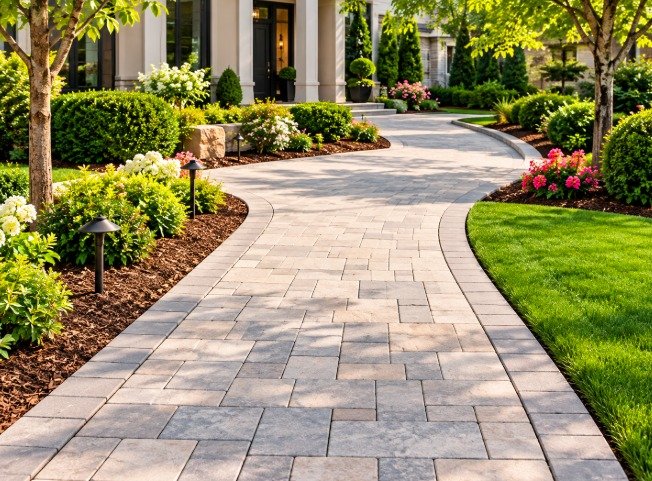
  • Connected walkways

The design should complement the architecture of the home and surrounding landscape.

A modern home may work well with large-format rectangular pavers and clean lines, while a traditional property may be better suited to textured pavers and classic patterns.

Decorative paving services

Patio Paver Borders

Borders can define the edge of a patio and add visual contrast.

Popular border options include:

  • Contrasting colors
  • Soldier course
  • Sailor course
  • Double borders
  • Dark accent borders
  • Natural stone borders

Borders can also be used to separate different areas of a larger patio, such as a dining zone and fire pit area.

Patio Paver Patterns

The pattern used for a patio can have a major effect on the final appearance.

Running Bond

A simple staggered layout that works well with rectangular pavers.

Herringbone

A dynamic pattern often used for patios, walkways, and high-traffic areas.

Basket Weave

A traditional pattern that works especially well with brick-style pavers.

Random or Modular Pattern

Several paver sizes are combined to create a natural, less repetitive appearance.

Stack Bond

Straight, aligned joints create a clean and modern look.

Circular Pattern

Circular layouts can be used around fire pits, fountains, or as decorative focal points.

Explore all paver styles, colors and patterns

Patio Paver Materials

Each material offers a different look, texture, installation method and price point.

Concrete Pavers

Concrete pavers are widely used for patios because they are available in many sizes, shapes, textures, and colors. They can be manufactured to resemble natural stone, brick, slate, travertine, or smooth modern stone.

Concrete pavers work well for both traditional and contemporary designs. They are also available in modular systems that allow several paver sizes to be combined in one pattern.

Brick Pavers

Brick-style pavers provide a classic appearance that works well with traditional homes, historic-style properties, courtyards, and garden patios. Popular layouts include running bond, basket weave, herringbone, and stack bond.

Brick colors can range from traditional red and brown to gray, charcoal, and blended earth tones. Brick pavers can also be combined with contrasting borders for a more customized appearance.

Natural Stone Pavers

Natural stone can create a high-end patio with unique color and texture. Common options include travertine, flagstone, limestone, granite, sandstone, and bluestone.

Because natural materials vary in thickness, texture, and appearance, installation may require additional preparation and attention to detail. Natural stone is often selected for luxury patios, pool areas, courtyards, and properties where a more organic appearance is desired.

Porcelain Patio Pavers

Porcelain pavers provide a clean, modern look and are available in many finishes that resemble stone, concrete, and other materials. They are commonly used for modern patios, outdoor kitchens, pool areas, rooftop spaces, and contemporary homes.

Porcelain pavers require the correct installation system and base preparation based on the application. Their consistent dimensions make them especially well suited for modern designs with precise joint lines.

Permeable Patio Pavers

Permeable pavers are designed to allow water to move through the joints and into a specially prepared base. They may be useful in areas where stormwater management is an important consideration.

Permeable patios require a different base design than conventional paver installations. The installation typically uses open-graded aggregate that allows water to move through the pavement structure rather than collecting on the surface.

Compare all paver materials

Patio Base Preparation

The long-term performance of a paver patio depends heavily on the base below it.

A typical installation may include:

  1. Excavation
  2. Soil preparation
  3. Compacted aggregate base
  4. Bedding layer
  5. Paver installation
  6. Edge restraint
  7. Joint filling
  8. Final compaction

If the base is too thin, poorly compacted, or installed over unstable soil, the pavers can settle and become uneven. Proper base preparation is one of the most important parts of the entire installation.

Patio Drainage

A patio should be graded so rainwater moves away from buildings and does not create standing water.

Drainage planning may include:

  • Surface slope
  • Drain channels
  • Catch basins
  • Permeable sections
  • Landscape drainage
  • Downspout management

Drainage should be considered before the first paver is installed. Correct elevations are especially important near doors, foundations, pools, and retaining walls.

Patio Paver Edge Restraints

Edge restraints help prevent pavers from spreading or shifting outward over time. Different systems may be used depending on the patio design and surrounding material.

Properly installed edge restraints help maintain:

  • Straight borders
  • Curved layouts
  • Joint consistency
  • Overall surface stability

Edges that are not properly supported can gradually move, causing gaps and uneven sections.

Patio Paver Joint Sand

Joint material fills the spaces between pavers and helps lock the surface together. Polymeric sand is commonly used for many patio installations because it can harden within the joints while still allowing some flexibility.

Proper joint filling can help reduce:

  • Paver movement
  • Joint erosion
  • Weed growth
  • Insect activity

The correct joint material depends on the type of paver and installation method.

Patio Paver Cost in Los Angeles

Estimated installed prices, including materials and labor. Your exact price depends on your site and design, so every quote starts with a free on-site evaluation.

Brick Pavers

$18 – $35 / sq ft

Backyard patio (300 sq ft): $5,400 – $10,500

Natural Stone

$25 – $50 / sq ft

Backyard patio (300 sq ft): $7,500 – $15,000

Porcelain Pavers

$25 – $50 / sq ft

Backyard patio (300 sq ft): $7,500 – $15,000

What Affects the Cost of Your Patio

  • Patio size and shape
  • Paver material and pattern
  • Removal of an old slab or patio
  • Soil condition and base depth
  • Slope, steps and elevation changes
  • Drainage work required
  • Borders, inlays and curves
  • Fire pits, seating walls and kitchens
  • Site access for equipment

Prices are estimates only, not a final quote. Fire pits start from about $2,500 and outdoor kitchens are priced per project. Repairs and renovations are priced after an inspection.

GET MY EXACT PRICE

Patio Paver Care

A little routine care keeps your patio looking its best.

Patio Paver Cleaning

Over time, outdoor patios collect:

  • Dirt
  • Leaves
  • Organic growth
  • Food stains
  • Mud
  • Weather-related buildup

Periodic cleaning can help maintain the appearance of the patio.

Cleaning methods should be selected according to the paver material because overly aggressive washing can sometimes remove joint sand or damage certain surfaces.

Patio Paver Sealing

Some property owners choose to seal their patio pavers to enhance color or make maintenance easier.

Depending on the product, sealing may help:

  • Deepen paver color
  • Reduce staining
  • Make cleaning easier
  • Stabilize joint sand
  • Protect the surface

Not every patio requires sealing, and different materials have different recommendations.

The patio should be clean and dry before a compatible sealer is applied.

Worn concrete slab and bare dirt in a backyard before a paver patio

Signs Your Patio Pavers Need Repair

Common signs include:

  • Uneven pavers
  • Loose units
  • Large gaps
  • Sunken areas
  • Damaged edges
  • Poor drainage
  • Missing joint material
  • Rocking pavers
  • Cracked units
  • Trip hazards

Many of these problems can be corrected without replacing the entire patio if they are addressed early.

Our Patio Paver Installation Process

Ten steps from the first site visit to the final walk-through.

  1. 1

    Site Evaluation

    We review the area, elevations, drainage, access, and intended patio use.

  2. 2

    Design and Layout

    The size, shape, material, color, pattern, and border details are selected.

  3. 3

    Excavation

    Existing soil, grass, concrete, or other materials are removed as necessary.

  4. 4

    Base Installation

    Aggregate is placed and compacted to create a stable foundation.

  5. 5

    Bedding Preparation

    A consistent bedding layer is prepared for the pavers.

  6. 6

    Paver Installation

    Pavers are placed according to the approved pattern and layout.

  7. 7

    Edge Installation

    Edge restraints are secured around the perimeter.

  8. 8

    Joint Filling

    Joint material is applied between the pavers.

  9. 9

    Final Compaction

    The surface is compacted and checked for stability.

  10. 10

    Final Inspection

    The patio is reviewed for alignment, drainage, transitions, and overall finish.

Why Choose Patio Pavers?

Pavers offer several practical and design advantages for outdoor spaces. Unlike a single continuous slab, individual pavers can often be lifted and reset if underground work or localized repairs become necessary.

Build a Patio That Fits Your Property

A patio should be designed around the way you actually plan to use the space. Some homeowners want a quiet place for a small table and chairs. Others want a complete outdoor entertainment area with a kitchen, fire feature, large dining table, and lounge furniture.

Our patio paver services can be tailored to both simple and complex projects, including new construction, replacement, repairs, extensions, custom designs, pool areas, courtyards, outdoor kitchens, fire pits, and commercial patios.

Residential Patio Pavers

Residential paver patios can be customized to match the architecture and outdoor lifestyle of the home. Projects can range from a small backyard seating area to a complete outdoor living environment, including new patio installation, replacement, repair, extensions, pool patios, fire pit patios, outdoor kitchens, courtyard patios, walkways, and decorative borders.

Residential paving services

Patio pavers can provide:

  • Custom appearance
  • Many material choices
  • Multiple colors and textures
  • Repairable individual sections
  • Flexible design options
  • Defined outdoor living spaces
  • Durable walking and seating surfaces
  • Decorative borders and patterns

Patio Paver FAQs

Pavers cost more than plain poured concrete, but they offer far more colors, patterns and textures, and they handle ground movement better because each paver can shift slightly without cracking. If a section settles or gets damaged, individual pavers can be lifted and reset instead of breaking out a whole slab. For many Los Angeles homeowners, that flexibility and longer life make pavers the better long-term value.

Most backyard patios take between two and five working days, depending on size, removal of an old slab, base preparation and the pattern you choose. Larger outdoor living projects with steps, seating walls, fire pits or outdoor kitchens can take one to three weeks. You can usually walk on the patio right after final compaction. We give you a clear timeline with your written estimate before any work begins.

Sometimes. If your concrete slab is solid, level and drains correctly, thin pavers can be installed over it using the right bedding and edge system. However, overlays raise the patio height, which can cause problems at door thresholds and steps. If the slab is cracked, sinking or poorly sloped, removing it and building a proper base is the better long-term choice. We check your slab and recommend the right option.

Sealing is optional, not required. A quality sealer can deepen paver color, make stains easier to clean and help keep joint sand in place, which is useful around outdoor kitchens and pools. Some materials, especially certain natural stones and porcelain, have their own manufacturer recommendations. If you choose to seal, the patio should be clean and dry first, and most sealers are reapplied every few years to keep their protection.

Lighter colors absorb less heat, so tan, cream, light gray and travertine-style pavers generally stay more comfortable underfoot than charcoal or dark red. Textured surfaces also improve traction around pools. Natural travertine and light porcelain are popular choices for pool decks and sunny patios. We can show you samples in person so you can compare colors and textures in real daylight before choosing the material for your patio.

REQUEST A PATIO PAVER ESTIMATE

Planning a new patio or restoring an existing one? We evaluate the layout, drainage, base conditions, material options, design goals and intended use of the area before developing a plan for your project.

Paver patio under a pergola

WHY CHOOSE

DREAM PAVING LOS ANGELES?

  • Over 13 Years of Experience
  • Licensed, Bonded and Insured
  • Proper Base Preparation
  • Drainage Planned Into Every Job
  • Custom Patterns & Borders
  • Free, Honest Estimates
  • On-Time Project Completion
  • Clean, Respectful Crews
  • Beautiful & Long-Lasting Results