New Driveway Installation
New driveway installation is ideal for new homes, newly developed properties, additional structures, detached garages, commercial buildings, or properties that currently have gravel, dirt, or unfinished access areas.
A durable driveway starts below the visible surface. Before paving begins, the area must be properly laid out and prepared. This may include excavation, removal of unsuitable soil, grading, installation of a compacted aggregate base, and drainage adjustments.
The thickness and construction method should be selected according to the expected traffic. A standard residential driveway typically has different requirements than an entrance that will regularly support delivery vehicles, work trucks, trailers, or other heavy loads.
Proper grading is especially important. The surface should direct water away from buildings and prevent standing water from collecting on the driveway. Once the foundation is properly prepared, the paving material can be installed, compacted, and finished to create a smooth, functional entrance.
New driveway installation can also include:
- Driveway layout and design
- Excavation and site preparation
- Base installation
- Compaction
- Drainage planning
- Asphalt paving
- Concrete paving
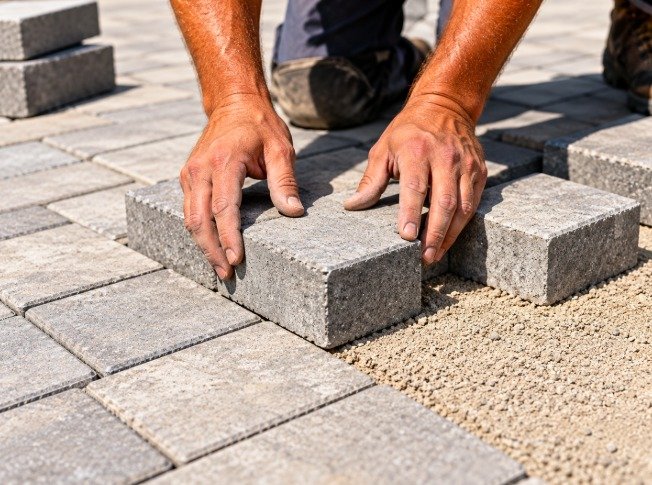
- Paver installation
- Driveway aprons
- Curved driveway layouts
- Turnaround areas
- Additional parking areas
A professionally installed driveway is designed as a complete system rather than simply a layer of pavement placed over the ground.
Driveway Replacement
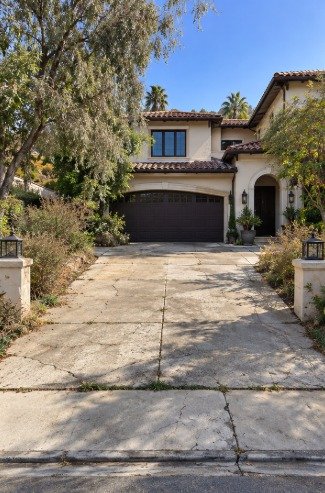
Older driveways eventually reach a point where repeated repairs are no longer the most practical solution. Extensive cracking, widespread settlement, major potholes, failed edges, drainage problems, or deteriorated base material can indicate that driveway replacement should be considered.
Driveway replacement generally involves removing the existing pavement and examining the material below it. If the base has failed, it may need to be rebuilt or reinforced before the new surface is installed.
Replacing a driveway also provides an opportunity to improve problems that may have existed in the original design. The new driveway can sometimes be widened, extended, reshaped, or regraded during the same project.
Common reasons for driveway replacement include:
- Widespread cracking
- Severe surface deterioration
- Large areas of settlement
- Multiple potholes
- Broken pavement edges
- Poor drainage
- Tree-root damage
- Base failure
- Repeated repairs that no longer last
- An outdated driveway layout
Instead of continuing to patch a surface that is failing throughout, replacement allows the driveway to be rebuilt from the foundation upward.
Driveway Resurfacing
Driveway resurfacing can be a practical option when the existing driveway is worn but the underlying structure remains reasonably stable.
During resurfacing, the existing pavement is prepared and a new surface layer is installed over it. Depending on the condition of the driveway, preparation may include cleaning, repairing damaged areas, correcting low spots, milling sections of pavement, sealing major cracks, or adjusting transitions.
Resurfacing can improve:
- Surface appearance
- Driving comfort
- Minor cracking
- Weathered pavement
- Surface oxidation
- Shallow surface deterioration
It can also extend the useful life of an existing driveway without requiring complete removal.
However, resurfacing is not appropriate for every property. If the driveway has severe foundation problems, major movement, extensive structural cracking, or deep settlement, placing a new surface over the existing pavement may only hide the problem temporarily.
An inspection helps determine whether resurfacing, repair, or full replacement is the better approach.
Driveway Repair
Not every damaged driveway needs to be replaced. Localized driveway repair can address specific areas of failure while allowing the remaining pavement to stay in place.
Driveway damage may develop from weather exposure, water infiltration, vehicle traffic, poor drainage, soil movement, construction activity, or aging materials.
Typical driveway repairs include:
- Crack repair
- Pothole repair
- Asphalt patching
- Edge repair
- Sunken-area repair
- Surface patching
- Joint repair
- Low-spot correction
- Drainage-related repair
- Small section replacement
Early repairs can help prevent minor pavement problems from becoming larger structural issues. For example, cracks that remain open can allow water to penetrate below the surface. Once moisture reaches the base, repeated traffic and weather changes can gradually weaken the surrounding pavement.
The best repair method depends on the cause of the damage, not only what is visible at the surface.
Driveway Extension
A driveway extension can provide additional usable space without requiring the entire driveway to be rebuilt.
Homeowners often extend driveways to create room for another vehicle, connect to a new garage, provide trailer parking, reach a backyard structure, or improve access around the property. Commercial properties may need driveway extensions for service access, additional employee parking, deliveries, or new sections of a facility.
Driveway extensions can be designed to connect smoothly with the existing pavement and surrounding property.
Common driveway extension projects include:
- Additional parking spaces
- Garage access extensions
- RV parking areas
- Trailer parking
- Side-yard access
- Backyard access
- Workshop access
- Detached garage connections
- Expanded commercial access
Preparation is particularly important where new pavement meets an existing driveway. The transition should be properly graded and compacted to reduce uneven settling and create a practical driving surface.
Driveway Widening
Driveway widening is another way to increase usable parking and improve vehicle access.
A narrow driveway can make it difficult for two vehicles to pass, open doors comfortably, back out safely, or park multiple vehicles. Widening can add space along one side or both sides depending on the layout of the property.
Driveway widening is commonly used for:
- Two-car parking
- Additional household vehicles
- Work trucks
- Larger SUVs
- RV access
- Trailer access
- Easier garage entry
- Guest parking
- Commercial vehicle movement
The existing driveway should be evaluated before the widening area is installed. Proper excavation, base preparation, drainage, and elevation matching help create a smoother transition between the original pavement and the new section.
A widened driveway can also be combined with an extension or full replacement project when a larger redesign is needed.