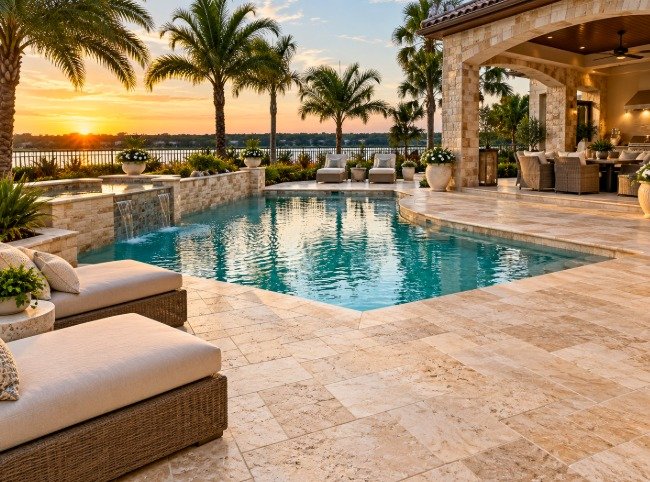
Travertine pool deck with lounge chairs and palm trees at sunset

Paver MaterialsLos Angeles

Concrete, brick, travertine, natural stone, porcelain, cobblestone and permeable pavers, matched to how each surface will be used.

Choosing the Right Paver Material

Choosing the right paver material is one of the most important decisions in any driveway, patio, walkway, pool deck, courtyard, entryway, or outdoor living project. Different materials offer different appearances, textures, colors, strength levels, maintenance needs, and installation requirements.

Our paver material options include concrete pavers, brick pavers, natural stone, travertine, porcelain, granite, limestone, sandstone, flagstone, cobblestone-style pavers, permeable pavers, and other decorative paving systems.

The best material depends on how the surface will be used, the style of the property, exposure to weather and water, expected traffic, maintenance preferences, and the overall design.

A driveway has different structural demands than a garden path. A pool deck has different surface requirements than a commercial courtyard. For this reason, paver selection should consider both appearance and performance.

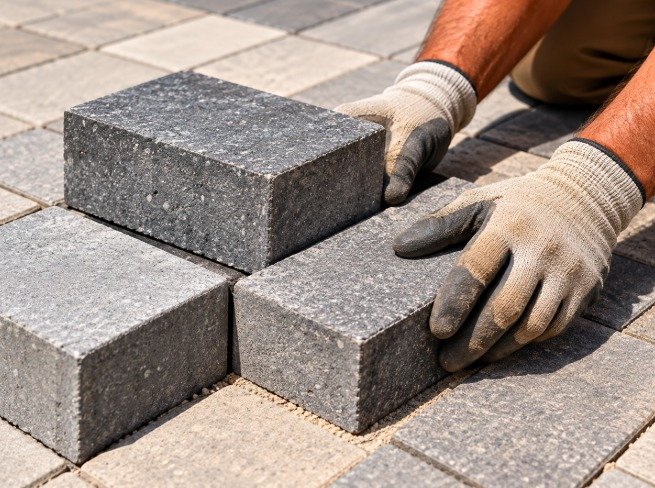
Gloved installer setting charcoal concrete paver blocks

Concrete Paver Options

The most versatile paving material, available in almost any shape, size, color and finish.

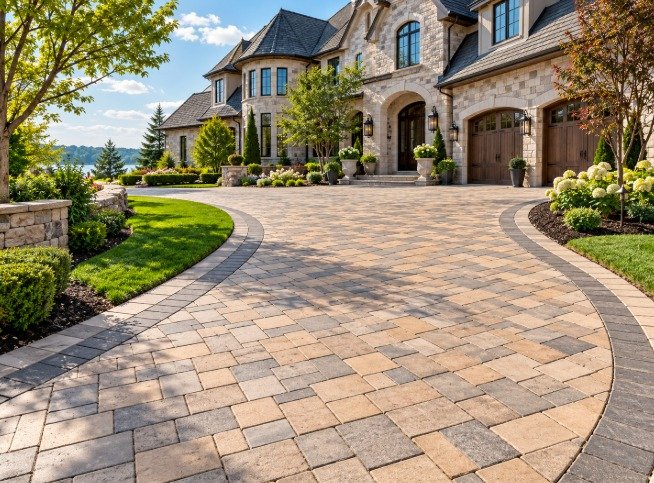
Blended tan and gray concrete paver driveway with a charcoal border at a stone home

Concrete Pavers

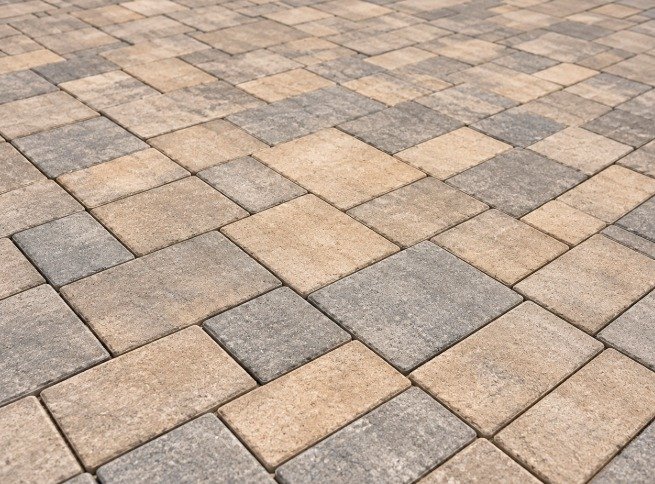
Concrete pavers are among the most widely used paving materials because they are available in a large range of shapes, sizes, colors, textures, finishes, and patterns.

Concrete pavers can be manufactured to resemble:

  • Natural stone
  • Brick
  • Slate
  • Travertine
  • Smooth architectural concrete

They can be used for:

  • Driveways
  • Patios
  • Walkways
  • Pool decks
  • Courtyards
  • Entryways
  • Commercial areas

One of the main advantages of concrete pavers is design flexibility. They can be installed in simple layouts or highly customized patterns with decorative borders and accent colors.

Interlocking Concrete Pavers

Interlocking concrete pavers are designed to work together as a complete pavement system. They are especially popular for driveways, parking areas, walkways, patios, and commercial spaces.

They can be installed in patterns such as:

  • Herringbone
  • Running bond
  • Basket weave
  • Modular layouts

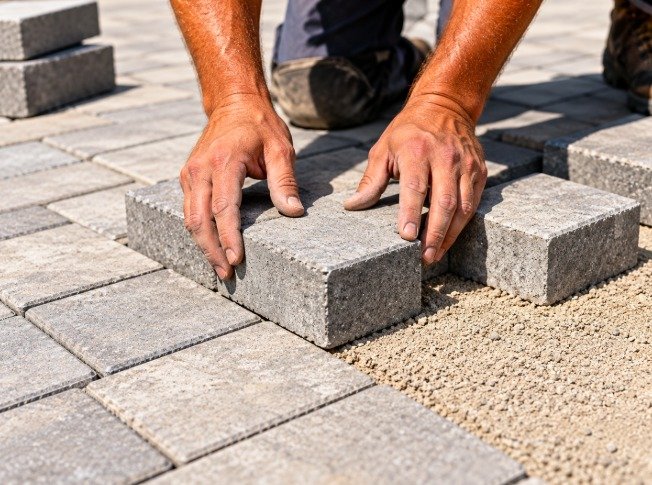
The finished strength depends on more than the pavers themselves. The base, edge restraint, joint material, and compaction all contribute to the stability of the surface.

Large-Format Concrete Pavers

Large-format pavers create a clean and modern appearance.

They are commonly used for:

  • Contemporary patios
  • Pool decks
  • Walkways
  • Courtyards
  • Entry areas

Large pavers can reduce the number of visible joints and make an area feel more open.

Because their larger size can highlight uneven surfaces, accurate base preparation is especially important.

Textured Concrete Pavers

Textured pavers are designed to add surface character and visual depth.

They may imitate:

  • Limestone
  • Slate
  • Flagstone
  • Travertine
  • Rough-cut stone

Textured surfaces can work well in traditional, rustic, Mediterranean, and transitional designs.

Smooth Concrete Pavers

Smooth pavers are often used for modern and minimalist projects.

They provide:

  • Clean joint lines
  • Sharp edges
  • Simple geometry
  • Consistent color

They are commonly installed around contemporary homes, outdoor kitchens, modern pools, and commercial courtyards.

Concrete Brick-Style Pavers

Concrete can also be manufactured in brick-shaped units. These products can provide the appearance of brick with a wider range of available sizes, colors, and finishes.

They can be used for:

  • Driveways
  • Patios
  • Walkways
  • Borders
  • Courtyards

Brick, Cobblestone & Tumbled Pavers

Classic materials with warm color and old-world character.

Red brick paver patio with outdoor dining and a stone fireplace at dusk

Brick Pavers

Brick pavers provide a classic appearance that has been used in paving for generations. They are popular for walkways, patios, courtyards, entryways, driveways, and decorative borders.

Brick-style colors may include:

  • Red
  • Brown
  • Burgundy
  • Charcoal
  • Tan
  • Mixed blends

Traditional patterns include herringbone, running bond, and basket weave.

Brick pavers work especially well with historic-style, colonial, traditional, and cottage architecture.

Clay Brick Pavers

Clay brick pavers are manufactured from natural clay and fired at high temperatures. Their color comes from the clay and firing process rather than a surface coating.

Clay pavers may offer:

  • Rich natural color
  • Traditional appearance
  • Strong color retention
  • Distinctive texture

They can be used for both decorative and functional paving.

Cobblestone Pavers

Cobblestone paving creates an old-world appearance. Traditional cobblestones may be natural stone, while many modern products are manufactured to imitate that look.

Cobblestone-style pavers are popular for:

  • Driveways
  • Entryways
  • Courtyards
  • Borders
  • Walkways

They can be arranged in straight rows, fan patterns, or curved layouts.

Granite Cobblestones

Granite cobblestones provide a traditional natural stone appearance.

They are often used for:

  • Driveway aprons
  • Decorative borders
  • Historic-style projects
  • Courtyards
  • Streetscape-style areas

Their small size also makes them useful around curves.

Concrete Cobblestone-Style Pavers

Concrete cobblestone pavers offer more consistent dimensions while maintaining an aged appearance.

They may include:

  • Tumbled edges
  • Blended colors
  • Textured surfaces

Tumbled Pavers

Tumbled pavers are processed to soften their edges and create an aged appearance. They can resemble materials that have been weathered over time.

Tumbled finishes are common in:

  • Traditional patios
  • Courtyards
  • Mediterranean designs
  • Garden paths
  • Rustic driveways

Natural Stone Pavers

Natural stone creates a premium appearance because every piece has its own color variation, grain, and texture. Natural materials often require more careful selection and installation because thickness and texture can vary between pieces.

Travertine Pavers

Travertine is commonly used in outdoor paving because of its light, natural appearance, in ivory, cream, beige, walnut, and light brown.

It is often used for pool decks, patios, courtyards, walkways, and outdoor kitchens, and is especially popular in Mediterranean and resort-style landscapes.

Granite Pavers

Granite is a dense natural stone that can create a durable and high-end paved surface for driveways, courtyards, walkways, commercial plazas, and entryways.

Finishes range from rough and textured to more refined, in gray, black, pink, brown, and mixed mineral tones.

Limestone Pavers

Limestone has a softer and more uniform natural appearance than some other stones, in beige, cream, light gray, and tan. It can work well for patios, pool decks, courtyards, and walkways.

Different limestone varieties have different levels of density and porosity, so the material should be selected according to the application.

Sandstone Pavers

Sandstone offers natural texture and a wide range of earthy colors, including tan, brown, red, gold, and gray.

It can be used for patios, garden paths, walkways, and courtyards, and works well in rustic and landscape-focused designs.

Bluestone Pavers

Bluestone is known for its blue-gray and charcoal tones and creates a refined natural stone appearance for patios, walkways, courtyards, entry areas, and pool surrounds.

Bluestone may be installed in regular rectangular patterns or more natural irregular layouts.

Flagstone Pavers

Flagstone generally refers to flat natural stone pieces, which may include sandstone, limestone, slate, and other stones, used for patios and walkways.

It can be installed in irregular layouts, rectangular patterns, or stepping-stone designs, and is especially popular for garden paths and natural-style patios.

Slate Pavers

Slate has a layered texture and distinctive color variation in gray, blue, green, black, and rust tones.

Slate can be used for decorative patios, courtyards, and walkways, but material selection should consider weather exposure and surface characteristics.

Porcelain Paver Options

Manufactured outdoor paving units known for their consistent appearance and broad design range.

Modern entry with large-format light gray porcelain pavers and lit planters

Porcelain Pavers

Porcelain pavers can reproduce the look of natural stone, concrete, marble, and wood.

Porcelain pavers are often used for:

  • Modern patios
  • Pool decks
  • Walkways
  • Rooftop spaces
  • Courtyards

Outdoor porcelain should be specifically rated for exterior use. The installation method should match the thickness and intended application of the product.

Wood-Look Porcelain Pavers

Wood-look porcelain offers the appearance of timber without using traditional wood decking.

It may feature:

  • Wood grain texture
  • Plank shapes
  • Brown tones
  • Weathered gray finishes

These pavers are commonly used around pools, patios, outdoor kitchens, and modern courtyards.

Stone-Look Porcelain Pavers

Porcelain can also replicate materials such as:

  • Travertine
  • Limestone
  • Slate
  • Marble

This can create a highly consistent appearance while offering a manufactured paving system.

Marble-Look Porcelain Pavers

Marble-look porcelain can be used where a luxury appearance is desired without using natural marble throughout the entire outdoor surface.

It is often selected for:

  • Upscale patios
  • Pool areas
  • Courtyards
  • Contemporary outdoor spaces

Permeable Pavers & Paver Shapes

Systems that manage water, and shapes that set the look of the finished surface.

Permeable Pavers

Permeable pavers are designed to allow water to move through the joints into a specially prepared base.

They may be installed for:

  • Driveways
  • Parking areas
  • Patios
  • Walkways
  • Commercial sites

Permeable systems usually use wider joints filled with open-graded aggregate. The base below is also designed differently from conventional paving to allow water to pass through the pavement structure.

Permeable Concrete Pavers

Permeable concrete pavers are manufactured specifically for water infiltration systems. They can help reduce surface runoff when installed as part of a properly designed drainage system.

The complete system should account for:

  • Soil conditions
  • Base depth
  • Drainage
  • Expected traffic

Modular Pavers

Modular pavers include several coordinating sizes, such as small squares, medium rectangles, and large rectangles, that can be installed together.

This creates visual variation while maintaining an organized pattern. Modular pavers work well for patios, courtyards, pool decks, and large outdoor areas.

Plank Pavers

Plank pavers are long, narrow paving units that create a linear and modern appearance.

They are commonly used for walkways, patios, pool decks, and outdoor kitchens, and may be manufactured from concrete or porcelain.

Geometric Pavers

Geometric pavers use shapes beyond standard squares and rectangles, including hexagons, diamonds, triangles, and specialty modular shapes.

They can be used to create bold modern patterns in patios, courtyards, and entryways.

Hexagon Pavers

Hexagon pavers create a honeycomb-style pattern and can be installed in one color, multiple colors, random blends, or geometric designs.

Hexagon paving works particularly well in modern outdoor spaces.

Square Pavers

Square pavers provide a simple and balanced layout, installed in straight grids, offset patterns, or mixed-size combinations.

Large square pavers are especially popular in contemporary patios and walkways.

Rectangular Pavers

Rectangular pavers are highly versatile and can be installed in herringbone, running bond, stack bond, and basket weave.

They are suitable for driveways, walkways, patios, and courtyards.

Explore all paver styles, colors and patterns

Paver Materials for Every Area

A paver that performs well on a patio may not automatically be the best choice for a driveway.

Paver Materials for Driveways

Common materials include interlocking concrete pavers, brick pavers, granite pavers, cobblestone-style pavers, and permeable concrete pavers.

The material should be paired with a properly designed base. Thickness, pattern, joint material, and edge restraint also affect performance.

Driveway paving

Paver Materials for Patios

Patios allow more design flexibility because they typically carry pedestrian rather than vehicle loads. Popular materials include concrete pavers, travertine, porcelain, flagstone, limestone, and brick pavers.

The best choice depends on style, furniture use, maintenance, and surrounding landscape.

Patio pavers

Paver Materials for Walkways

Walkway materials may include concrete, brick, natural stone, porcelain, and permeable pavers.

Walkways should provide a comfortable, stable walking surface, and the material should work with any curves, steps, and landscaping.

Walkway pavers

Paver Materials for Pool Decks

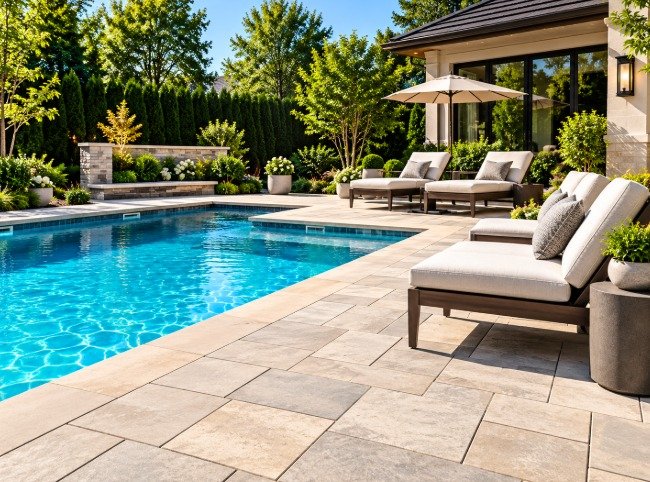
Pool deck materials are regularly exposed to water and barefoot traffic. Common options include travertine, textured concrete pavers, porcelain pavers, limestone, and other suitable natural stone.

Important considerations include surface texture, heat absorption, water exposure, maintenance, and color.

Pool deck pavers

Paver Materials for Courtyards

Courtyards can use nearly any decorative paving material. Popular choices include brick, travertine, concrete pavers, porcelain, and natural stone.

Courtyards also provide opportunities for mixed-material designs.

Paver Materials for Entryways

Entryways often benefit from visually distinctive materials, including brick pavers, natural stone, concrete pavers, granite, and decorative porcelain.

Accent borders can also help frame the entry.

Paver Materials for Commercial Areas

Commercial paving should consider foot traffic, vehicle loads, maintenance, accessibility, and surface stability.

Common commercial materials include interlocking concrete pavers, permeable pavers, granite, porcelain, and brick-style pavers.

How to Choose Paver Materials

Durability, color, texture, size and site conditions all shape the right choice.

Choosing Pavers by Durability

Durability depends on the material, thickness, installation system, traffic, drainage, and maintenance.

A paver that performs well on a patio may not automatically be the best choice for a driveway. The complete pavement structure should be selected according to expected use.

Choosing Pavers by Color

Paver materials are available in gray, charcoal, beige, cream, brown, red, gold, blue-gray, and mixed tones.

Color should be coordinated with:

  • Building exterior
  • Roofing
  • Landscaping
  • Pool finishes
  • Existing stone
  • Retaining walls

Choosing Pavers by Texture

Texture influences both appearance and function.

Paver surfaces may be:

  • Smooth
  • Tumbled
  • Riven
  • Brushed
  • Sand-textured
  • Stone-textured

A pool deck may need a different texture than a formal courtyard.

Choosing Pavers by Size

Paver size affects the visual scale of the project.

Large pavers often create a modern appearance, while smaller units can create detailed traditional patterns.

Smaller pavers may also be easier to install around tight curves.

Choosing Pavers for Hot Areas

Color and material can influence how hot an outdoor surface becomes in direct sunlight. Lighter materials are often preferred around pools and barefoot areas.

Actual surface temperature depends on:

  • Material
  • Color
  • Sun exposure
  • Weather
  • Surrounding conditions

Choosing Pavers for Wet Areas

Areas regularly exposed to water should use materials with a suitable outdoor surface texture.

Wet-area projects may include:

  • Pool decks
  • Outdoor showers
  • Spa areas
  • Garden walkways

The installation should also provide adequate drainage.

Choosing Pavers for Heavy Traffic

Vehicle and high-traffic areas require attention to:

  • Paver thickness
  • Compressive strength
  • Pattern
  • Base preparation
  • Edge restraint

The entire system works together to support the load.

Mixed-Material Paving

Different paver materials can be combined within one project:

  • Concrete pavers with granite borders
  • Travertine patios with brick accents
  • Porcelain patios with gravel strips
  • Concrete driveways with stone entry details

Mixed materials can create a more custom appearance when the colors and textures are coordinated carefully.

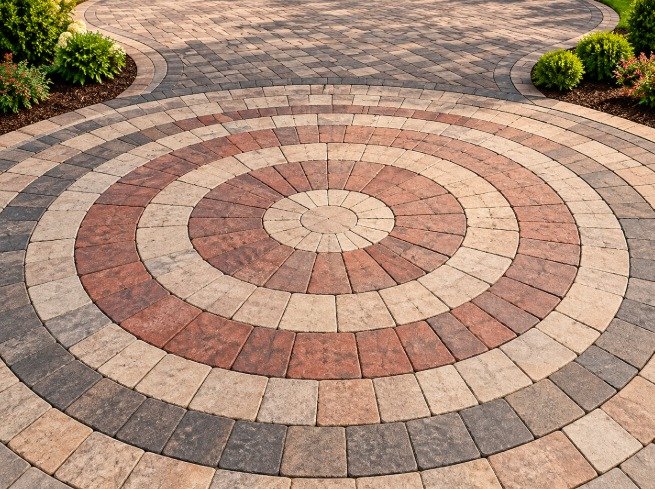
Paver Borders and Material Combinations

Borders are a simple way to add another material without changing the entire surface.

Common combinations include:

  • Gray concrete with charcoal border
  • Travertine with darker stone
  • Brick with concrete pavers
  • Light porcelain with dark accent bands

Borders can frame the surface and help define the overall design.

Comparing Paver Materials

Cost, maintenance, installation, and design preferences should all be considered.

Natural vs Manufactured Pavers

Natural stone provides unique variation because no two pieces are exactly the same. Manufactured pavers typically provide more consistent sizing, predictable colors, coordinated product lines, and easier pattern planning.

Concrete Pavers vs Brick Pavers

Concrete pavers generally offer a wider variety of shapes, textures, and colors. Brick pavers typically provide a more traditional appearance. Both can be used for many outdoor applications when properly installed.

Concrete Pavers vs Natural Stone

Concrete can imitate many natural stone textures while providing more consistent dimensions. Natural stone offers genuine geological variation and a distinctive appearance.

Porcelain Pavers vs Natural Stone

Porcelain can provide a consistent stone-look finish, while natural stone offers unique variation from piece to piece. Outdoor porcelain requires a specific installation approach based on product thickness and project type.

Permeable vs Standard Pavers

Standard pavers generally shed water across the surface. Permeable pavers are part of a drainage system designed to allow water into the base. The choice depends on site drainage, soil, local requirements, project use, and design goals.

Paver Material and Base Preparation

Every paver material depends on the foundation below it.

Base preparation may include:

  1. Excavation
  2. Soil evaluation
  3. Grading
  4. Aggregate installation
  5. Compaction
  6. Bedding preparation

A premium paving material installed over a weak base can still become uneven.

Paver Material and Drainage

Different paver systems handle water differently.

Conventional pavers generally direct water across the surface, while permeable pavers allow water to pass through joints.

The drainage design should be selected before installation begins.

Paver Material and Edge Restraints

Edge restraints help prevent pavers from spreading.

The restraint system may vary according to:

  • Material
  • Traffic
  • Project size
  • Surrounding surfaces

Driveways typically require stronger edge support than small garden paths.

Paver Material and Joint Type

Joint size and material depend on the paver system.

Options may include:

  • Polymeric sand
  • Standard joint sand
  • Open-graded stone for permeable systems

The correct joint material helps stabilize the surface.

Maintenance, Sealing & Repair

Natural stone and manufactured pavers may require different cleaning and sealing products.

Paver Material Maintenance

Routine paver maintenance may include:

  • Sweeping
  • Rinsing
  • Cleaning
  • Re-sanding
  • Weed control
  • Repairing settled areas

Natural stone and manufactured pavers may require different cleaning products.

Paver Sealing

Depending on the material and product, sealing may:

  • Enhance color
  • Reduce staining
  • Make cleaning easier
  • Stabilize joint sand

Not every material needs sealing, and some natural stones require specific products.

Paver Material Repair

One advantage of unit paving is that damaged pavers can often be replaced individually.

Repairs may include:

  • Replacing cracked pavers
  • Resetting loose units
  • Releveling settled sections
  • Restoring joints
  • Repairing borders

Matching an older material may be more difficult if the original product has been discontinued.

Matching Existing Paver Materials

When extending an existing paved area, an exact material match may not always be available.

Possible approaches include:

  • Using the nearest matching paver
  • Creating a contrasting border
  • Reusing existing pavers in visible areas
  • Adding a deliberate transition between materials

A planned contrast can often look better than a material that almost matches but is visibly different.

Paver Material Cost in Los Angeles

Estimated installed prices by material, including materials and labor. Your exact price depends on the area, pattern and base work, so every quote starts with a free on-site evaluation.

Brick & Clay Pavers

$18 – $35 / sq ft

Backyard patio (300 sq ft): $5,400 – $10,500

Porcelain Pavers

$25 – $50 / sq ft

Backyard patio (300 sq ft): $7,500 – $15,000

Travertine & Natural Stone

$25 – $55 / sq ft

Backyard patio (300 sq ft): $7,500 – $16,500

What Affects the Cost of Paver Materials

  • Material type and grade
  • Paver thickness and size
  • Driveway vs. patio base depth
  • Pattern and cutting required
  • Borders and mixed materials
  • Permeable base systems
  • Removal of existing surfaces
  • Drainage work required
  • Site access and delivery

Prices are estimates only, not a final quote. Permeable systems typically cost more because of the deeper, open-graded base. Granite and specialty stone are priced by selection.

GET MY EXACT PRICE

Our Paver Material Selection Process

Eight steps to the right material and a complete installation plan.

  1. 1

    Evaluate the Project Area

    We review the size, location, traffic, drainage, and surrounding property.

  2. 2

    Determine the Intended Use

    A driveway, pool deck, patio, and walkway each have different requirements.

  3. 3

    Select Suitable Materials

    Materials are narrowed down according to performance needs.

  4. 4

    Compare Appearance

    Color, texture, size, and overall style are reviewed.

  5. 5

    Choose a Pattern

    The installation layout is selected.

  6. 6

    Add Borders and Accents

    Additional materials can be used for customization.

  7. 7

    Plan the Base and Drainage

    The supporting structure is designed for the selected material.

  8. 8

    Finalize the Installation Plan

    Paver type, layout, elevations, joints, and transitions are confirmed before work begins.

Choosing the Right Paver Material for Your Property

There is no single paving material that is best for every project.

A modern pool deck may benefit from light porcelain or travertine, while a driveway may require interlocking concrete pavers designed for vehicle traffic. A traditional courtyard may look best with brick, while a natural garden path may use flagstone or sandstone.

Considering all of these factors together can help create a finished surface that looks appropriate for the property and performs well over time.

The right material should balance:

  • Appearance
  • Durability
  • Surface texture
  • Traffic
  • Drainage
  • Maintenance
  • Installation requirements

Paver Materials FAQs

Interlocking concrete pavers are the most common choice for driveways because they are strong, affordable and available in many colors and styles. Clay brick, granite and cobblestone-style pavers are also good options for a more traditional or high-end look. Whatever the material, a driveway needs pavers of the right thickness, a deeper compacted base, a strong interlocking pattern like herringbone and solid edge restraints to handle vehicle loads.

Travertine is one of the most popular pool deck materials in Southern California because it has a natural texture and light colors that stay more comfortable underfoot. Light-colored textured concrete pavers and exterior-rated porcelain are also excellent choices. Around pools, look for good traction when wet, light colors that absorb less heat and a material that handles water and pool chemicals. We help you compare options side by side.

They offer different benefits. Quality concrete pavers are strong, consistent in size and color, easier to plan into patterns and usually cost less. Natural stone offers unique, genuine variation that no manufactured product fully matches, and often a more premium look, but it can cost more and may need more careful installation and specific sealers. Many homeowners choose concrete for driveways and natural stone for patios or pool areas.

Yes, when you use porcelain made specifically for exterior use and install it with the right system. Outdoor porcelain pavers are typically thicker than indoor tile and are designed to handle sun, water and foot traffic. They are popular for modern patios, pool decks and walkways. Porcelain requires a very flat, well-prepared base and precise installation, and the method depends on the product thickness and whether vehicles will use the area.

Permeable pavers are a good choice when you want to reduce runoff, manage stormwater on your property or meet local drainage requirements. They allow rainwater to soak through wider joints into a specially designed stone base instead of running off the surface. They require a deeper, different base than standard pavers and suitable soil conditions, so we evaluate your site to see whether a permeable system makes sense for your project.

REQUEST A PAVER MATERIAL & INSTALLATION ESTIMATE

Selecting the right material is an important first step. We evaluate the project area, intended use, drainage, traffic requirements, colors, textures, patterns and material options before developing an installation plan.

Large-format porcelain paver entry

WHY CHOOSE

DREAM PAVING LOS ANGELES?

  • Over 13 Years of Experience
  • Licensed, Bonded and Insured
  • Every Major Paver Material
  • Honest Material Recommendations
  • Proper Base Preparation
  • Free, Honest Estimates
  • On-Time Project Completion
  • Clean, Respectful Crews
  • Beautiful & Long-Lasting Results