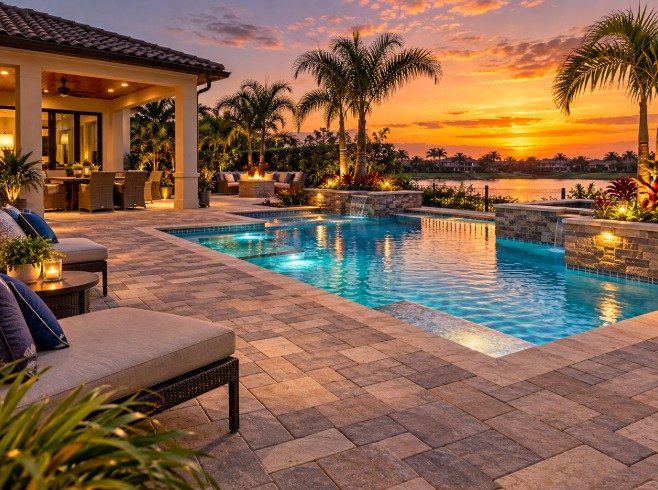
Lit swimming pool with a paver pool deck, lounge seating and palm trees at sunset

Pool Deck PaversServices Los Angeles

New pool decks, replacement, repair, renovation, extensions and coping coordination, built for water, sun and bare feet.

A Pool Deck Built for Comfort and Performance

Pool deck pavers can transform the area around a swimming pool into a clean, comfortable, and visually appealing outdoor space. A well-designed pool deck should provide more than appearance alone. It should create a practical walking surface, help manage water around the pool, complement the surrounding landscape, and provide enough space for lounge chairs, tables, outdoor kitchens, shade structures, and other features.

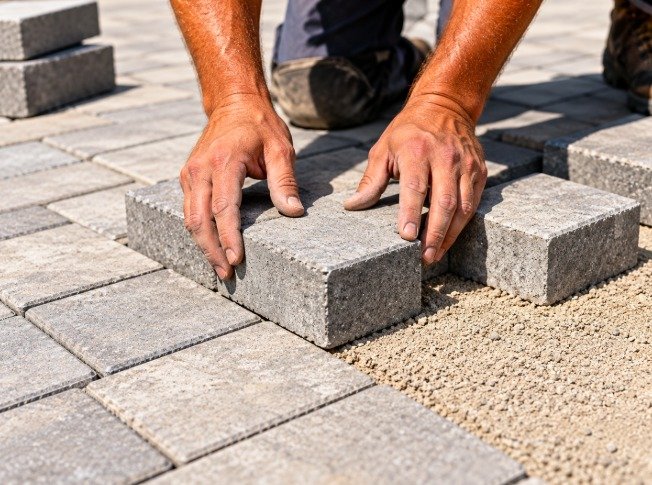
Our pool deck paver services include new installation, replacement, repair, resurfacing, extensions, drainage correction, custom layouts, decorative borders, coping coordination, and complete pool-area renovations. Whether the project involves a new swimming pool, an older deck that has become uneven, or an existing patio that needs to be expanded around the pool, proper preparation and material selection are essential.

Pool environments create special conditions that should be considered during design and installation. The surface is frequently exposed to water, sunlight, chemicals, foot traffic, furniture, and changing temperatures. For this reason, the paver type, texture, color, base preparation, drainage, and edge details should all be selected with long-term performance in mind.

Paver pool deck with a charcoal border, lounge chairs and water features

Our Pool Deck Paver Services

From brand-new pool decks to repairs around the coping, every project is planned around water, safety and how you use your pool.

New Pool Deck Paver Installation

New pool deck paver installation is ideal for newly constructed pools, complete backyard renovations, or properties that currently have unfinished ground around the pool. The project begins with evaluating the pool shape, yard layout, elevations, drainage, access points, and intended use of the space.

A new pool deck can be designed around:

  • In-ground swimming pools
  • Spas
  • Hot tubs
  • Plunge pools
  • Lap pools
  • Freeform pools
  • Geometric pools
  • Infinity-style pools
  • Residential pools
  • Commercial pools

The installation area is excavated and prepared with a stable base before the pavers are laid. Correct grading is especially important around a pool because water should move away from structures and should not remain trapped in low areas.

The layout should also account for pool equipment, gates, steps, drains, landscaping, seating areas, and connections to nearby patios or walkways.
Pool Deck Paver Replacement

Older pool decks can become worn, cracked, faded, uneven, or outdated. Replacement may be a practical solution when the existing deck has extensive damage or when the homeowner wants to redesign the entire pool area.

Pool deck replacement can involve removing:

  • Old concrete
  • Damaged pavers
  • Loose stone
  • Deteriorated deck materials
  • Outdated decorative surfaces

Once the old surface is removed, the base can be evaluated and corrected before new pavers are installed.

Replacement also creates an opportunity to improve:

  • Drainage
  • Deck width
  • Walking space
  • Seating areas
  • Paver style
  • Pool coping
  • Outdoor living layout
  • Transitions to other patios

A complete replacement can make an older pool area look and function like a newly built outdoor space.

Pool Deck Paver Repair

One advantage of paver pool decks is that individual areas can often be repaired without replacing the entire surface.

Pool deck paver repair may be needed for:

  • Sunken pavers
  • Loose pavers
  • Cracked units
  • Uneven areas
  • Separated joints
  • Settled edges
  • Missing joint material
  • Drainage-related movement
  • Trip hazards
  • Shifting near the pool edge

When pavers settle, the affected section can often be lifted so the underlying material can be corrected. The pavers can then be reinstalled and leveled with the surrounding surface.

Repairing the cause of the problem is important. Simply resetting the surface without correcting a weak base or drainage issue may allow the same problem to return.

Pool Deck Resurfacing and Renovation

Some pool decks remain structurally usable but need cosmetic and functional improvement.

A pool deck renovation may include:

  • Releveling pavers
  • Replacing damaged units
  • Cleaning the deck
  • Re-sanding joints
  • Adding new borders
  • Correcting low areas
  • Improving drainage
  • Expanding seating zones
  • Updating the color scheme

Renovation can be a practical alternative to full replacement when the majority of the existing deck is still in acceptable condition.

It can also help modernize an older backyard without rebuilding every outdoor feature.

Pool Deck Extension

Pool decks often need more space as the way a property is used changes.

An extension can provide room for:

  • Lounge chairs
  • Dining tables
  • Umbrellas
  • Outdoor kitchens
  • Fire pits
  • Pergolas
  • Cabanas
  • Outdoor bars
  • Additional seating
  • Spa access

Pool deck extensions can be built onto one side or several sides of the existing area. The new section should be properly supported and carefully matched to the elevation of the existing deck.

When the original paver is no longer available, a contrasting or complementary material can be used to create an intentional design transition.

Residential Pool Deck Pavers

Residential pool decks can be customized around the homeowner's lifestyle.

Services may include:

  • New pool deck installation
  • Deck replacement
  • Paver repair
  • Pool deck extension
  • Coping coordination
  • Outdoor kitchen areas
  • Spa areas
  • Fire pit areas
  • Walkway connections

The goal is to make the pool area comfortable for everyday use while maintaining a cohesive appearance with the rest of the property.

Residential paving services

Pool Deck Pavers for Every Pool

Geometric or freeform, compact or resort-sized, every pool deck is designed around its shape, style and the way you use it.

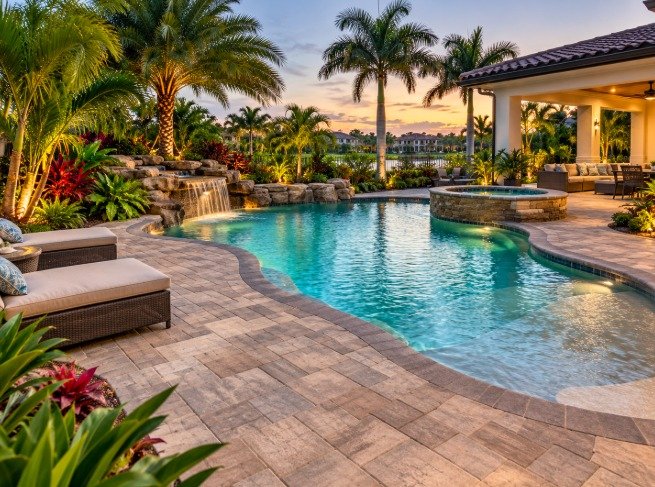
Freeform pool with a raised spa, rock waterfall and paver deck

Pavers Around In-Ground Pools

Pavers are commonly used around in-ground pools because they can be arranged to follow both straight and curved pool shapes.

The deck can be designed to provide:

  • Walking space
  • Lounge areas
  • Seating areas
  • Access to pool equipment
  • Connections to patios
  • Safe transitions to landscaping

The pool shape should influence the paver pattern and layout. For example, rectangular pavers can emphasize the clean lines of a geometric pool, while modular or natural-style pavers can complement a freeform pool.

Water features
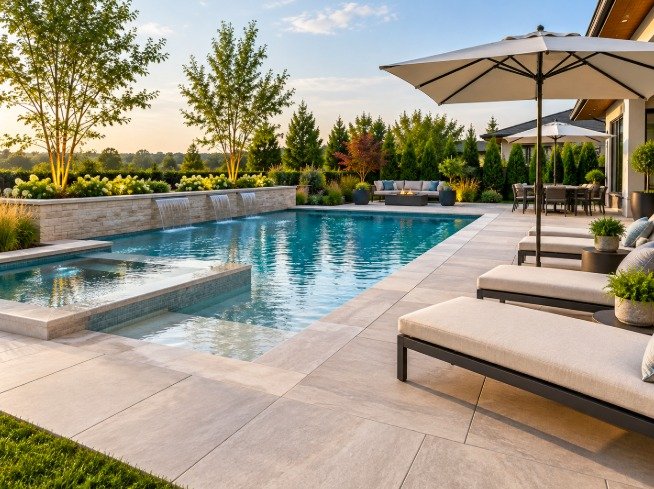
Modern pool deck with large-format light pavers, lounge chairs and umbrella

Modern Pool Deck Pavers

Modern pool decks often use large-format pavers, neutral colors, straight lines, minimal joint patterns, gray or light beige tones, and porcelain or smooth concrete styles.

The design may connect directly with modern landscaping, glass fencing, outdoor kitchens, and architectural pool shapes.

Traditional Pool Deck Pavers

Traditional pool areas may use brick-style pavers, tumbled pavers, natural stone, earth tones, decorative borders, and curved layouts.

These materials can work well with classic homes, Mediterranean designs, and established landscaping.

Pavers Around Spas and Hot Tubs

Spa and hot tub areas also benefit from a durable paved surface. Pavers can create a defined platform around the spa while connecting it visually with the rest of the patio or pool deck.

Important considerations include:

  • Step access
  • Drainage
  • Equipment access
  • Slip resistance
  • Furniture placement
  • Privacy structures

The surface should also be planned to avoid creating water traps around the spa base.

Slip-Resistant Pool Deck Pavers

Pool decks are regularly exposed to water, so surface texture is an important material consideration. Many homeowners prefer pavers with a textured or non-polished finish because they can provide better traction than very smooth surfaces.

Material selection may consider:

  • Surface texture
  • Joint layout
  • Water exposure
  • Barefoot comfort
  • Pool use
  • Maintenance requirements

No outdoor surface is completely slip-proof, especially when wet, but choosing a suitable texture can help create a more practical pool environment.

Cool Pool Deck Pavers

Pool decks are often walked on barefoot, which makes heat absorption an important consideration. Lighter-colored pavers generally absorb less heat than very dark materials.

Options commonly selected for warmer climates:

  • Light concrete pavers
  • Travertine
  • Light porcelain pavers
  • Certain natural stones

The actual surface temperature can vary depending on color, material, sunlight, air temperature, and surrounding conditions. Choosing a lighter deck can also help create a brighter visual appearance around the pool.

Small Pool Deck Pavers

Even a compact pool area can be made more functional with careful paver design.

Small pool decks should prioritize:

  • Comfortable walking paths
  • Furniture clearance
  • Pool access
  • Drainage
  • Safe transitions

Using fewer materials and simpler patterns can help prevent a small area from looking overly busy. Large-format pavers can also create a clean appearance in compact spaces.

Large Pool Deck Pavers

Large pool decks can include multiple outdoor living zones.

A larger project may include:

  • Pool lounging area
  • Outdoor dining
  • Outdoor kitchen
  • Cabana
  • Fire pit
  • Spa
  • Pergola
  • Bar area
  • Walkways

Different paver patterns or borders can be used to visually organize these spaces without using physical walls.

Commercial Pool Deck Pavers

Pavers can also be used around commercial and shared pools.

Applications include:

  • Hotels
  • Resorts
  • Apartment complexes
  • Condominiums
  • Community pools
  • Fitness facilities
  • Clubs

Commercial pool decks may experience significantly more foot traffic than residential decks. The layout should also account for furniture movement, maintenance access, drainage, and public circulation.

Pool Deck Design: Coping, Borders & Patterns

The details around the water's edge and the pattern across the deck have a big effect on the finished look.

Pool Coping and Pavers

Pool coping forms the edge around the swimming pool and creates a transition between the pool shell and the deck.

Pool deck pavers can be coordinated with:

  • Bullnose coping
  • Natural stone coping
  • Concrete coping
  • Paver coping
  • Porcelain coping

The coping may match the deck or contrast with it. A contrasting coping color can visually define the pool perimeter, while matching materials can create a seamless appearance.

Proper elevation and installation around the coping are essential for a clean transition.

Pool Deck Borders

Borders can add contrast and help define the perimeter of the deck.

Popular border styles include:

  • Dark accent borders
  • Matching borders
  • Double borders
  • Soldier course
  • Contrasting stone borders

Borders can also be used to separate:

  • Dining areas
  • Lounge areas
  • Walkways
  • Spa zones
  • Outdoor kitchens

A well-designed border can make a basic paver layout look much more customized.

Decorative paving services

Pool Deck Paver Patterns

The paver pattern can dramatically influence the appearance of the pool area.

Running Bond

Rectangular pavers are staggered in rows for a simple and classic look.

Herringbone

Pavers are arranged at angles to create a more dynamic pattern.

Modular Pattern

Several paver sizes are mixed together for a varied appearance.

Stack Bond

Straight joint lines create a structured, contemporary design.

Random Layout

Different sizes are arranged to produce a more natural appearance.

Large-Format Layout

Large rectangular or square pavers can create a modern, minimalist pool deck.

Explore all paver styles, colors and patterns

Pool Deck Paver Materials

Each stone has different characteristics related to texture, heat absorption, porosity, and maintenance, so material selection should consider both appearance and practical poolside use.

Concrete Pool Deck Pavers

Concrete pavers are a popular choice because they are available in a large range of colors, shapes, sizes, and finishes. They can be designed to resemble natural stone, slate, travertine, smooth concrete, or brick.

Concrete pavers can be used for traditional, transitional, and modern pool designs. They also allow damaged units to be replaced individually if necessary.

Travertine Pool Deck Pavers

Travertine is commonly used around swimming pools because of its natural appearance and variety of light earth-tone colors. It can create a high-end look around luxury pools, Mediterranean-style homes, resort-style backyards, spas, and courtyards.

Because natural stone varies in color and texture, each installation has a slightly different appearance. Travertine should be selected and installed according to the needs of the specific pool environment.

Porcelain Pool Deck Pavers

Porcelain pavers are frequently used in modern pool designs. They are available in finishes that imitate stone, concrete, wood, and marble, and can create a very clean and consistent appearance.

Outdoor porcelain pavers should be specifically rated for exterior use, and the installation system should be appropriate for the material and site conditions.

Natural Stone Pool Deck Pavers

Natural stone can provide a distinctive poolside appearance. Options may include limestone, sandstone, granite, bluestone, flagstone, and travertine.

Each stone has different characteristics related to texture, heat absorption, porosity, and maintenance. Material selection should therefore consider both appearance and practical poolside use.

Permeable Pool Deck Pavers

Permeable pavers can be used in certain pool areas where water management is an important concern. These systems allow water to move through wider joints and into a specially prepared open-graded base.

Permeable paving may help reduce surface runoff, but it requires a different base design than conventional paver installations. Site drainage and soil conditions should be evaluated before choosing this system.

Compare all paver materials

Pool Deck Base Preparation

A stable paver deck begins below the surface.

Typical base preparation can include:

  1. Excavation
  2. Soil evaluation
  3. Compacted aggregate base
  4. Drainage preparation
  5. Bedding layer
  6. Paver installation
  7. Edge restraint
  8. Joint filling

The base depth and construction method depend on site conditions and the selected paver system. Proper compaction is important to reduce settling and uneven movement.

Pool Deck Drainage

Drainage is one of the most important parts of pool deck construction. Water from the pool, rain, and cleaning should have a place to flow.

Drainage solutions may include:

  • Proper deck slope
  • Channel drains
  • Deck drains
  • Catch basins
  • Landscape drainage
  • Permeable paving
  • Swales

The deck should generally be graded so water moves away from buildings and does not collect around doors, walls, or pool equipment. Poor drainage can cause standing water, settlement, staining, or base deterioration.

Pool Deck Edge Restraints

Edge restraints help maintain the shape of the paver deck and prevent the outer units from spreading.

They are especially important where the deck meets:

  • Grass
  • Landscaping
  • Gravel
  • Mulch
  • Open soil

The correct restraint system depends on the paver type, base, and surrounding materials.

Pool Deck Paver Joint Sand

Joint material helps stabilize pavers and maintain consistent spacing. Polymeric sand is often used in traditional pool deck paver systems.

It can help reduce:

  • Joint erosion
  • Paver movement
  • Weed growth
  • Ant activity

The material should be compatible with the paver type and installed according to the manufacturer's recommendations.

Pool Deck Paver Cost in Los Angeles

Estimated installed prices, including materials and labor. Your exact price depends on your pool, deck size and design, so every quote starts with a free on-site evaluation.

Travertine

$25 – $50 / sq ft

Pool deck (500 sq ft): $12,500 – $25,000

Porcelain Pavers

$25 – $50 / sq ft

Pool deck (500 sq ft): $12,500 – $25,000

Natural Stone

$30 – $55 / sq ft

Pool deck (500 sq ft): $15,000 – $27,500

What Affects the Cost of Your Pool Deck

  • Deck size and pool shape
  • Paver material and pattern
  • Removal of old concrete or pavers
  • New coping or coping replacement
  • Cutting around curves and drains
  • Drainage work required
  • Borders and decorative details
  • Spa, steps and elevation changes
  • Site access for equipment

Prices are estimates only, not a final quote. Coping, drains and pool equipment work are priced per project. Repairs and renovations are priced after an inspection.

GET MY EXACT PRICE

Pool Deck Paver Care

Pool deck pavers are exposed to sunscreen, leaves, water, food, dirt, and pool chemicals.

Pool Deck Paver Cleaning

Periodic cleaning can help preserve their appearance.

Cleaning may involve:

  • Sweeping
  • Rinsing
  • Low-pressure washing
  • Spot treatment
  • Joint maintenance

Cleaning methods should be appropriate for the paver material.

Aggressive pressure washing can remove joint material or damage certain surfaces if done incorrectly.

Pool Deck Paver Sealing

Some paver decks can be sealed to change the appearance or make maintenance easier.

Depending on the material and sealer, sealing may help:

  • Enhance color
  • Reduce staining
  • Stabilize joint material
  • Simplify cleaning

Not every paver system needs sealing.

Natural stone, concrete, and porcelain can have different requirements, so a compatible product should be selected.

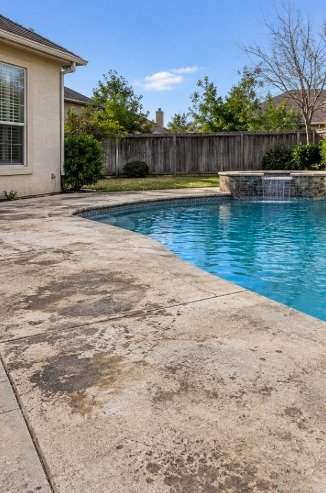
Stained, worn concrete pool deck before paver replacement

Signs Your Pool Deck Pavers Need Repair

Common warning signs include:

  • Sunken pavers
  • Loose units
  • Rocking pavers
  • Trip hazards
  • Cracked pavers
  • Eroded joints
  • Standing water
  • Separating edges
  • Uneven transitions
  • Settlement near coping

Addressing small issues early can help prevent larger sections from becoming unstable.

Our Pool Deck Paver Installation Process

Ten steps from the first site visit to the final walk-through.

  1. 1

    Site Evaluation

    We review the pool, existing deck, yard elevations, drainage, access, and intended use.

  2. 2

    Material and Design Selection

    Paver size, color, texture, pattern, coping, and borders are planned.

  3. 3

    Excavation and Removal

    Existing materials and unsuitable soil are removed as necessary.

  4. 4

    Grading and Drainage

    The site is shaped to manage water properly.

  5. 5

    Base Installation

    Aggregate material is installed and compacted.

  6. 6

    Bedding Preparation

    The paver bedding layer is prepared at the correct elevation.

  7. 7

    Paver Installation

    The selected pavers are installed according to the design.

  8. 8

    Cutting and Edge Work

    Pavers are cut around pool curves, coping, drains, and other features.

  9. 9

    Joint Filling

    Joint material is installed between the pavers.

  10. 10

    Final Inspection

    The finished pool deck is checked for alignment, drainage, transitions, and stability.

Why Choose Pavers for a Pool Deck?

Pavers offer many design and maintenance advantages for pool areas. They can be designed around both simple rectangular pools and complex freeform layouts.

Create a Complete Poolside Outdoor Living Area

A pool deck can be much more than a narrow strip around the water. With proper planning, the paver surface can connect the pool to the rest of the backyard and create a complete outdoor living environment.

The design may include:

  • Lounge areas
  • Dining areas
  • Outdoor kitchens
  • Fire features
  • Spas
  • Pergolas
  • Walkways
  • Garden areas
  • Cabanas

Planning these features together helps create better traffic flow and a more unified appearance.

Benefits of paver pool decks:

  • Wide material selection
  • Custom patterns
  • Decorative borders
  • Individual paver replacement
  • Multiple colors and textures
  • Flexible layouts
  • Easy integration with patios
  • Attractive poolside appearance

Pool Deck Paver FAQs

Yes. Pavers are one of the most popular pool deck surfaces because they come in many colors, textures and patterns, and many options provide good traction when wet. Because each paver is a separate piece, the deck can flex slightly with ground movement instead of cracking like a concrete slab. If a section settles or is damaged, individual pavers can be lifted, corrected and reset without replacing the whole deck.

All outdoor surfaces warm up in direct sun, but color and material make a big difference. Light concrete pavers, travertine and light porcelain generally stay more comfortable underfoot than dark gray or charcoal pavers. In the Los Angeles climate, most homeowners choose lighter tones for the main walking areas and use darker colors only for borders or accents. We can show you samples in real sunlight before you decide.

Yes. We remove the old concrete, evaluate the base underneath and correct any grading or drainage problems before installing the new pavers. This is also a good time to widen the deck, add seating or dining areas, and update or replace the coping. In some cases, pavers can be installed over sound concrete, but removal usually gives better long-term results and avoids raising the deck height near doors and the pool edge.

Quality pavers are made to handle normal pool water and splashing. Over time, chlorine, salt water, sunscreen and minerals can cause fading, staining or buildup, especially on natural stone. Rinsing the deck regularly, cleaning spills and, where recommended, applying a compatible sealer help protect the surface. We recommend materials and sealers suited to your pool type, including saltwater pools, which can be harder on some natural stones.

Most residential pool decks take about one to two weeks, depending on deck size, removal of existing concrete, coping work, drainage improvements and the number of cuts needed around curves and drains. Smaller repairs or renovations can often be completed in a few days. The pool can usually stay filled during deck work. We give you a clear timeline with your written estimate before any work begins.

REQUEST A POOL DECK PAVER ESTIMATE

Building a new pool, replacing an aging deck or upgrading your pool area? We evaluate the pool layout, deck dimensions, drainage, base conditions, material choices, coping and surrounding features before developing a plan.

Freeform pool with paver deck and spa

WHY CHOOSE

DREAM PAVING LOS ANGELES?

  • Over 13 Years of Experience
  • Licensed, Bonded and Insured
  • Proper Base Preparation
  • Drainage Planned Into Every Job
  • Cool, Slip-Resistant Options
  • Free, Honest Estimates
  • On-Time Project Completion
  • Clean, Respectful Crews
  • Beautiful & Long-Lasting Results