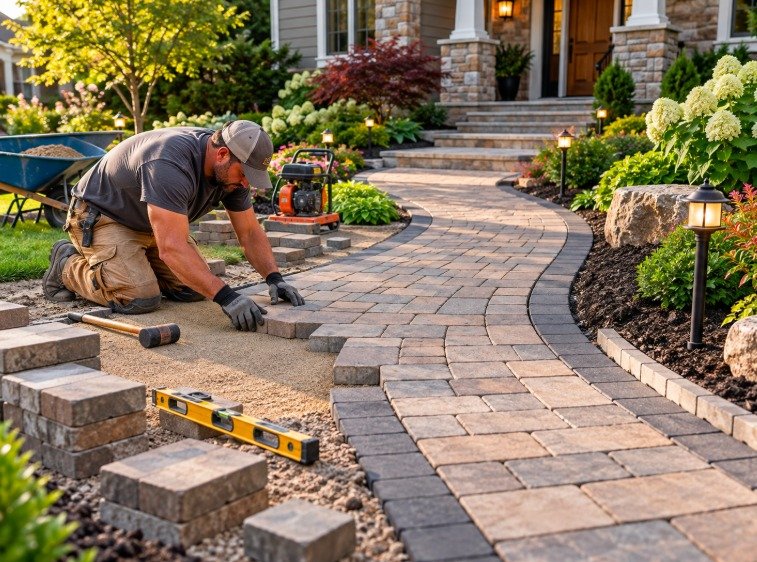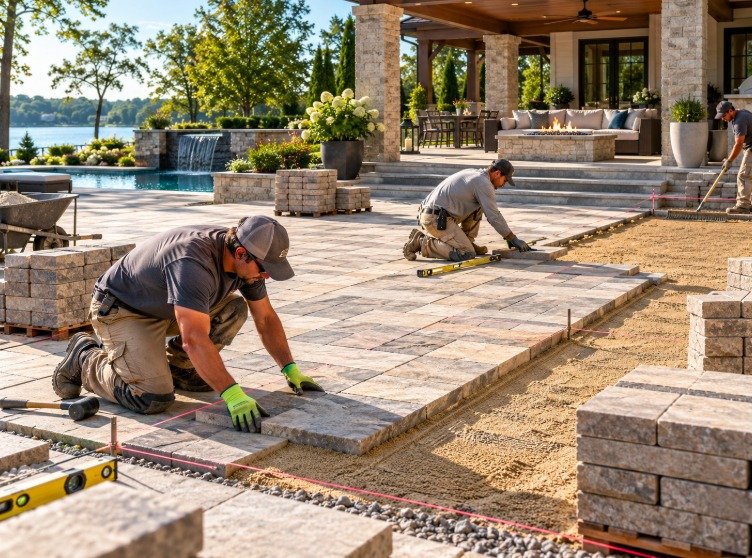
Paving crew installing pavers on a sand bedding layer beside a pool and outdoor living area

Paver InstallationServices Los Angeles

Professional paver installation for driveways, patios, walkways, pool decks, courtyards and entryways, built on a properly prepared base.

Paver Surfaces Built to Last

Professional paver installation can transform driveways, patios, walkways, pool decks, courtyards, entryways, and outdoor living areas into durable and attractive finished spaces. Pavers offer flexibility in design, color, pattern, texture, and material while also allowing individual sections to be repaired or replaced more easily than many continuous surfaces.

Our paver installation services cover new construction, replacement projects, expansions, decorative upgrades, outdoor living areas, residential properties, commercial properties, and custom landscape designs. Every project begins with proper planning because the long-term performance of a paver surface depends just as much on the base, grading, drainage, and edge support as it does on the pavers themselves.

A professionally installed paver surface should look clean and finished, remain stable under regular use, drain properly, and fit naturally with the surrounding property.

Two installers setting pavers on a screeded sand bed in front of a patio

Our Paver Installation Services

New installations, replacements, repairs and releveling for homes and businesses across Los Angeles County.

New Paver Installation

New paver installation is ideal for properties that need a completely new paved area.

Pavers can be installed for:

  • Driveways
  • Patios
  • Walkways
  • Pool decks
  • Courtyards
  • Entryways
  • Outdoor kitchens
  • Fire pit areas
  • Garden paths
  • Commercial pedestrian areas
  • Parking areas
  • Side yards

The installation process generally begins by defining the layout and determining the finished elevation. The site is then excavated and prepared with the appropriate base material. Once the base is compacted, a bedding layer is added and the pavers are carefully installed according to the selected design.

Edge restraints and joint material complete the system and help keep the surface stable.
Residential Paver Installation

Residential paver installation can improve both the function and appearance of a home’s exterior.

Common residential projects include:

  • Driveway pavers
  • Patio pavers
  • Pool deck pavers
  • Walkway pavers
  • Backyard pavers
  • Entryway pavers
  • Garden paths
  • Courtyard pavers
  • Fire pit areas
  • Outdoor kitchen areas

Residential pavers can be selected to complement the style of the home, landscaping, roof color, exterior finishes, and surrounding hardscape.

A modern home may use large-format pavers with clean lines, while a traditional home may benefit from brick-style or textured pavers.

Residential paving services

Paver Replacement

Older paver surfaces may need replacement when they have extensive settlement, damaged materials, poor drainage, or outdated designs.

Replacement may involve:

  • Removing existing pavers
  • Correcting the base
  • Regrading the site
  • Installing new pavers
  • Updating borders
  • Improving drainage

Replacement can also be used to completely redesign the layout.

Paver Repair

Many paver surfaces can be repaired in smaller sections.

Paver repair may address:

  • Sunken pavers
  • Loose units
  • Cracked pavers
  • Edge separation
  • Missing joint material
  • Trip hazards
  • Uneven sections
  • Drainage-related settlement

One of the major advantages of pavers is that individual units can often be removed and reset.

Paver Releveling

Over time, sections of a paver surface can settle. Paver releveling generally involves removing affected pavers, correcting the underlying material, and reinstalling the surface at the proper elevation.

Releveling may be useful for:

  • Low areas
  • Depressions
  • Trip hazards
  • Water collection
  • Rocking pavers

The underlying cause of settlement should be addressed before the surface is reset.

Commercial Paver Installation

Commercial pavers can be used to create durable and attractive surfaces in areas with higher foot traffic and more frequent use.

Commercial applications may include:

  • Retail centers
  • Hotels
  • Restaurants
  • Apartment complexes
  • Office buildings
  • Schools
  • Medical facilities
  • Courtyards
  • Outdoor dining areas
  • Walkways
  • Entry plazas
  • Common areas

Commercial projects often require careful planning around traffic flow, accessibility, drainage, maintenance access, and the surrounding building layout.

Paver Installation for Every Project

Every area of your property has different loads, drainage needs and design goals, so each installation is planned for the way it will be used.

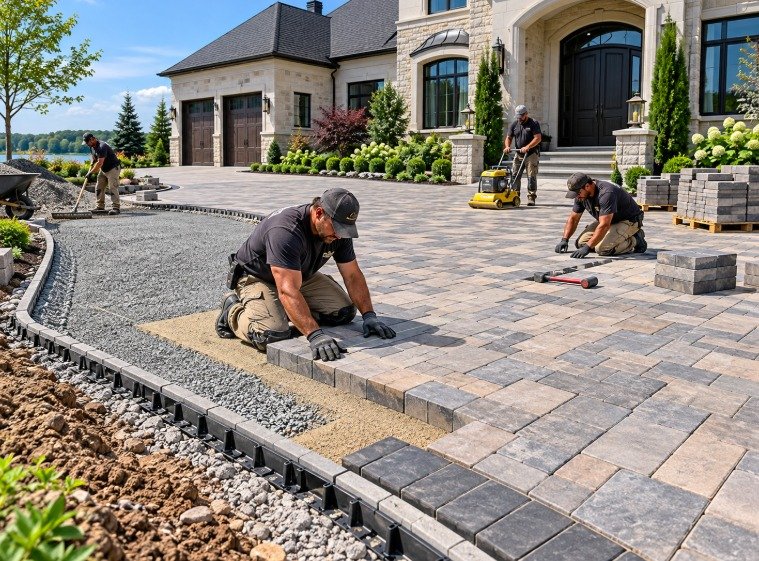
Crew installing a paver driveway with edge restraints, gravel base and plate compactor

Driveway Paver Installation

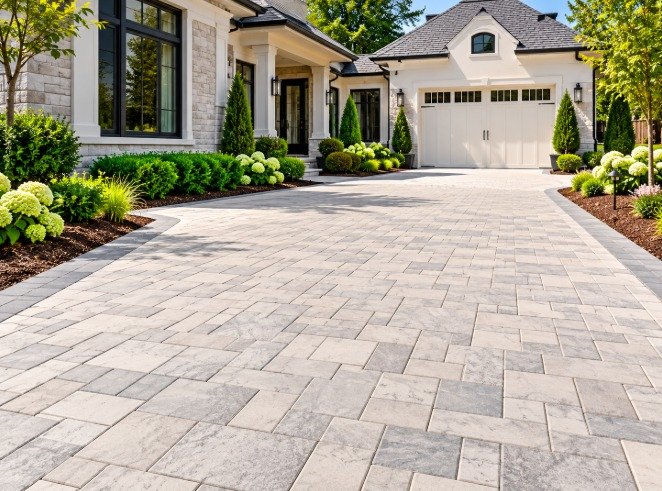
Paver driveways can create a distinctive entrance while providing a durable surface for vehicle traffic. A driveway paver installation requires a strong, properly compacted base because the surface must support the weight and movement of vehicles.

Driveway pavers can be installed in:

  • Straight driveways
  • Circular driveways
  • Wide driveways
  • Multi-car driveways
  • Driveway aprons
  • Private driveway entrances

Patterns such as herringbone are commonly used for vehicle areas because they can provide strong interlock. The thickness of the paver and the base structure should be selected according to the expected load.

Driveway paving services
Installer laying a curved paver walkway with a charcoal border toward a front porch

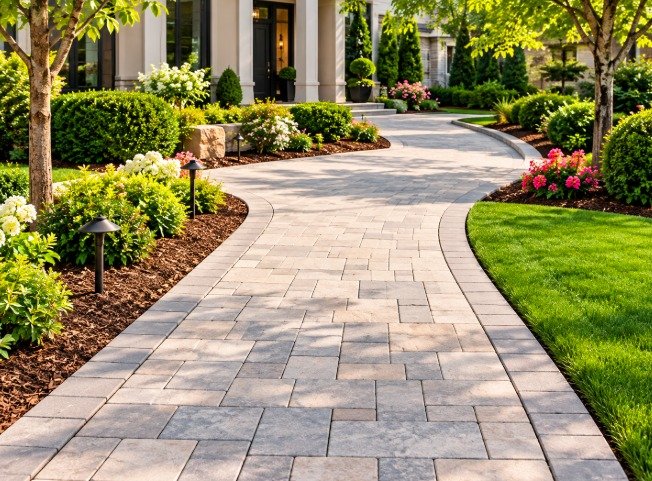
Walkway Paver Installation

Walkway pavers can create clear pedestrian paths around residential and commercial properties.

Walkways may connect:

  • Driveways to entrances
  • Patios to pools
  • Homes to detached garages
  • Gardens to outdoor living areas
  • Side gates to backyards

A walkway can be straight, curved, narrow, wide, decorative, or minimal depending on the property. Proper edge support is especially important on narrow paths because unsupported edges can spread over time.

Walkway paver services

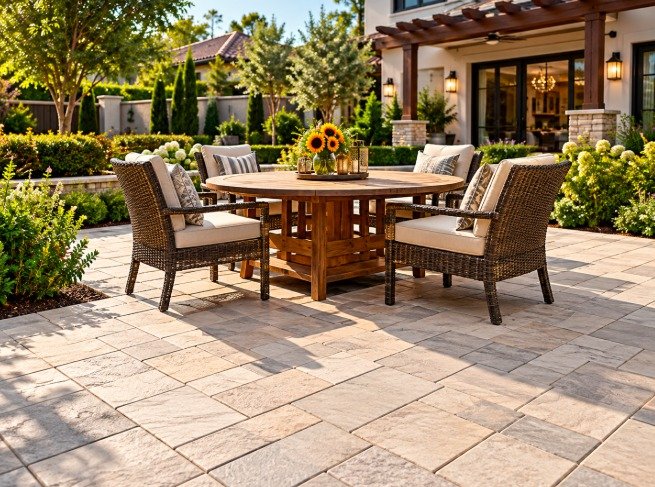
Patio Paver Installation

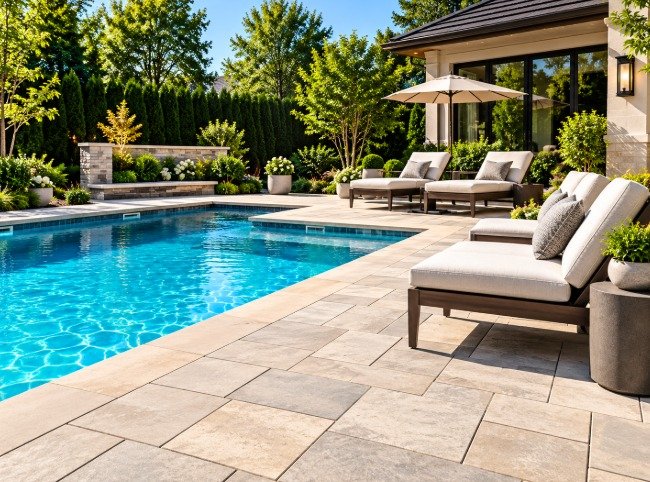
Paver patios create defined outdoor spaces for dining, relaxing, grilling, and entertaining.

A patio can be designed around:

  • Outdoor furniture
  • Fire pits
  • Outdoor kitchens
  • Pergolas
  • Grills
  • Hot tubs
  • Garden areas
  • Lounge spaces

Patio pavers are available in many colors and styles, making them suitable for both simple and highly customized designs. The finished surface should be graded properly so water moves away from the home and does not collect in low areas.

Patio paver services

Pool Deck Paver Installation

Pool deck pavers are commonly selected because of their design flexibility and the ability to create textured walking surfaces around water.

Pool deck designs may include:

  • Concrete pavers
  • Travertine
  • Porcelain pavers
  • Natural stone
  • Light-colored pavers
  • Decorative borders

Poolside surfaces should be selected with texture, heat absorption, water exposure, and barefoot comfort in mind. Drainage and coping transitions should also be carefully planned.

Pool deck paver services

Backyard Paver Installation

Backyard pavers can be used to create practical and decorative outdoor areas.

Projects may include:

  • Seating areas
  • Outdoor dining
  • Fire pits
  • Walkways
  • Outdoor kitchens
  • Garden patios
  • Pergola bases
  • Entertainment spaces

Backyard paver installation can help turn unused lawn or dirt areas into more functional outdoor living space.

Courtyard Paver Installation

Pavers can give courtyards a finished, structured appearance.

Courtyard designs may include:

  • Decorative borders
  • Circular patterns
  • Fountains
  • Seating areas
  • Planters
  • Fireplaces
  • Garden features

Because courtyards are often visible from several directions, the paver layout can become a major design feature.

Entryway Paver Installation

Entryways are one of the most visible parts of a property.

Pavers can be used to improve:

  • Front steps
  • Walkways
  • Landings
  • Porch approaches
  • Doorway areas
  • Driveway-to-entry connections

The color and pattern can be coordinated with the building exterior for a more polished look.

Outdoor Kitchen Pavers

Pavers are a popular surface around outdoor kitchens because they can support heavy furniture and equipment when installed correctly.

The layout should account for:

  • Cabinets
  • Grills
  • Counters
  • Appliances
  • Utility lines
  • Seating
  • Traffic flow

Planning the paver layout before kitchen installation helps avoid awkward cuts and uneven transitions.

BBQ island services Outdoor kitchens

Fire Pit Paver Installation

Pavers can be used to create defined areas around fire pits.

Popular layouts include:

  • Circular patios
  • Square patios
  • Sunken gathering areas
  • Seating zones
  • Separate backyard destinations

Materials near heat sources should be selected according to their intended use and manufacturer recommendations.

Fire pit services

Paver Steps and Landings

Pavers can be integrated with steps and landing areas.

These features may be used near:

  • Front entrances
  • Patios
  • Pools
  • Garden levels
  • Retaining walls

Elevation changes should be planned carefully so the finished surface feels natural and safe.

Paver Cutting and Detail Work

Custom projects often require precise cuts around:

  • Curves
  • Steps
  • Columns
  • Drains
  • Pool coping
  • Walls
  • Utility boxes

Clean cutting contributes significantly to the finished appearance of the project.

Paver Design: Patterns, Borders, Color & Texture

The pattern selected for a project can significantly affect the final appearance.

Running Bond

A staggered layout that works well with rectangular pavers.

Herringbone

An angled pattern that creates strong visual movement.

Basket Weave

A traditional layout often used with brick-style pavers.

Stack Bond

Straight aligned joints create a modern look.

Modular Pattern

Multiple paver sizes are combined in one repeating layout.

Random Pattern

Different sizes are arranged with less repetition.

Explore all paver styles, colors and patterns

Decorative Paver Borders

Borders can add definition and contrast to a paver surface.

Options may include:

  • Dark border pavers
  • Matching borders
  • Double borders
  • Soldier course
  • Natural stone edging

Borders can also be used to divide functional areas within a large patio or courtyard.

Decorative paving services

Paver Color Selection

Common choices include:

  • Gray
  • Charcoal
  • Tan
  • Beige
  • Brown
  • Red
  • Cream
  • Mixed earth tones

Color selection should consider the home exterior, roof, landscaping, and surrounding hardscape. Lighter colors may feel brighter, while darker tones can create stronger contrast.

Paver Texture Selection

Paver surfaces can range from smooth to heavily textured.

Texture can influence:

  • Appearance
  • Traction
  • Barefoot comfort
  • Maintenance
  • Style

Pool areas often benefit from textured finishes, while modern patios may use smoother surfaces.

Paver Materials We Install

From versatile concrete pavers to natural stone and large-format porcelain, each material has its own look and installation needs.

Concrete Pavers

Concrete pavers are among the most versatile paving materials. They are available in square, rectangular, large-format and modular designs with textured, smooth, or stone-look finishes.

Concrete pavers can work well for driveways, patios, walkways, and pool decks.

Brick Pavers

Brick-style pavers provide a classic look for driveways, walkways, patios, courtyards, and entryways. Popular patterns include herringbone, running bond, basket weave, and stack bond.

Brick tones can range from traditional red to blended brown, gray, or charcoal.

Natural Stone Pavers

Natural stone creates a high-end appearance with unique color variation and texture. Common materials include travertine, flagstone, bluestone, limestone, granite, and sandstone.

Natural stone installation often requires more precise preparation because individual pieces can vary in thickness and shape.

Porcelain Pavers

Porcelain pavers are commonly used in modern outdoor designs and may resemble concrete, natural stone, wood, or marble.

Porcelain requires the correct installation system and products designed for exterior use. Large-format porcelain is often used for patios, pool decks, and contemporary walkways.

Permeable Pavers

Permeable pavers allow water to pass through the joints and into a specially prepared base. They may be used for driveways, walkways, patios, and parking areas.

Permeable systems require open-graded base materials rather than the same structure used in conventional paving, and can help reduce surface runoff when properly designed.

Interlocking Pavers

Interlocking pavers are designed to fit together in a pattern that helps distribute loads. They are often used for driveways, patios, walkways, and commercial areas.

The strength of the system comes from the combination of the base, paver shape, joint material, and edge restraint.

Large-Format Pavers

Large-format pavers can create a clean, modern appearance. They are popular for contemporary patios, pool decks, walkways, and courtyards.

Because larger units can highlight uneven surfaces, base preparation and installation accuracy are particularly important.

Compare all paver materials

Site Preparation for Pavers

Proper site preparation is one of the most important stages of installation.

The process may include:

  1. Marking the project area
  2. Excavation
  3. Removing unsuitable soil
  4. Grading
  5. Installing base material
  6. Compacting the base
  7. Checking elevations

A weak foundation can lead to settlement and movement even if the pavers themselves are high quality.

Paver Base Installation

The base supports the entire paved surface.

The required depth depends on:

  • Soil conditions
  • Intended use
  • Vehicle traffic
  • Climate
  • Paver type

Driveways usually require a stronger base than pedestrian walkways. The base should be installed and compacted in layers rather than all at once.

Paver Bedding Layer

A bedding layer creates a consistent surface for setting the pavers. The thickness should remain even so the pavers sit at a uniform elevation.

An uneven bedding layer can create dips or high spots in the final surface.

Paver Edge Restraints

Edge restraints keep the perimeter pavers from spreading outward.

They are especially important where pavers meet:

  • Grass
  • Mulch
  • Gravel
  • Soil
  • Landscape beds

Without proper restraint, the surface can gradually lose its shape.

Paver Joint Sand

Joint material fills the gaps between pavers and helps lock the surface together. Polymeric sand is commonly used for many installations.

It may help reduce:

  • Joint erosion
  • Weed growth
  • Insect activity
  • Paver movement

The joint material must be compatible with the chosen paver system.

Paver Drainage

Drainage should be planned before installation begins.

Paver surfaces may require:

  • Proper slope
  • Channel drains
  • Catch basins
  • Permeable sections
  • Landscape drainage
  • Downspout management

Water should generally be directed away from buildings and should not remain trapped on the surface.

Paver Installation Cost in Los Angeles

Estimated installed prices for concrete pavers, including materials and labor. Natural stone, travertine and porcelain typically run about $25 to $55 per square foot. Every quote starts with a free on-site evaluation.

Patio Pavers

$15 – $35 / sq ft

Backyard patio (300 sq ft): $4,500 – $10,500

Patio cost guide

What Affects the Cost of Paver Installation

  • Project size and shape
  • Paver material, color and pattern
  • Removal of existing surfaces
  • Soil condition and base depth
  • Vehicle vs. foot traffic
  • Slope, steps and landings
  • Curves and detailed cutting
  • Borders and decorative details
  • Drainage work and site access

Prices are estimates only, not a final quote. Repairs and releveling are priced after an inspection, because the right fix depends on what is causing the movement.

GET MY EXACT PRICE

Paver Care

Outdoor pavers are exposed to dirt, leaves, food, oil, weather, and organic buildup.

Paver Cleaning

Routine maintenance can include:

  • Sweeping
  • Rinsing
  • Spot cleaning
  • Joint maintenance
  • Low-pressure washing

Cleaning methods should match the paver material.

Paver Sealing

Some paver surfaces can be sealed to enhance their appearance or reduce staining.

Depending on the sealer, it may:

  • Deepen color
  • Reduce stains
  • Make cleaning easier
  • Stabilize joint sand

Not all pavers require sealing, and the correct product depends on the material.

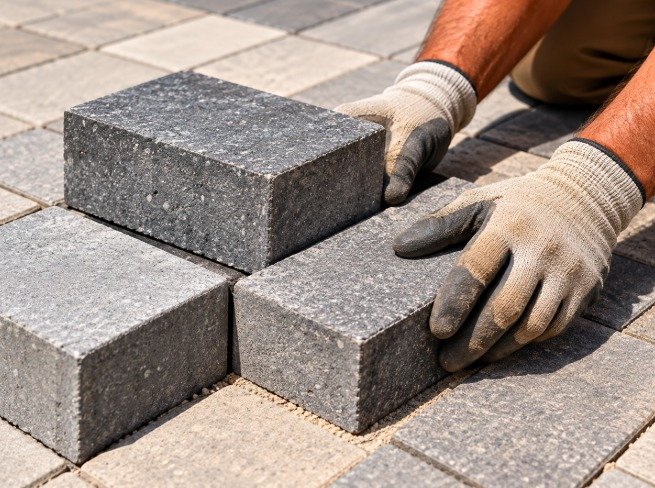
Gloved installer setting charcoal paver blocks

Signs Pavers Need Repair

Common warning signs include:

  • Sunken sections
  • Rocking pavers
  • Large gaps
  • Broken units
  • Standing water
  • Uneven edges
  • Missing joint sand
  • Trip hazards

Addressing problems early can help reduce the need for larger repairs.

Why Professional Paver Installation Matters

Pavers can look simple to install, but many problems begin below the surface.

Common causes of failure include:

  • Insufficient excavation
  • Weak base material
  • Poor compaction
  • Incorrect slope
  • Missing edge restraints
  • Inconsistent bedding
  • Poor drainage

Professional installation focuses on the entire pavement system, not only the visible surface.

Our Paver Installation Process

Ten steps from the first site visit to the final inspection.

  1. 1

    Site Evaluation

    We review the project area, drainage, soil conditions, traffic needs, and surrounding features.

  2. 2

    Design Planning

    Paver material, color, pattern, layout, borders, and elevation are selected.

  3. 3

    Excavation

    The existing surface and unsuitable material are removed.

  4. 4

    Grading

    The site is shaped to establish proper elevations and drainage.

  5. 5

    Base Installation

    Aggregate base is installed and compacted.

  6. 6

    Bedding Preparation

    A smooth bedding layer is prepared.

  7. 7

    Paver Installation

    The pavers are installed according to the selected pattern.

  8. 8

    Cutting and Edge Restraint

    Edges, curves, and custom details are completed.

  9. 9

    Joint Filling

    Joint material is installed between the pavers.

  10. 10

    Final Compaction and Inspection

    The finished surface is compacted and checked for alignment, drainage, and stability.

Why Choose Pavers?

Pavers provide several advantages for outdoor projects and can be installed in both simple and highly detailed designs.

Paver Installation for Projects of Every Size

Paver installation can range from a small garden path to a large driveway or commercial courtyard.

Our services can include:

Each project is planned according to its size, expected use, drainage, and surrounding property.

Pavers offer:

  • Many design choices
  • Individual unit replacement
  • Custom colors and patterns
  • Strong visual appeal
  • Flexible layouts
  • Easy integration with landscaping
  • Options for residential and commercial use

Paver Installation FAQs

Base depth depends on how the area will be used and your soil. Walkways and patios typically need about 4 to 6 inches of compacted aggregate base, while driveways usually need 8 to 12 inches or more to support vehicles. Soft or clay soils may require extra depth or a geotextile fabric. The base is always compacted in layers, and a thin, even bedding layer goes on top before the pavers are set.

A properly installed paver surface can last 30 years or more. Quality concrete pavers are very strong, and because they are separate units, they flex slightly with ground movement instead of cracking like a slab. The key to a long life is what is underneath: correct excavation, a well-compacted base, proper slope and solid edge restraints. Occasional joint sand refills and cleaning keep the surface looking its best.

Sometimes. If the concrete is structurally sound, level and drains well, thinner overlay pavers can be installed over it with a proper bedding and edge system. However, overlays raise the surface height, which can cause problems at doors, garage entries and steps. Cracked, sinking or poorly sloped concrete should be removed so a new base can be built. We inspect the slab and recommend the best long-term option for your project.

Unlike poured concrete, pavers do not need curing time. Walkways and patios can usually be used as soon as the final compaction and joint filling are complete. If polymeric sand is used, it needs time to set, so we recommend avoiding heavy use and water for about 24 hours. For driveways, most homeowners can park on the new surface shortly after completion, and we give specific guidance for your project.

Most paver problems start below the surface. Common causes include not digging deep enough, using the wrong base material, poor compaction, an uneven bedding layer, missing edge restraints and poor drainage that lets water soften the base. The pavers themselves are rarely the problem. That is why we focus on the full system, from excavation and grading to edges and joints, so your surface stays level and stable for years.

REQUEST A PAVER INSTALLATION ESTIMATE

Planning a new paver project or replacing an older surface? We review the site, drainage, layout, intended use, paver style, base requirements and surrounding features before developing a plan.

Installer laying a curved paver walkway

WHY CHOOSE

DREAM PAVING LOS ANGELES?

  • Over 13 Years of Experience
  • Licensed, Bonded and Insured
  • Proper Base Preparation
  • Drainage Planned Into Every Job
  • Clean Cuts & Detail Work
  • Free, Honest Estimates
  • On-Time Project Completion
  • Clean, Respectful Crews
  • Beautiful & Long-Lasting Results