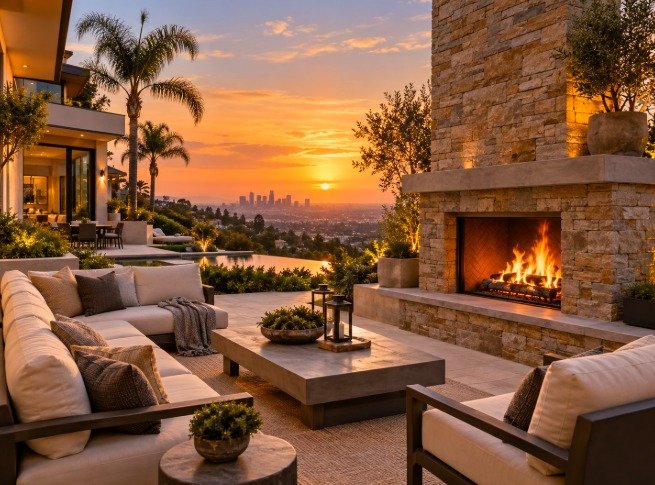
Stacked stone outdoor fireplace with lounge seating and the Los Angeles skyline at sunset

Outdoor FireplacesServices Los Angeles

Custom gas and wood-burning outdoor fireplaces in stone, brick, stucco and concrete, with hearths, mantels, chimneys and built-in seating.

A Permanent Focal Point for Your Outdoor Space

An outdoor fireplace can become one of the strongest focal points in a backyard, patio, courtyard, pool area, or complete outdoor living space. Unlike a portable fire feature, a built-in outdoor fireplace creates a permanent architectural element that can provide warmth, atmosphere, visual structure, and a natural gathering point for family and guests.

Our outdoor fireplace services can include new construction, custom fireplace design, gas fireplaces, wood-burning fireplaces, masonry fireplaces, stone fireplaces, brick fireplaces, stucco fireplaces, modern linear fireplaces, traditional fireplaces, fireplace seating areas, paver surrounds, chimney construction, hearths, mantels, firebox installation, repair, renovation, and integration with patios, outdoor kitchens, pergolas, and pool areas.

A successful outdoor fireplace should be designed around more than appearance. The project should consider location, wind, clearances, fuel type, chimney or venting requirements, seating distance, drainage, paving, structural support, and the surrounding outdoor layout.

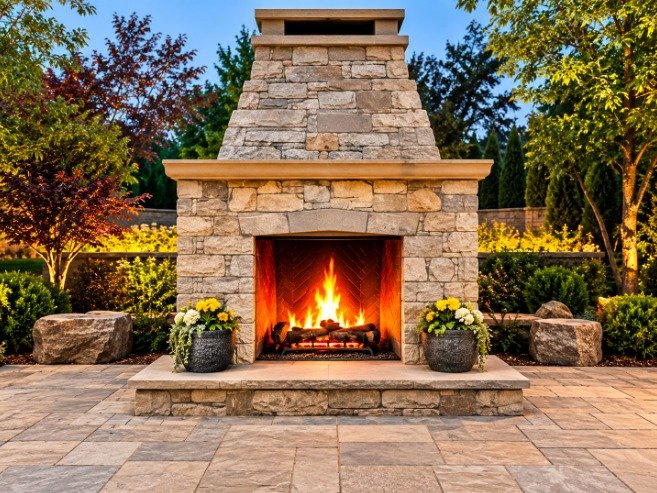
Stacked stone outdoor fireplace with flower pots on a paver patio

Our Outdoor Fireplace Services

Custom design, new construction, repair, renovation, replacement and gas conversion for outdoor fireplaces across Los Angeles.

Custom Outdoor Fireplace Design

Every outdoor fireplace can be designed to match the architecture and character of the property.

Custom design can consider:

  • Backyard size
  • Patio layout
  • Seating arrangement
  • Pool location
  • Existing pavers
  • Outdoor kitchen position
  • Property views
  • Wind direction
  • Fuel source
  • Landscaping
  • Architectural style

Some homeowners prefer a simple fireplace with a clean rectangular opening, while others want a large masonry feature with side walls, storage niches, built-in seating, a mantel, and matching stonework.

The fireplace should fit the scale of the surrounding space so it feels like a natural part of the property.
New Outdoor Fireplace Installation

A new outdoor fireplace can be installed as part of a new patio project or added to an existing outdoor living area.

A typical installation may include:

  • Site planning
  • Excavation
  • Footing or foundation preparation
  • Structural masonry
  • Firebox construction
  • Gas or wood-burning components
  • Chimney or venting
  • Exterior finish
  • Hearth construction
  • Paver or patio integration
  • Final detailing

The supporting base must be designed to carry the weight of the fireplace and remain stable over time.

Outdoor Fireplace Repair

Existing outdoor fireplaces may need repair because of:

  • Cracked mortar
  • Loose stone
  • Damaged brick
  • Firebox deterioration
  • Settlement
  • Chimney damage
  • Water intrusion

Repairs should address the underlying problem instead of only covering visible damage.

Outdoor Fireplace Renovation

An older fireplace can often be updated without complete demolition.

Renovation may include:

  • New stone veneer
  • Stucco refinishing
  • New mantel
  • Updated hearth
  • New gas insert
  • Lighting
  • New surrounding pavers

This can dramatically change the appearance of an existing outdoor space.

Outdoor Fireplace Replacement

Replacement may be appropriate if the fireplace is structurally damaged, poorly located, or no longer fits the desired backyard design.

A replacement project allows the layout to be reconsidered from the ground up.

Converting a Wood Fireplace to Gas

Some outdoor fireplaces may be candidates for gas conversion.

The existing structure, firebox, chimney, and gas availability should be evaluated before any conversion is planned.

The selected system should be approved for the intended application.

Outdoor Fireplace Maintenance

Maintenance may include:

  • Removing ash
  • Cleaning fire media
  • Inspecting mortar
  • Cleaning the hearth
  • Checking gas components
  • Inspecting chimney areas
  • Cleaning surrounding pavers

The maintenance routine will vary by fireplace type.

Outdoor Fireplace Weather Protection

Outdoor fireplaces are exposed to rain, sun, temperature changes, and debris.

Protection may include:

  • Proper chimney caps
  • Drainage
  • Suitable exterior finishes
  • Covers for certain components

Materials should be selected for long-term outdoor exposure.

Gas & Wood-Burning Outdoor Fireplaces

Fuel type shapes the firebox, venting, chimney and how you'll use your fireplace day to day.

Gas Outdoor Fireplaces

Gas outdoor fireplaces provide convenient ignition and controlled flame, using natural gas or propane, in traditional firebox, linear modern, see-through, or raised wall designs.

Benefits can include:

  • Fast startup
  • Easy flame control
  • No firewood storage
  • Less ash and cleanup
  • Consistent appearance

Gas systems should be installed according to manufacturer specifications and applicable requirements.

Natural Gas Outdoor Fireplaces

Natural gas can provide a permanent fuel source when service is available at the property.

It can be integrated with:

  • Outdoor kitchens
  • Gas grills
  • Fire pits
  • Pool areas
  • Covered patios where approved

The gas line should be properly sized for the fireplace and any other connected appliances.

Propane Outdoor Fireplaces

Propane can be used where natural gas is unavailable, using remote tanks, larger permanent tanks, or other approved supply configurations.

The design should allow safe fuel access and proper ventilation where required.

Wood-Burning Outdoor Fireplaces

Wood-burning fireplaces provide the traditional experience of real logs, flames, and crackling fire.

They require careful planning around:

  • Chimney height
  • Smoke movement
  • Spark control
  • Firebox design
  • Clearances
  • Firewood storage

The location should consider prevailing wind so smoke is less likely to move toward seating, doors, or neighboring properties. Local regulations may affect where and how wood-burning fireplaces can be installed or used.

Outdoor Fireplace Ignition Systems

Gas fireplaces may use:

  • Manual ignition
  • Push-button ignition
  • Electronic ignition
  • Remote-controlled systems

Available options depend on the selected fireplace system.

Outdoor Fireplace Media

Gas fireplaces may use decorative media such as:

  • Fire glass
  • Lava rock
  • Ceramic logs
  • Approved stones

Only products specifically designed for the fireplace should be used.

Outdoor Fireplace Gas Lines

Gas installation may require a new or extended fuel line sized for the appliance. Lines may also serve nearby grills, side burners, and fire pits, so utility planning should be completed early.

Outdoor Fireplace Ventilation

Gas fireplaces and covered installations may require specific ventilation depending on appliance, fuel, location, and manufacturer instructions. It should be planned before walls and finishes are completed.

Firebrick and Heat-Resistant Materials

Wood-burning masonry fireplaces often use firebrick or other suitable heat-resistant materials inside the combustion area. Decorative veneer should not replace required fire-rated internal components.

Wood Storage

Wood-burning designs can include side niches, built-in boxes, covered racks, or separate storage areas. Firewood should be stored safely away from active flames and excessive moisture.

Outdoor Fireplace Construction & Materials

Masonry fireplaces are built as permanent structural features, finished to match your home and hardscape.

Masonry Outdoor Fireplaces

Construction may involve concrete block, brick, fire-rated masonry, stone veneer, and stucco finishes, allowing a wide range of custom shapes and sizes.

The fireplace can include a large hearth, raised firebox, mantel, wood storage, decorative arches, side walls, and built-in seating.

Stone Outdoor Fireplaces

Stone can create a substantial and natural appearance with stacked stone, ledgestone, fieldstone, cut stone, or natural stone veneer.

Stone fireplaces work well with rustic homes, traditional landscapes, luxury patios, pool areas, and outdoor kitchens, and can be coordinated with retaining walls.

Brick Outdoor Fireplaces

Brick creates a classic appearance for the full fireplace exterior, firebox surround, hearth, chimney, or decorative accents.

Brick fireplaces pair naturally with brick patios and paver courtyards.

Stucco Outdoor Fireplaces

Stucco can create a smooth, clean fireplace finish that works especially well with Mediterranean architecture, Southwestern homes, and contemporary designs.

The stucco color can be selected to match or contrast with the house exterior.

Concrete Outdoor Fireplaces

Concrete fireplaces can create a strong modern or industrial appearance using cast concrete, poured concrete, concrete block with finish, or precast components.

Concrete can be combined with wood-look elements, porcelain, natural stone, and metal accents.

Outdoor Fireplace Styles & Types

From warm Mediterranean stucco to sleek linear gas fireplaces, the style can match your home's architecture.

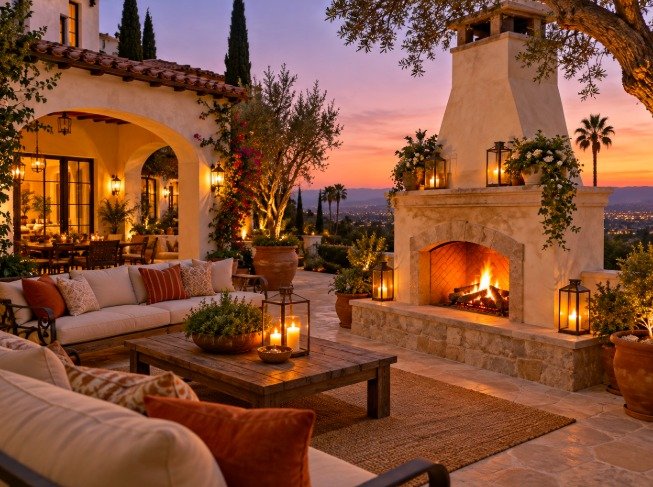
White stucco Mediterranean outdoor fireplace with an arched firebox and stone hearth at dusk

Mediterranean Outdoor Fireplaces

Mediterranean fireplaces may feature:

  • Stucco
  • Travertine
  • Warm stone
  • Arched openings
  • Tile details
  • Warm earth tones

They work especially well in courtyards, patios, and pool areas, and suit many Southern California homes.

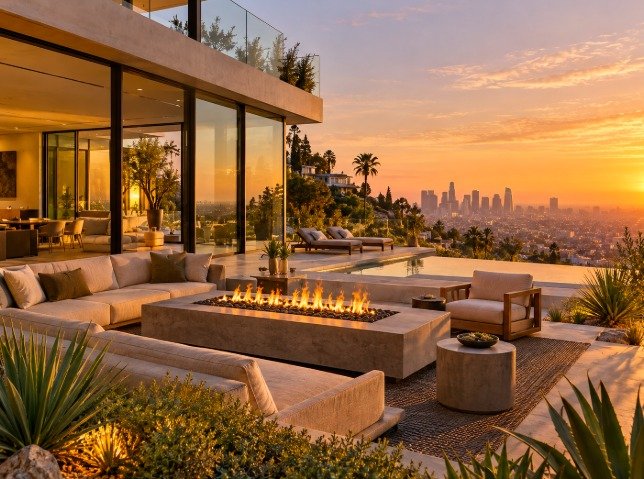
Modern linear gas fire feature with sectional seating overlooking the Los Angeles skyline

Modern Outdoor Fireplaces

Modern fireplace designs typically emphasize clean lines and minimal detailing, with linear fire openings, large smooth walls, neutral colors, concrete finishes, porcelain cladding, dark metal accents, and floating hearths.

Modern fireplaces pair well with large-format pavers, geometric patios, and contemporary furniture.

Linear Outdoor Fireplaces

Linear gas fireplaces create a wide horizontal flame and are commonly used in contemporary outdoor spaces, in feature walls, patio walls, poolside lounge areas, and covered outdoor rooms where approved.

The long flame can create a dramatic focal point without using a traditional arched or square firebox.

Traditional Outdoor Fireplaces

Traditional fireplaces may include:

  • Arched firebox openings
  • Brick
  • Natural stone
  • Large mantels
  • Raised hearths
  • Decorative chimney details

These designs can complement classic homes and mature landscaping.

Rustic Outdoor Fireplaces

Rustic fireplaces often use:

  • Rough stone
  • Irregular masonry
  • Timber-style mantels
  • Natural colors
  • Large hearths

They can create a lodge-inspired or countryside appearance.

See-Through Outdoor Fireplaces

A see-through fireplace can serve two outdoor areas at the same time.

It may separate:

  • Dining and lounge areas
  • Pool deck and patio
  • Outdoor kitchen and seating area

The fireplace creates a visual divider while allowing the flame to be seen from both sides.

Double-Sided Outdoor Fireplaces

Double-sided fireplaces can provide warmth and visibility on both sides of a structure.

They require careful planning around:

  • Venting
  • Structural support
  • Seating
  • Traffic flow

This style can be especially effective in large outdoor living spaces.

Freestanding Outdoor Fireplaces

A freestanding fireplace does not need to be attached to the home.

It can be placed:

  • At the end of a patio
  • Beside a pool
  • In a garden
  • Within a courtyard
  • Near an outdoor kitchen

A freestanding design can help anchor a large open area.

Outdoor Fireplace Feature Walls

Feature walls may include:

  • TV mounting area
  • Shelving
  • Lighting
  • Decorative niches
  • Seating walls

A feature wall can make the fireplace feel like part of a complete outdoor room.

Hearths, Mantels, Chimneys & Fireboxes

The details that make a fireplace both beautiful and functional.

Outdoor Fireplace Hearths

The hearth forms the area immediately in front of the fireplace. It may be raised, flush, extended, or wide enough for seating, in stone, brick, concrete, or tile.

The hearth should be designed according to the fireplace type and combustible-material requirements.

Raised Hearth Fireplaces

A raised hearth can create both visual interest and informal seating, coordinated with stone benches, retaining walls, and patio seating.

The height should be planned so the hearth remains functional without blocking the firebox.

Flush Hearth Fireplaces

A flush hearth creates a more minimal appearance and works especially well in modern designs where clean lines are preferred.

The surrounding surface should still be appropriate for heat exposure.

Outdoor Fireplace Mantels

A mantel can add architectural detail in stone, concrete, metal, or outdoor-rated wood where appropriate.

The material and mounting location should consider heat and clearances.

Fireplace Chimneys

Wood-burning fireplaces typically require a chimney designed to move smoke upward and away from the seating area.

Chimney design may consider:

  • Fireplace size
  • Nearby structures
  • Rooflines
  • Wind patterns
  • Local requirements

Outdoor Fireplace Fireboxes

The firebox is the area where combustion occurs and should be constructed or installed using materials and systems suitable for high temperatures.

Fireboxes may be masonry, factory-built, or gas insert systems. The design should match the selected fuel type.

Fireplace Seating, Patios & Outdoor Rooms

A fireplace is most useful when the seating, paving and nearby features are planned at the same time.

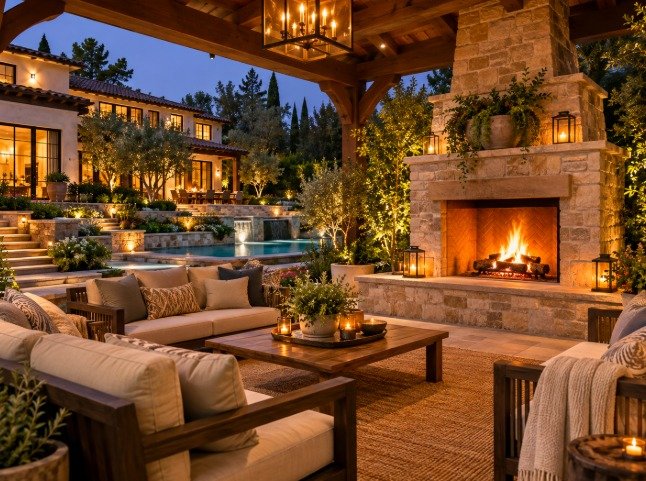
Stone outdoor fireplace under a timber pavilion with lounge seating beside a pool at dusk

Outdoor Fireplaces With Pavilions

A fireplace can also be integrated into a roofed outdoor pavilion.

Covered fireplace projects require careful planning for:

  • Venting
  • Chimney routing
  • Clearances
  • Ceiling materials
  • Roof penetration

These details should be resolved as part of the initial design.

Outdoor Fireplaces With Pergolas

A fireplace can be positioned near a pergola, but clearance and heat exposure must be considered carefully, including pergola posts, overhead beams, fuel type, chimney, and flame height.

Outdoor Fireplace Seating Areas

Seating may include:

  • Outdoor sofas
  • Lounge chairs
  • Built-in benches
  • Seat walls
  • Dining chairs

The layout should provide comfortable viewing of the fire while leaving adequate walking space.

Built-In Seating Around Fireplaces

Built-in seating can create a permanent outdoor conversation area with straight seat walls, L-shaped benches, low masonry seating, or stone benches.

The seating can be finished to match the fireplace.

Walls & pillars

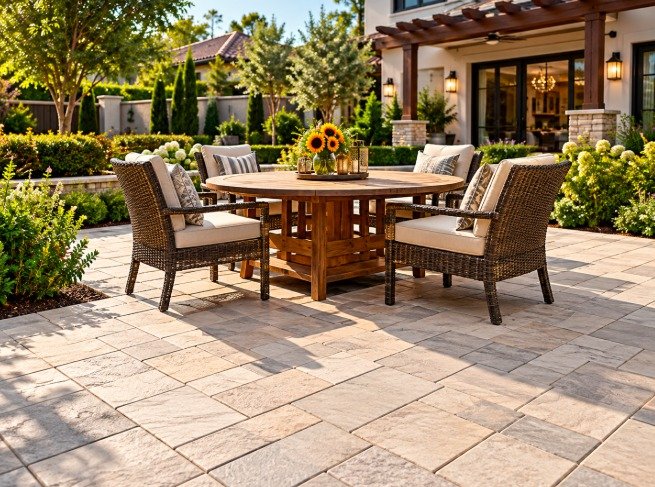
Outdoor Fireplace Paver Patios

Pavers can create a finished surface around an outdoor fireplace using concrete pavers, brick pavers, travertine, porcelain, or natural stone.

The paver style can either match the fireplace or create deliberate contrast.

Patio paver services

Outdoor Fireplace Patio Extensions

If the existing patio is too small, it can be extended to create room for sofas, chairs, side tables, walkways, and wood storage.

The new section should be graded and supported properly.

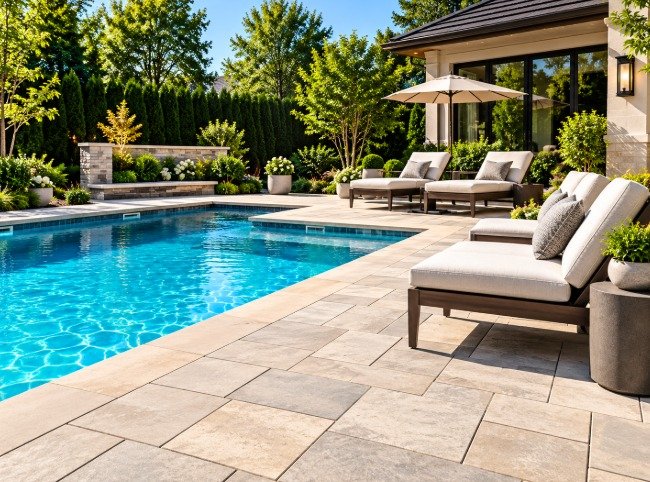
Outdoor Fireplaces Near Pools

A fireplace near the pool can create a strong resort-style feature at the end of the pool deck, near a lounge area, beside a spa, or within a cabana.

The layout should keep the primary pool walkway open and avoid crowding wet traffic near the fire.

Pool deck pavers

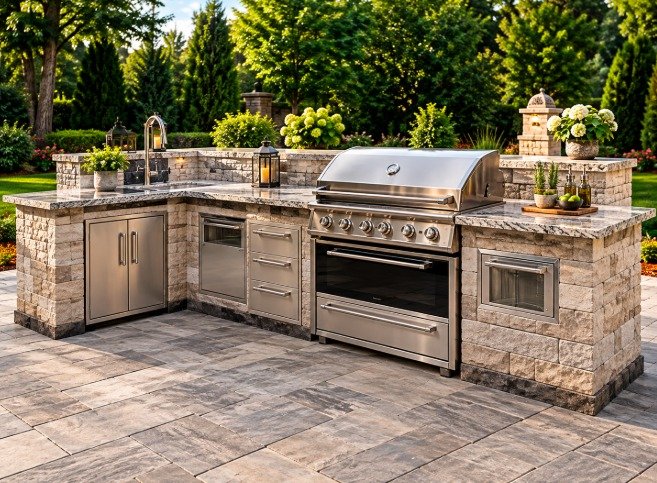
Outdoor Fireplaces With Outdoor Kitchens

An outdoor fireplace and kitchen can work together as part of one entertainment area, with separate zones for cooking, dining, and relaxing.

The fireplace should not be positioned where smoke or excessive heat interferes with the grill or food preparation area.

Outdoor kitchens

Outdoor Fireplaces With TVs

The layout should consider:

  • Heat exposure
  • Viewing height
  • Glare
  • Mounting surface
  • Weather protection

Placing a television directly above a fireplace may require additional heat management depending on the fireplace design.

Outdoor Fireplace Lighting

Wall sconces, recessed lighting, step lighting, landscape lighting, and seat-wall lighting can make the area more functional at night.

Lighting should complement the fireplace rather than overpower the flame.

Outdoor Fireplace Walkways

A walkway can connect the fireplace area to the house, pool, outdoor kitchen, garden, or driveway.

A paved connection helps integrate a separate fireplace area into the rest of the property.

Walkway pavers

Small Outdoor Fireplaces

Compact fireplaces can work well in smaller patios or courtyards, with a simple masonry firebox, narrow feature wall, compact gas insert, or small raised hearth.

The fireplace should fit the scale of the area without overwhelming nearby seating.

Large Outdoor Fireplaces

Large properties can support a tall chimney, wide hearth, side walls, wood storage, built-in seating, TV wall, and decorative lighting.

A large fireplace can become the architectural anchor of the entire outdoor living space.

Outdoor Fireplace Location Planning

Important factors may include:

  • Wind direction
  • Distance from structures
  • Overhead features
  • Seating layout
  • Neighboring properties
  • Views
  • Outdoor kitchen location
  • Pool traffic

The best location should support both safe use and comfortable seating.

Outdoor Fireplace Clearances

Fireplaces require adequate clearance from combustible materials.

The required distance depends on:

  • Fuel type
  • Appliance
  • Construction method
  • Manufacturer instructions
  • Applicable codes

Clearances should be determined before construction begins.

Outdoor Fireplace Safety Planning

Projects should consider:

  • High temperatures
  • Open flame
  • Gas systems
  • Sparks from wood fires
  • Chimney performance
  • Surrounding materials

Applicable regulations, manufacturer instructions, and fire-safety requirements should always be followed.

Outdoor Fireplace Drainage

The patio and fireplace area should be designed so water does not collect around the structure, using proper surface slope, channel drains, patio drains, and landscape drainage.

Water should not be allowed to pool around the fireplace base.

Outdoor Fireplace Landscaping

Planting beds, trees, decorative gravel, low walls, and landscape lighting can soften the transition between masonry and the yard.

Plants should be positioned with appropriate clearance from heat and smoke.

Outdoor Fireplace Repair Services

The condition of the underlying structure should be evaluated before cosmetic work begins.

Outdoor Fireplace Masonry Repair

Masonry repair may include:

  • Repointing mortar joints
  • Replacing damaged brick
  • Resetting stone
  • Repairing caps
  • Correcting cracks

Outdoor Fireplace Firebox Repair

Fireboxes can deteriorate from repeated heat exposure.

Repair may involve:

  • Replacing damaged firebrick
  • Repairing joints
  • Rebuilding affected sections

The repair materials should be suitable for high-temperature use.

Outdoor Fireplace Chimney Repair

Chimney problems may include:

  • Cracked caps
  • Loose masonry
  • Water entry
  • Deteriorated joints

A damaged chimney should be evaluated before continued fireplace use.

Outdoor Fireplace Cost in Los Angeles

Estimated installed prices. Your exact price depends on size, fuel type, finishes and foundation work, so every quote starts with a free on-site evaluation.

Gas Outdoor Fireplace

$8,000 – $15,000

Gas firebox or insert with a stone, stucco or concrete finish and hearth.

Fireplace Feature Wall & Seating

$35,000 – $60,000+

Large fireplace with side walls, wood storage, seating walls, TV wall and lighting.

What Affects the Cost of an Outdoor Fireplace

  • Fireplace size and height
  • Gas or wood-burning
  • Chimney construction
  • Foundation and footing
  • Stone, brick, stucco or concrete finish
  • Hearth and mantel details
  • Gas line length
  • Built-in seating and niches
  • Surrounding patio work

Prices are estimates only, not a final quote. Gas line work and some fireplace installations may require licensed trades and city permits. Repairs and renovations are priced after an inspection.

GET MY EXACT PRICE

Our Outdoor Fireplace Installation Process

Ten steps from the first site visit to the final inspection.

  1. 1

    Site Evaluation

    We review the patio, backyard layout, fuel options, surrounding structures, paving, drainage, and proposed seating area.

  2. 2

    Design Planning

    The fireplace size, style, material, fuel type, hearth, mantel, and surrounding layout are selected.

  3. 3

    Foundation Preparation

    The site is excavated and a suitable structural base is prepared.

  4. 4

    Utility Work

    Gas, electrical, and related utilities are prepared when required.

  5. 5

    Structural Construction

    The fireplace body, firebox, chimney, and supporting masonry are constructed or installed.

  6. 6

    Exterior Finish

    Stone, brick, stucco, concrete, tile, or another selected finish is applied.

  7. 7

    Hearth and Mantel

    The hearth, mantel, caps, and decorative details are completed.

  8. 8

    Patio and Seating Integration

    Pavers, seating walls, walkways, or nearby patio areas are completed.

  9. 9

    Fireplace Components

    Gas burners, approved fire media, doors, or other system components are installed as applicable.

  10. 10

    Final Inspection

    The project is reviewed for stability, clearances, ventilation, drainage, utility access, and finished appearance.

Why Professional Outdoor Fireplace Construction Matters

An outdoor fireplace combines high heat, masonry, structural work, venting, and sometimes gas or electrical systems.

Professional construction focuses on both the visual design and the systems that allow the fireplace to perform properly over time.

Create a Complete Outdoor Fireplace Area

An outdoor fireplace can be designed as one part of a larger backyard project, connecting with paver patios, outdoor kitchens, pergolas, pavilions, pool decks, walkways, built-in seating, landscape walls, and outdoor lighting.

Planning these features together can create a more cohesive outdoor environment.

Common problems can result from:

  • Weak foundations
  • Poor chimney design
  • Incorrect clearances
  • Water intrusion
  • Improper firebox materials
  • Poor gas ventilation
  • Inadequate drainage

Outdoor Fireplace FAQs

An outdoor fireplace is a tall, permanent architectural feature that anchors one side of a patio, directs heat toward the seating in front of it and can block wind or views. A fire pit is lower and centered, so people can gather all the way around it. Fireplaces usually cost more and need a stronger foundation. Many Los Angeles homeowners choose based on layout, and some larger yards include both features in separate zones.

Gas fireplaces start with the push of a button, have adjustable flames, produce no ash and don't need firewood, which makes them the most popular choice in Los Angeles. Wood-burning fireplaces offer a real crackling fire but need a properly designed chimney, more clearance, firewood storage and regular ash cleanup. Southern California air quality rules can also restrict wood burning on certain days, so gas is often the more practical option.

A standard outdoor fireplace usually takes about two to four weeks from foundation to finish. The footing and masonry need time to set, and stone or stucco finishes add more time. Larger fireplaces with tall chimneys, side walls, built-in seating or a new patio can take longer. Gas line installation and any required inspections can also affect the schedule, so we give you a clear timeline with your written estimate.

Most permanent outdoor fireplaces, especially those with a gas line, a tall chimney or a connection to a patio cover, require a building permit in Los Angeles County cities. Rules for size, height, setbacks and wood burning vary by city and neighborhood. We check the requirements for your address during the estimate, design the fireplace to meet them and help you through the permit process when one is required.

Sometimes, but it requires careful planning. Covered fireplaces need an approved fireplace system, proper venting or chimney routing through the roof, adequate clearances from beams and ceiling materials, and compliance with manufacturer instructions and local codes. Not every fireplace or cover is suitable. We evaluate your structure during the design stage and recommend a safe option, whether that is a covered installation or a nearby open-air location.

REQUEST AN OUTDOOR FIREPLACE ESTIMATE

Planning a new outdoor fireplace or renovating an existing one? We evaluate the space, paving, fuel options, structural needs, chimney or ventilation requirements, materials, seating and drainage before developing a project plan.

Mediterranean stucco outdoor fireplace

WHY CHOOSE

DREAM PAVING LOS ANGELES?

  • Over 13 Years of Experience
  • Licensed, Bonded and Insured
  • Custom Masonry Fireplaces
  • Fireplace & Patio Built Together
  • Safety Clearances Planned In
  • Free, Honest Estimates
  • On-Time Project Completion
  • Clean, Respectful Crews
  • Beautiful & Long-Lasting Results