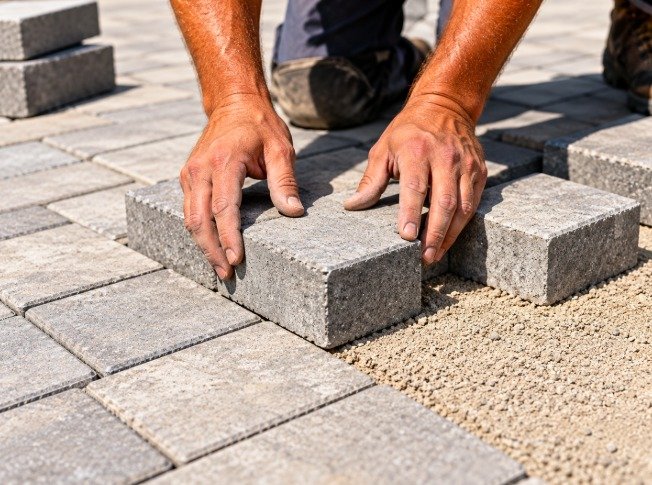
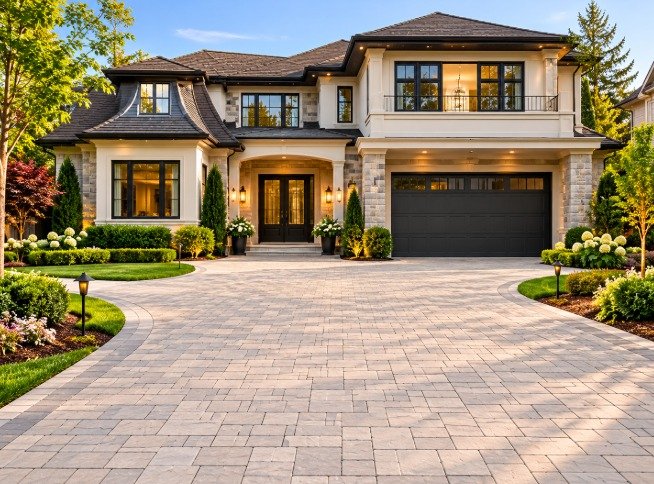
Estate home with a large paver driveway, stone pillars and lanterns at dusk

Residential PavingServices Los Angeles

Driveways, parking areas, patios, walkways, pool decks and private roads for Los Angeles homes, planned as one connected exterior.

Paving That Works for the Way You Live

Residential paving plays an important role in how a home looks, functions, and handles everyday vehicle and foot traffic. From a new driveway to a backyard patio, walkway, private access road, parking area, or paver entry, professionally installed pavement can create a cleaner appearance and a more practical outdoor layout.

Our residential paving services include new installation, replacement, resurfacing, repairs, driveway extensions, widening, asphalt paving, concrete paving, paver installation, walkways, patios, private roads, parking areas, and complete exterior paving improvements.

Every residential property is different. Some homes need a simple driveway replacement, while others require several connected paving areas such as a driveway, side parking area, front walkway, backyard patio, and access route to a detached garage.

A successful paving project begins with understanding how the property is used, where water flows, what type of traffic the surface will support, and how the new pavement should connect with the house, garage, street, landscaping, and other outdoor features.

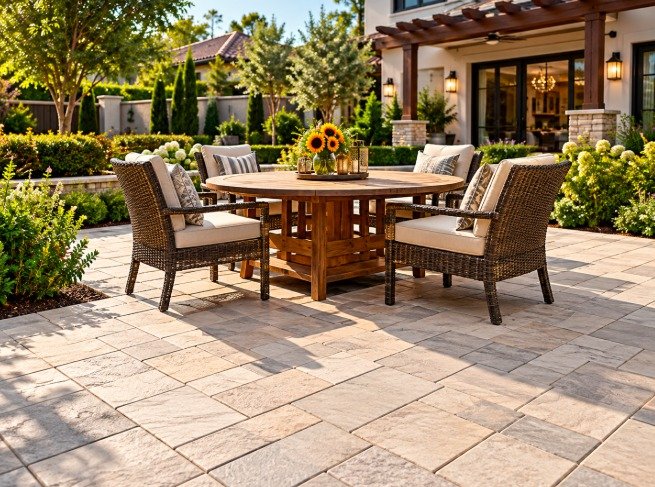
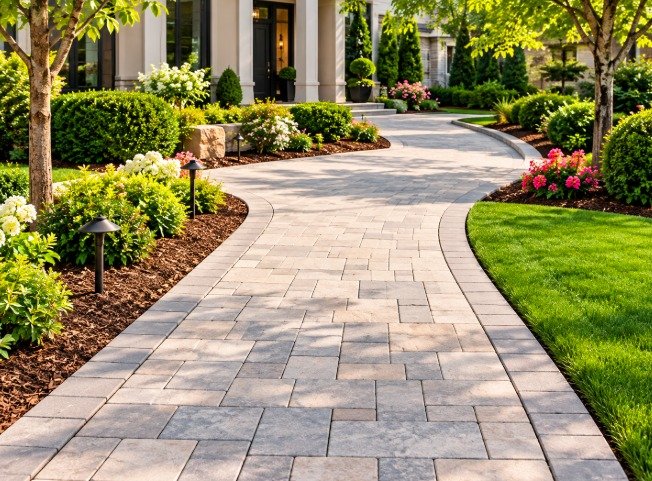
Backyard paver patio with a fire table and a lit paver side walkway

Our Residential Paving Services

New installation, replacement, resurfacing, repair, extensions and widening, planned around your home, your vehicles and your drainage.

New Residential Paving

New residential paving can be used for newly built homes, undeveloped areas, home additions, new garages, outdoor living projects, or properties that currently have dirt or gravel surfaces.

New paving projects may include:

  • Driveways
  • Parking areas
  • Patios
  • Walkways
  • Private roads
  • Side-yard access
  • Backyard surfaces
  • Detached garage access
  • RV parking
  • Trailer parking

The installation process usually begins with excavation and grading. A compacted base is then installed to create a stable foundation before the final paving material is placed.

The correct base depth and pavement structure depend on the intended use of the area. A walkway may require a different foundation than a driveway that regularly supports trucks or large SUVs.
Residential Driveway Paving

Driveways are one of the most common residential paving projects.

A well-built driveway should provide:

  • Reliable access
  • Smooth parking
  • Proper drainage
  • Strong edges
  • Clean transitions
  • Long-term support

Residential driveway paving may include:

  • New driveway installation
  • Driveway replacement
  • Resurfacing
  • Driveway repair
  • Driveway widening
  • Driveway extensions
  • Circular driveways
  • Long driveways
  • Private driveway entrances

The layout should fit the home, garage location, vehicle count, and traffic patterns. A driveway can also be designed to include additional parking space or a turnaround area.

Driveway paving services

Driveway Replacement

Older driveways may eventually need full replacement.

Common reasons include:

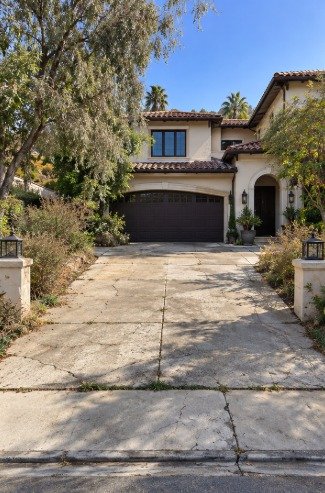
  • Extensive cracking
  • Large potholes
  • Deep settlement
  • Widespread surface failure
  • Drainage problems
  • Base failure
  • Repeated patching
  • Crumbling edges

Replacement involves removing the existing surface and evaluating the base below. If the foundation is weak, it can be rebuilt before the new pavement is installed.

This is also an opportunity to widen, extend, or reshape the driveway.

Driveway Resurfacing

Driveway resurfacing can be a practical option when the surface is worn but the base remains stable.

Resurfacing may help improve:

  • Surface appearance
  • Minor cracking
  • Weathered pavement
  • Rough texture
  • Shallow deterioration

The existing surface must be evaluated first.

If the driveway has severe structural problems, resurfacing may not provide a long-term solution.

Residential Driveway Repair

Driveway repair can address localized damage without replacing the entire surface.

Common repairs include:

  • Crack repair
  • Pothole repair
  • Asphalt patching
  • Concrete repair
  • Edge repair
  • Low spot correction
  • Sunken area repair
  • Drainage-related repair

The cause of the damage should be identified before the repair is completed.

Water, weak base material, and soil movement can cause recurring problems if they are not corrected.

Driveway Extensions

A driveway extension can provide additional parking or access without rebuilding the entire driveway.

Extensions may be added for:

  • Additional cars
  • RVs
  • Trailers
  • Work vehicles
  • Detached garages
  • Side-yard access
  • Backyard access

The new area should be properly excavated and supported so it does not settle differently from the existing driveway.

Driveway Widening

Widening a driveway can make parking easier and improve vehicle access.

Common reasons for widening include:

  • Multiple household vehicles
  • Larger SUVs
  • Work trucks
  • Easier garage entry
  • Guest parking
  • RV access

The width can be increased on one side or both sides depending on the property layout.

Residential Parking Areas

Some properties need more than a standard driveway.

Residential parking areas can be created for:

  • Multiple vehicles
  • Guests
  • RVs
  • Boats
  • Trailers
  • Work trucks

Parking areas can be built with asphalt, concrete, or pavers depending on the desired appearance and use.

Drainage and turning space should be considered during planning.

Residential Paving Surfaces

Asphalt, concrete and pavers each have their own look, cost and maintenance needs.

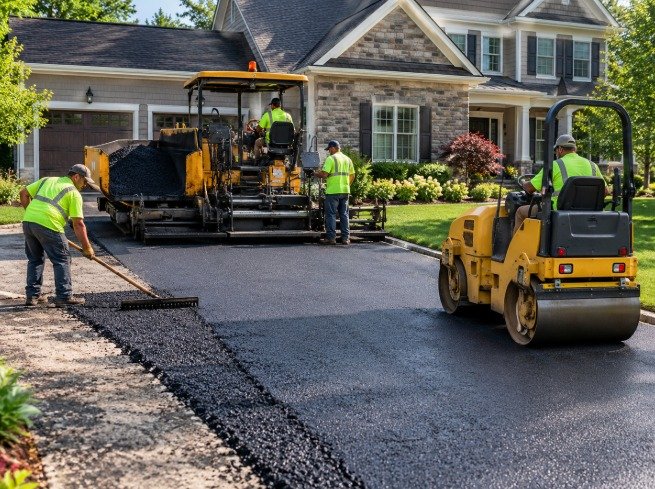
Crew paving a residential asphalt driveway with a paver machine and roller

Asphalt Driveways & Residential Asphalt Paving

Asphalt is widely used for residential driveways because it creates a smooth, flexible surface and can be installed over a properly prepared base.

Asphalt driveways may be used for:

  • Single-car driveways
  • Multi-car driveways
  • Long private driveways
  • Rural access roads
  • Driveway extensions
  • Side parking areas

A residential asphalt project should include proper:

  • Excavation
  • Base installation
  • Grading
  • Compaction
  • Asphalt thickness
  • Edge finishing

Proper grading, compaction, and base preparation are essential because a thin or poorly supported asphalt surface can develop cracking and settlement. Asphalt can also be repaired and resurfaced as it ages.

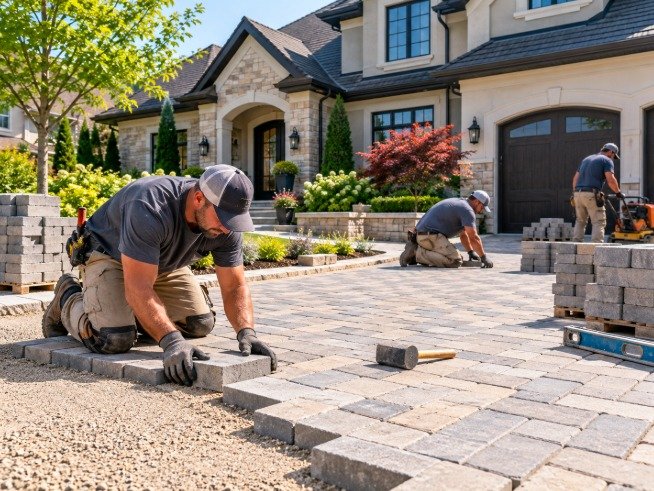
Crew installing a paver driveway in front of a home

Paver Driveways & Residential Paver Installation

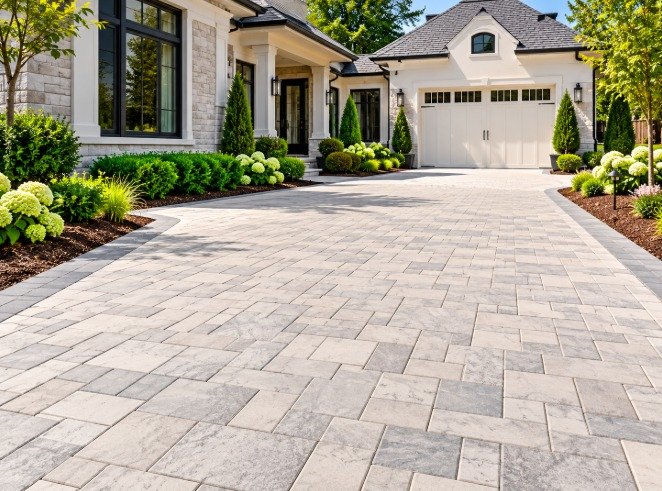
Paver driveways offer more design flexibility than many continuous surfaces. They can be installed in herringbone patterns, running bond, modular patterns, custom layouts, and with decorative borders.

Pavers are available in concrete, brick-style, natural stone, and other materials. A paver driveway requires strong base preparation because the surface must support vehicle loads.

Pavers can be used for many areas around the home:

  • Driveways
  • Patios
  • Walkways
  • Pool decks
  • Courtyards
  • Entryways
  • Outdoor kitchens

Pavers allow a wide range of colors, sizes, and patterns. Individual units can often be replaced if localized damage occurs.

Paver installation services Paver materials

Concrete Driveways

Concrete driveways provide a rigid paved surface and can be finished in several styles.

Options may include:

  • Standard broom finish
  • Smooth finish
  • Decorative concrete
  • Colored concrete
  • Stamped concrete
  • Decorative borders

Concrete projects require careful joint placement, base preparation, and drainage planning. The finished surface can also be coordinated with sidewalks, patios, and entry areas.

Concrete Residential Paving

Concrete can be installed for:

  • Driveways
  • Walkways
  • Patios
  • Parking areas
  • Sidewalks
  • Entry areas

It can also be finished with decorative textures and colors.

Proper joint placement helps manage normal movement and cracking.

Decorative Residential Paving

Decorative paving can add visual interest to outdoor areas.

Options may include:

  • Stamped concrete
  • Colored concrete
  • Paver borders
  • Decorative inlays
  • Brick-style pavers
  • Natural stone
  • Patterned surfaces

Decorative areas can be used as accents or throughout an entire driveway or patio.

Decorative paving services

Driveways, Roads & Vehicle Access

From RV pads to long private roads, vehicle areas are planned around weight, turning room and drainage.

RV and Trailer Parking

Dedicated paved areas can provide cleaner and more stable parking for large recreational vehicles and trailers.

These surfaces may require:

  • Stronger base preparation
  • Additional width
  • Improved turning access
  • Drainage planning
  • Reinforced edges

The pavement should be designed around the expected weight and frequency of use.

Private Road Paving

Homes located far from the public street may use long private roads or shared driveways.

Residential private road paving can include:

  • New private roads
  • Road resurfacing
  • Road repairs
  • Long driveways
  • Shared access roads
  • Gated property roads

Private roads should be planned with adequate width, drainage, turning areas, and base strength.

Long Driveway Paving

Long driveways require careful grading because even small drainage problems can become significant over a longer distance.

A long residential driveway may include:

  • Curves
  • Slopes
  • Gates
  • Culverts
  • Turnaround areas
  • Passing areas
  • Multiple building access points

Consistent base preparation is important along the full length of the driveway.

Circular Driveways

Circular driveways can improve access and create a distinctive front entrance. They can make it easier for vehicles to enter and exit without backing into the street.

Circular driveway paving may use:

  • Asphalt
  • Concrete
  • Pavers
  • Decorative borders

The turning radius should be planned around the types of vehicles that regularly use the property.

Paving Around Detached Garages

Detached garages often require longer driveway connections or secondary parking areas. The route should provide enough width and turning room for comfortable vehicle access.

Paving may extend from the main driveway to:

  • Garage doors
  • Workshops
  • Storage buildings
  • Access gates

Paving Around Home Additions

A home addition can change how the exterior space is used.

Paving may be required for:

  • New entry doors
  • Expanded driveways
  • New patios
  • Walkways
  • Parking areas

New pavement should be coordinated with the finished elevation of the addition.

Paving Around Your Home

Walkways, entries, patios, pool decks and side yards that connect every part of your property.

Residential Walkway Paving

Walkways create defined pedestrian access around the property.

They may connect:

  • Driveways to front doors
  • Homes to patios
  • Patios to pools
  • Side gates to backyards
  • Houses to detached garages
  • Gardens to seating areas

Walkways can be installed with pavers, concrete, or other materials.

Walkway paver services

Front Entry Paving

The front entry is one of the most visible areas of a home.

Paving can improve:

  • Walkways
  • Landings
  • Steps
  • Entry plazas
  • Porch approaches

Decorative materials can be used to create a more finished transition between the driveway and home entrance.

Patio Paving

Residential patios create usable outdoor living space.

Patio paving may be used for:

  • Dining areas
  • Lounge spaces
  • Grilling
  • Fire pits
  • Outdoor kitchens
  • Pergolas
  • Backyard entertainment

Patios can be installed with pavers, concrete, or decorative paving materials.

Patio paver services

Pool Deck Paving

Residential pool areas can be upgraded with paved deck surfaces.

Pool deck paving should consider:

  • Surface texture
  • Drainage
  • Barefoot comfort
  • Heat absorption
  • Slip resistance
  • Pool coping

Pavers and decorative concrete are commonly used around pools because they allow a wide variety of designs.

Pool deck paver services

Backyard Paving

Backyard paving can convert unused dirt or lawn into functional space.

Projects may include:

  • Patios
  • Outdoor kitchens
  • Fire pit areas
  • Walkways
  • Seating areas
  • Pergola bases
  • Garden paths

Backyard surfaces should be planned around furniture placement, drainage, and access from the home.

Side-Yard Paving

Side yards can become muddy or difficult to use.

Paving can create cleaner access for:

  • Trash bins
  • Garden equipment
  • Pool equipment
  • Side gates
  • Storage areas
  • Backyard access

Narrow areas require careful grading so water does not collect near the house.

Courtyard Paving

Courtyard paving can create a defined outdoor area between or beside buildings.

Courtyards may include:

  • Pavers
  • Decorative concrete
  • Seating
  • Fountains
  • Planters
  • Outdoor fireplaces

The paving layout can become a central design feature.

Residential Paving for New Construction

New homes often need several paving areas completed together.

A new-construction project may include:

  • Driveway
  • Walkways
  • Patio
  • Side access
  • Parking areas
  • Private road connections

Planning these areas together can create better drainage and more consistent elevations.

Paving for Older Homes

Older properties may have pavement that has been repaired many times or no longer fits the homeowner's needs.

Paving upgrades can include:

  • Complete driveway replacement
  • Additional parking
  • Wider walkways
  • New patios
  • Drainage corrections
  • Updated decorative materials

Older homes may also require careful planning around existing foundations, mature landscaping, and utility lines.

Residential Paving Repair & Maintenance

Repair methods depend on the extent and cause of the damage. Minor repairs completed early can help slow further deterioration.

Residential Asphalt Repair

Asphalt surfaces may develop:

  • Cracks
  • Potholes
  • Edge failure
  • Depressions
  • Ruts

Repair methods depend on the extent and cause of the damage. Minor repairs completed early can help slow further deterioration.

Residential Concrete Repair

Concrete paving can develop cracking, settlement, surface deterioration, or broken edges.

Repair may involve:

  • Crack repair
  • Section replacement
  • Joint repair
  • Surface patching
  • Level correction

Severe movement may indicate a problem below the slab.

Paver Repair and Releveling

Pavers can often be lifted and reset.

This makes it possible to repair:

  • Sunken areas
  • Rocking pavers
  • Trip hazards
  • Separated joints
  • Drainage-related settlement

The base should be corrected before the pavers are reinstalled.

Residential Sealcoating

Sealcoating may be used on asphalt driveways as part of a maintenance plan. It can help protect the surface from weather and oxidation.

Sealcoating should be applied when the pavement is in appropriate condition and after necessary repairs are completed.

Crack Sealing

Crack sealing helps reduce water entry into asphalt pavement. Water that reaches the base can contribute to weakening and settlement.

Larger or structural cracks may require additional repair rather than simple sealing.

Residential Drainage Improvements

Water management is one of the most important parts of residential paving.

Drainage solutions may include:

  • Surface grading
  • Channel drains
  • Catch basins
  • French drains
  • Swales
  • Culverts
  • Permeable paving

Water should be directed away from foundations, garages, and paved areas whenever possible.

Grading for Residential Paving

Proper grading establishes the shape and slope of the finished surface.

Grading helps prevent:

  • Standing water
  • Water flowing toward the house
  • Erosion
  • Premature pavement damage

The grade should be planned before base installation begins.

Base Preparation

The quality of the base can determine how well the pavement performs over time.

Base preparation may include:

  1. Excavation
  2. Soil evaluation
  3. Removal of unstable material
  4. Aggregate installation
  5. Compaction
  6. Final grading

The depth and material should be appropriate for the expected traffic.

Why Professional Residential Paving Matters

Many pavement problems begin below the finished surface.

Common causes of premature failure include:

  • Weak base preparation
  • Poor compaction
  • Incorrect drainage
  • Insufficient pavement thickness
  • Unsupported edges
  • Poor transitions

Professional paving focuses on the entire structure rather than simply covering the ground.

Residential Paving Cost in Los Angeles

Estimated installed prices, including materials and labor. Your exact price depends on your property, so every quote starts with a free on-site evaluation.

Asphalt Driveway

$5 – $10 / sq ft

Two-car driveway (640 sq ft): $3,200 – $6,400

Concrete Driveway

$10 – $20 / sq ft

Two-car driveway (640 sq ft): $6,400 – $12,800

Paver Patio or Walkway

$15 – $35 / sq ft

Backyard patio (300 sq ft): $4,500 – $10,500

What Affects the Cost of Residential Paving

  • Project size and number of areas
  • Asphalt, concrete or paver surface
  • Removal of existing pavement
  • Soil condition and base depth
  • Vehicle weight (cars, trucks, RVs)
  • Slope and grading needs
  • Drainage work required
  • Borders and decorative finishes
  • Site access and permits

Prices are estimates only, not a final quote. Combining several areas, like a driveway, walkway and patio, in one project can lower the cost per square foot. Repairs, crack sealing and sealcoating are priced after an inspection.

GET MY EXACT PRICE
Cracked, worn concrete driveway in need of service

Signs Residential Pavement Needs Service

Common warning signs include:

  • Cracks
  • Potholes
  • Standing water
  • Sunken areas
  • Uneven surfaces
  • Broken edges
  • Loose pavers
  • Faded asphalt
  • Drainage problems
  • Repeated repairs

The appropriate solution may be repair, resurfacing, releveling, or full replacement depending on the condition.

Our Residential Paving Process

Eight steps from the first property visit to the final inspection.

  1. 1

    Property Evaluation

    We review the existing pavement, access, drainage, slope, and planned use.

  2. 2

    Project Planning

    The surface type, dimensions, layout, and elevations are determined.

  3. 3

    Excavation or Removal

    Old pavement or unsuitable material is removed as needed.

  4. 4

    Grading

    The area is shaped for proper drainage and final elevation.

  5. 5

    Base Installation

    Aggregate base is installed and compacted.

  6. 6

    Paving

    Asphalt, concrete, or pavers are installed according to the project design.

  7. 7

    Finishing

    Edges, joints, transitions, and surface details are completed.

  8. 8

    Final Inspection

    The paved area is reviewed for drainage, alignment, and overall workmanship.

Why Homeowners Choose Residential Paving

A well-planned project can connect different areas of the property into one more functional exterior layout.

Residential Paving for Projects of Every Size

Residential paving can range from a small walkway repair to a complete property improvement project.

Our services can cover:

Each project should be designed around the property and the way the homeowner plans to use the space.

Residential paving can help improve:

  • Vehicle access
  • Parking space
  • Outdoor living
  • Curb appeal
  • Pedestrian access
  • Drainage
  • Property organization

Residential Paving FAQs

Each has its strengths. Asphalt is the most affordable upfront, installs quickly and suits long driveways and parking areas. Concrete offers a clean, rigid surface with decorative finishes available. Pavers cost more but give the most design options and can be repaired one piece at a time. The best choice depends on your budget, home style, traffic and maintenance preferences, and we explain the trade-offs during your free estimate.

Yes, and it is often the smartest approach. Planning several areas together lets us set consistent elevations, direct water away from your home across the whole property and use matching or coordinating materials so everything looks connected. Combining work into one project can also reduce costs, because equipment, excavation and material deliveries are shared instead of being repeated for separate jobs at different times.

A typical driveway replacement takes about two to five working days, depending on size, removal of the old surface, base work and the material chosen. Walkways often take one to three days. Larger projects with several connected areas can take one to three weeks. Concrete needs extra curing time before driving on it, while pavers can usually be used right away. We give you a clear written timeline with your estimate.

If damage is limited to a few cracks, small potholes or an isolated sunken area, repair is usually enough. If the driveway has widespread cracking, deep settlement, crumbling edges, standing water or keeps failing after patches, the base underneath has likely failed and replacement is the better long-term value. We inspect the surface and the base, explain what is causing the damage and give you honest options.

It depends on the project and your city. New driveways, driveway widening, changes to the curb cut or apron at the street, and some drainage work often require a permit in Los Angeles County cities. Patios and walkways usually do not, but rules vary. We check the requirements for your address during the estimate, explain the process and help you with the paperwork so your project stays compliant.

REQUEST A RESIDENTIAL PAVING ESTIMATE

Need a new driveway, patio, walkway, parking area, private road or pavement repair? We assess the existing surface, drainage, soil conditions, traffic needs, layout and material options before developing a plan.

Two-story home with a wide paver driveway

WHY CHOOSE

DREAM PAVING LOS ANGELES?

  • Over 13 Years of Experience
  • Licensed, Bonded and Insured
  • Proper Base Preparation
  • Drainage Planned Into Every Job
  • Asphalt, Concrete & Pavers
  • Free, Honest Estimates
  • On-Time Project Completion
  • Clean, Respectful Crews
  • Beautiful & Long-Lasting Results